200 Most Common Persian Verbs
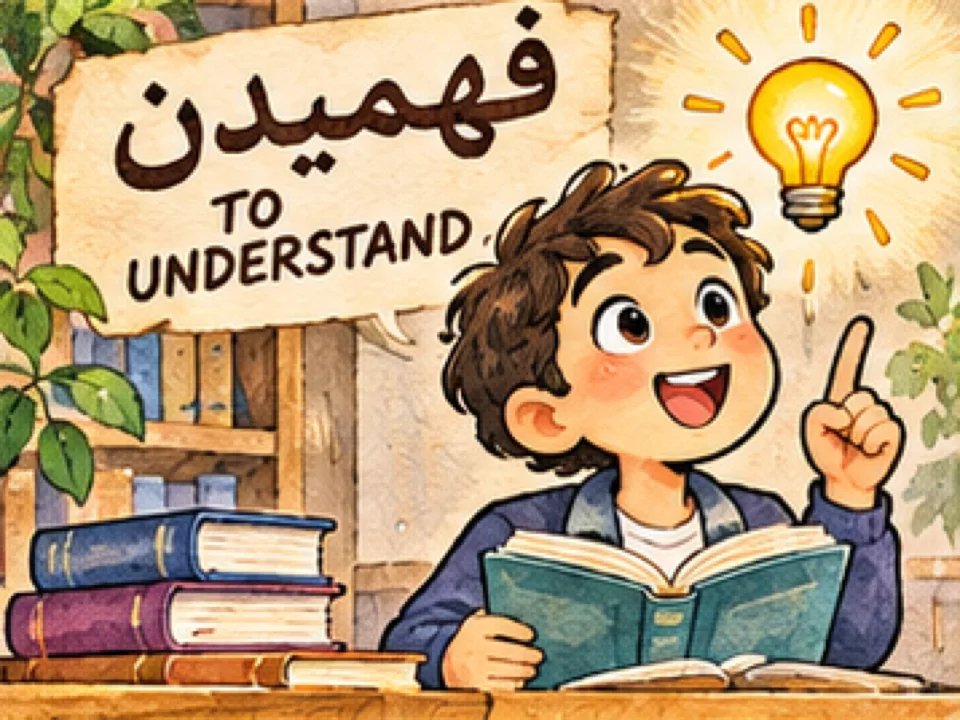
فَهمیدَن
Watch and listen to Reza Nazari explain this verb. More in the free 200 Persian Verbs video course.
Understand – Realize
مُتَرادِفِ فارسی: دَرک کَردَن – پی بُردَن
مُتَضادِ فارسی: مُتِوَجِه نَشُدَن
:صَرف
گُذَشتِه: فَهمیدَم – فَهمیدی – فَهمید – فَهمیدیم – فَهمیدید – فَهمیدَند
حال: می فَهمَم – می فَهمی – می فَهمَد – می فَهمیم – می فَهمید – می فَهمَند
:مِثال
.او فَهمید کِه کیفَش را چِه کَسی بَرداشتِه اَست
.مَن فَهمیدَم کِه دَر زِندِگی چِه می خواهَم
فهمیدن (fahmidan) means "to understand" in Persian. Here are its stems, full conjugation, examples with English, common phrases and a short quiz.
How to use فهمیدن (fahmidan)
فهمیدن is a simple, regular verb meaning "to understand" or "to realize". It is transitive, so a definite object takes را: حرفش را فهمیدم (harfash râ fahmidam), "I understood what he said". It is very often followed by که (ke, "that") and a clause: "I realized that…". The present stem فهم (fahm) is simply the past stem without ید.
The verb is common in both speech and writing. In conversation you will hear فهمیدی؟ (fahmidi?, "Got it?") and نمیفهمم (nemifahmam, "I don't get it"). A softer, more polite way to say you didn't catch something is متوجه نشدم (motavajjeh nashodam). Do not confuse فهمیدن with دانستن (dânestan, "to know"): فهمیدن is the moment of getting something, دانستن is having the knowledge.
Verb stems
| Infinitive | فهمیدن | /fahmidan/ | to understand, to realize |
|---|---|---|---|
| Past stem | فهمید | /fahmid/ | used for past tenses |
| Present stem | فهم | /fahm/ | used for present, subjunctive and imperative |
Conjugation of فهمیدن
| Person | Simple past | Present | Future | Subjunctive |
|---|---|---|---|---|
| من I |
فهمیدم /fahmidam/ |
میفهمم /mifahmam/ |
خواهم فهمید /khâham fahmid/ |
بفهمم /befahmam/ |
| تو you (sg.) |
فهمیدی /fahmidi/ |
میفهمی /mifahmi/ |
خواهی فهمید /khâhi fahmid/ |
بفهمی /befahmi/ |
| او he / she |
فهمید /fahmid/ |
میفهمد /mifahmad/ |
خواهد فهمید /khâhad fahmid/ |
بفهمد /befahmad/ |
| ما we |
فهمیدیم /fahmidim/ |
میفهمیم /mifahmim/ |
خواهیم فهمید /khâhim fahmid/ |
بفهمیم /befahmim/ |
| شما you (pl./polite) |
فهمیدید /fahmidid/ |
میفهمید /mifahmid/ |
خواهید فهمید /khâhid fahmid/ |
بفهمید /befahmid/ |
| آنها they |
فهمیدند /fahmidand/ |
میفهمند /mifahmand/ |
خواهند فهمید /khâhand fahmid/ |
بفهمند /befahmand/ |
Negative and imperative
| Persian | Pronunciation | English |
|---|---|---|
| نفهمیدم | /nafahmidam/ | I did not understand |
| نمیفهمم | /nemifahmam/ | I do not understand |
| بفهم! | /befahm!/ | Understand! (to one person) |
| بفهمید! | /befahmid!/ | Understand! (to several people, or politely) |
| نفهم! | /nafahm!/ | Don't understand! |
The examples above, translated
| Persian | Pronunciation | English |
|---|---|---|
| او فهمید که کیفش را چه کسی برداشته است. | /u fahmid ke kifash râ che kasi bardâshte ast./ | She found out who had taken her bag. |
| من فهمیدم که در زندگی چه میخواهم. | /man fahmidam ke dar zendegi che mikhâham./ | I realized what I want in life. |
| آنها فهمیدند که پسر بچه دروغ گفته است. | /ânhâ fahmidand ke pesar-bachche dorugh gofte ast./ | They realized that the little boy had lied. |
More example sentences
| Persian | Pronunciation | English |
|---|---|---|
| معلم سؤال را دوباره گفت تا همه بفهمند. | /mo'allem so'âl râ dobâre goft tâ hame befahmand./ | The teacher repeated the question so that everyone would understand. |
| ببخشید، من فارسی را خوب نمیفهمم. | /bebakhshid, man fârsi râ khub nemifahmam./ | Excuse me, I don't understand Persian well. |
| دیروز فهمیدم که کلیدم در ماشین است. | /diruz fahmidam ke kelidam dar mâshin ast./ | Yesterday I realized that my key was in the car. |
| اگر این درس را بفهمی، امتحان آسان است. | /agar in dars râ befahmi, emtehân âsân ast./ | If you understand this lesson, the exam is easy. |
Common phrases
| Persian | Pronunciation | English |
|---|---|---|
| فهمیدی؟ | /fahmidi?/ | Got it? Do you understand? |
| فهم | /fahm/ | understanding, comprehension (noun) |
| قابل فهم | /ghâbel-e fahm/ | understandable |
| سوءتفاهم | /su'-e tafâhom/ | misunderstanding (from the same Arabic root) |
In spoken Persian
In Tehran speech the present endings are shortened: میفهمه (mifahme) for میفهمد, and میفهمن (mifahman) for میفهمند. نفهمیدم (nafahmidam, "I didn't get it") is a very frequent reply, and میفهمی؟ (mifahmi?) can mean "Do you see what I mean?"
Watch out for
- فهمیدن means "to understand", not "to know". To say "I know" use میدانم (midânam), or in speech میدونم (midunam).
- Because the verb is simple, the subjunctive takes ب: بفهمم (befahmam), and the negative past is نفهمیدم (nafahmidam).
Practice
-
Translate into Persian: "I didn't understand your question."
Show answer
so'âlat râ nafahmidam. سؤالت را نفهمیدم.
-
What does this sentence mean? او فهمید که دیر شده است.
Show answer
He realized that it had gotten late.
-
Give the present-tense form for "we".
Show answer
mifahmim میفهمیم
Related verbs in this course
This is lesson 168 of 200 Most Common Persian Verbs. For the sounds used in the pronunciation guide, see Persian pronunciation.
.آنها فَهمیدَند کِه پِسَر بَچِه دُروغ گُفتِه اَست


Take this lesson further

Study with the book
200 Absolutely Essential Persian Verbs
This free lesson is part of 200 Most Common Persian Verbs. The book puts the whole series in one printable PDF you can study offline.
Serious about Persian? Get all 30 of our Persian learning books for $199.99 (55% less than buying them one by one).
Free Persian Starter Kit (PDF)
The Persian alphabet chart and the 101 most common Persian words with pronunciation, in one printable PDF. You also get a one-time 15% code for any of our books.
We will email you new lessons and book news from Learn Persian Online. Unsubscribe any time.Free: 100 Core Persian Words + 20 Survival Phrases
Get the 14-page printable Starter Pack (all 32 letters, a 7-day reading plan, 100 core words and 20 survival phrases) and a short 5-email course. Free.
Practise with free Persian games