200 Most Common Persian Verbs
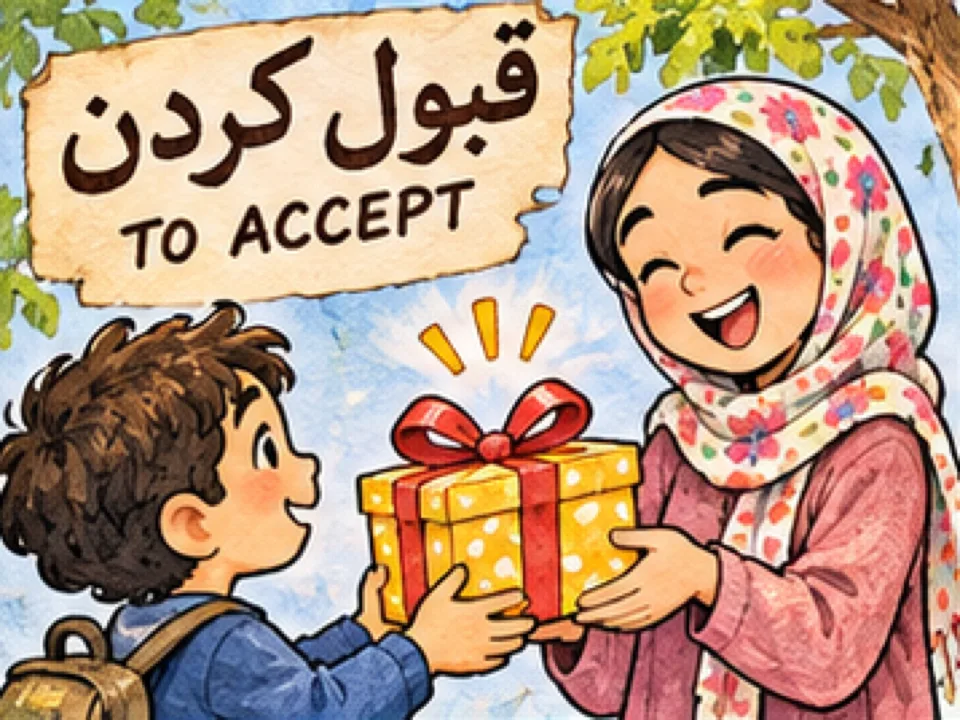
قَبول کَردَن
Watch and listen to Reza Nazari explain this verb. More in the free 200 Persian Verbs video course.
Accept
مُتَرادِفِ فارسی: پَذیرُفتَن
مُتَضادِ فارسی: رَد کَردَن
:صَرف
گُذَشتِه: قَبول کَردَم – قَبول کَردی – قَبول کَرد – قَبول کَردیم – قَبول کَردید – قَبول کَردَند
حال: قَبول می کُنَم – قَبول می کُنی – قَبول می کُنَد – قَبول می کُنیم – قَبول می کُنید – قَبول می کُنَند
:مِثال
.دُختَر پیشنَهادِ اِزدِواجِ پِسَر را قَبول کَرد
.مَن حَرفهایِ پِدَرم را قَبول کَردَم وَ بِه نَصیحَتهایِ او عَمَل کَردَم
قبول کردن (ghabul kardan) means "to accept" or "to agree to" in Persian. See its conjugation, examples, useful phrases and a quiz.
How to use قبول کردن (ghabul kardan)
قبول کردن is a compound verb: the Arabic-origin noun قبول (ghabul, "acceptance") plus کردن. It is transitive: دعوت او را قبول کردم ("I accepted his invitation"). It also means "to agree with" or "to admit": قبول میکنم که اشتباه کردم ("I admit that I made a mistake").
The verb is everyday and neutral; a more formal synonym is پذیرفتن (paziroftan). Don't confuse it with قبول شدن (ghabul shodan), which means "to pass" an exam or "to be accepted" somewhere: در کنکور قبول شدم ("I passed the university entrance exam"). Its opposite is رد کردن (rad kardan, "to reject").
Verb stems
| Infinitive | قبول کردن | /ghabul kardan/ | to accept, to agree to; to admit |
|---|---|---|---|
| Past stem | قبول کرد | /ghabul kard/ | used for past tenses |
| Present stem | قبول کن | /ghabul kon/ | used for present, subjunctive and imperative |
Conjugation of قبول کردن
| Person | Simple past | Present | Future | Subjunctive |
|---|---|---|---|---|
| من I |
قبول کردم /ghabul kardam/ |
قبول میکنم /ghabul mikonam/ |
قبول خواهم کرد /ghabul khâham kard/ |
قبول کنم /ghabul konam/ |
| تو you (sg.) |
قبول کردی /ghabul kardi/ |
قبول میکنی /ghabul mikoni/ |
قبول خواهی کرد /ghabul khâhi kard/ |
قبول کنی /ghabul koni/ |
| او he / she |
قبول کرد /ghabul kard/ |
قبول میکند /ghabul mikonad/ |
قبول خواهد کرد /ghabul khâhad kard/ |
قبول کند /ghabul konad/ |
| ما we |
قبول کردیم /ghabul kardim/ |
قبول میکنیم /ghabul mikonim/ |
قبول خواهیم کرد /ghabul khâhim kard/ |
قبول کنیم /ghabul konim/ |
| شما you (pl./polite) |
قبول کردید /ghabul kardid/ |
قبول میکنید /ghabul mikonid/ |
قبول خواهید کرد /ghabul khâhid kard/ |
قبول کنید /ghabul konid/ |
| آنها they |
قبول کردند /ghabul kardand/ |
قبول میکنند /ghabul mikonand/ |
قبول خواهند کرد /ghabul khâhand kard/ |
قبول کنند /ghabul konand/ |
Negative and imperative
| Persian | Pronunciation | English |
|---|---|---|
| قبول نکردم | /ghabul nakardam/ | I did not accept |
| قبول نمیکنم | /ghabul nemikonam/ | I do not accept / I am not accepting |
| قبول کن! | /ghabul kon!/ | Accept! (to one person) |
| قبول کنید! | /ghabul konid!/ | Accept! (to several people, or politely) |
| قبول نکن! | /ghabul nakon!/ | Don't accept! |
The examples above, translated
| Persian | Pronunciation | English |
|---|---|---|
| دختر پیشنهاد ازدواج پسر را قبول کرد. | /dokhtar pishnahâd-e ezdevâj-e pesar râ ghabul kard/ | The girl accepted the boy's marriage proposal. |
| من حرفهای پدرم را قبول کردم و به نصیحتهای او عمل کردم. | /man harf-hâ-ye pedaram râ ghabul kardam va be nasihat-hâ-ye u amal kardam/ | I accepted what my father said and followed his advice. |
| رئیس پیشنهاد من را قبول کرد. | /ra'is pishnahâd-e man râ ghabul kard/ | The boss accepted my proposal. |
More example sentences
| Persian | Pronunciation | English |
|---|---|---|
| دعوتت را با کمال میل قبول میکنم. | /da'vatat râ bâ kamâl-e meyl ghabul mikonam/ | I gladly accept your invitation. |
| او اشتباهش را قبول نکرد. | /u eshtebâhash râ ghabul nakard/ | He didn't admit his mistake. |
| این فروشگاه کارت اعتباری قبول نمیکند. | /in forushgâh kârt-e e'tebâri ghabul nemikonad/ | This store doesn't accept credit cards. |
| لطفا این هدیه را قبول کنید. | /lotfan in hedye râ ghabul konid/ | Please accept this gift. |
Common phrases
| Persian | Pronunciation | English |
|---|---|---|
| قبول شدن | /ghabul shodan/ | to pass (an exam), to be accepted |
| قبول دارم | /ghabul dâram/ | I agree |
| قابل قبول | /ghâbel-e ghabul/ | acceptable |
| قبولی | /ghabuli/ | passing (an exam), admission |
In spoken Persian
In speech the endings shorten: قبول میکنه (ghabul mikone), قبول نمیکنن (ghabul nemikonan). Friends say قبوله (ghabule, "deal" or "agreed") and قبول دارم (ghabul dâram, "I agree"). Children say قبول نیست (ghabul nist, "that doesn't count") when a game seems unfair.
Watch out for
- قبول کردن (to accept) and قبول شدن (to pass, to be admitted) are different: پیشنهاد را قبول کردم ("I accepted the offer") but در امتحان قبول شدم ("I passed the exam").
Practice
-
Translate into Persian: "I accept."
Show answer
ghabul mikonam. قبول میکنم.
-
What does this sentence mean? او دعوت ما را قبول نکرد.
Show answer
He didn't accept our invitation.
-
What is the future form for "they"?
Show answer
ghabul khâhand kard قبول خواهند کرد
Related verbs in this course
This is lesson 169 of 200 Most Common Persian Verbs. For the sounds used in the pronunciation guide, see Persian pronunciation.
.رَئیس پیشنَهادِ مَن را قَبول کَرد


Take this lesson further

Study with the book
200 Absolutely Essential Persian Verbs
This free lesson is part of 200 Most Common Persian Verbs. The book puts the whole series in one printable PDF you can study offline.
Serious about Persian? Get all 30 of our Persian learning books for $199.99 (55% less than buying them one by one).
Free Persian Starter Kit (PDF)
The Persian alphabet chart and the 101 most common Persian words with pronunciation, in one printable PDF. You also get a one-time 15% code for any of our books.
We will email you new lessons and book news from Learn Persian Online. Unsubscribe any time.Free: 100 Core Persian Words + 20 Survival Phrases
Get the 14-page printable Starter Pack (all 32 letters, a 7-day reading plan, 100 core words and 20 survival phrases) and a short 5-email course. Free.
Practise with free Persian games