200 Most Common Persian Verbs
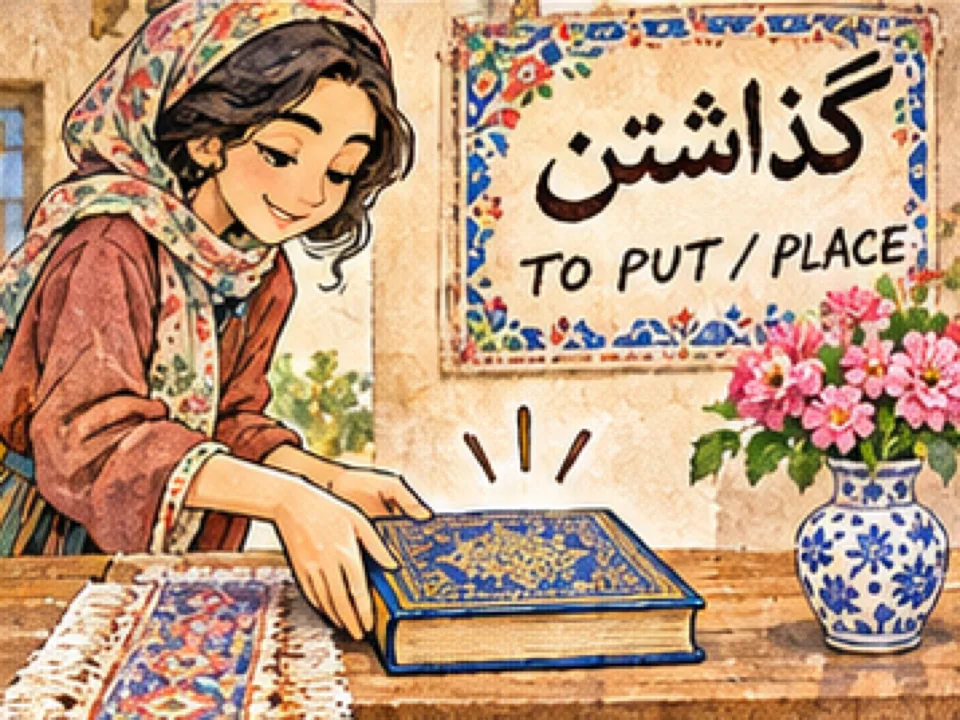
گذاشتَن
Watch and listen to Reza Nazari explain this verb. More in the free 200 Persian Verbs video course.
Put – Let
مُتَرادِفِ فارسی: نَهادَن – قَرار دادَن
مُتَضادِ فارسی: بَرداشتَن
:صَرف
گُذَشتِه: گُذاشتَم – گُذاشتی – گُذاشت – گُذاشتیم – گُذاشتید – گُذاشتَند
حال: می گُذارَم – می گُذاری – می گُذارَد – می گُذاریم – می گُذارید – می گُذارَند
:مِثال
.او کِتابَش را دَر کیف گُذاشت
.مَن لِباس ها را دَر کُمد گُذاشتَم
گذاشتن (gozâshtan) means "to put", "to place" or "to let". See its stems, full conjugation, examples, key phrases and a short quiz.
How to use گذاشتن (gozâshtan)
گذاشتن is a simple, transitive verb with an irregular present stem: past گذاشت (gozâsht), present گذار (gozâr). It means "to put" or "to place": کتاب را روی میز گذاشتم ("I put the book on the table"). It also means "to leave" something somewhere and "to let, to allow": بگذار بروم ("let me go").
It is an everyday verb and a common light verb: قرار گذاشتن ("to make a date or appointment"), احترام گذاشتن ("to respect"), تأثیر گذاشتن ("to have an effect"). Watch the spelling: it is written with ذ, and it is a different verb from گذشتن (gozashtan, "to pass"). Its opposite is برداشتن (bardâshtan, "to pick up").
Verb stems
| Infinitive | گذاشتن | /gozâshtan/ | to put, to place; to let, to leave |
|---|---|---|---|
| Past stem | گذاشت | /gozâsht/ | used for past tenses |
| Present stem | گذار | /gozâr/ | used for present, subjunctive and imperative |
Conjugation of گذاشتن
| Person | Simple past | Present | Future | Subjunctive |
|---|---|---|---|---|
| من I |
گذاشتم /gozâshtam/ |
میگذارم /migozâram/ |
خواهم گذاشت /khâham gozâsht/ |
بگذارم /begozâram/ |
| تو you (sg.) |
گذاشتی /gozâshti/ |
میگذاری /migozâri/ |
خواهی گذاشت /khâhi gozâsht/ |
بگذاری /begozâri/ |
| او he / she |
گذاشت /gozâsht/ |
میگذارد /migozârad/ |
خواهد گذاشت /khâhad gozâsht/ |
بگذارد /begozârad/ |
| ما we |
گذاشتیم /gozâshtim/ |
میگذاریم /migozârim/ |
خواهیم گذاشت /khâhim gozâsht/ |
بگذاریم /begozârim/ |
| شما you (pl./polite) |
گذاشتید /gozâshtid/ |
میگذارید /migozârid/ |
خواهید گذاشت /khâhid gozâsht/ |
بگذارید /begozârid/ |
| آنها they |
گذاشتند /gozâshtand/ |
میگذارند /migozârand/ |
خواهند گذاشت /khâhand gozâsht/ |
بگذارند /begozârand/ |
Negative and imperative
| Persian | Pronunciation | English |
|---|---|---|
| نگذاشتم | /nagozâshtam/ | I did not put |
| نمیگذارم | /nemigozâram/ | I do not put / I am not putting |
| بگذار! | /begozâr!/ | Put! (to one person) |
| بگذارید! | /begozârid!/ | Put! (to several people, or politely) |
| نگذار! | /nagozâr!/ | Don't put! |
The examples above, translated
| Persian | Pronunciation | English |
|---|---|---|
| او کتابش را در کیف گذاشت. | /u ketâbash râ dar kif gozâsht/ | She put her book in her bag. |
| من لباسها را در کمد گذاشتم. | /man lebâs-hâ râ dar komod gozâshtam/ | I put the clothes in the closet. |
| آنها ماشینشان را در پارکینگ میگذارند. | /ân-hâ mâshineshân râ dar pârking migozârand/ | They leave their car in the parking garage. |
More example sentences
| Persian | Pronunciation | English |
|---|---|---|
| کلید را کجا گذاشتی؟ | /kelid râ kojâ gozâshti?/ | Where did you put the key? |
| بگذار کمکت کنم. | /begozâr komakat konam/ | Let me help you. |
| با دوستم برای فردا قرار گذاشتم. | /bâ dustam barâ-ye fardâ gharâr gozâshtam/ | I made plans with my friend for tomorrow. |
| کفشهایت را اینجا نگذار. | /kafsh-hâyat râ injâ nagozâr/ | Don't leave your shoes here. |
Common phrases
| Persian | Pronunciation | English |
|---|---|---|
| قرار گذاشتن | /gharâr gozâshtan/ | to make a date, to set up a meeting |
| احترام گذاشتن | /ehterâm gozâshtan/ | to respect |
| تأثیر گذاشتن | /ta'sir gozâshtan/ | to have an effect, to influence |
| کنار گذاشتن | /kenâr gozâshtan/ | to set aside, to give up |
In spoken Persian
In speech the stem shortens to ذار: میذارم (mizâram, "I put"), میذاره (mizâre), بذار (bezâr, "put" or "let"), نذار (nazâr, "don't let"). بذار ببینم (bezâr bebinam, "let me see") is one of the most frequent phrases in spoken Persian, and the spellings بذار and میذارم are common in chat.
Watch out for
- Don't mix up گذاشتن (gozâshtan, "to put") and گذشتن (gozashtan, "to pass"). Their present stems are گذار and گذر: میگذارم ("I put") but میگذرد ("it passes").
Practice
-
Translate into Persian: "Put the book on the table."
Show answer
ketâb râ ru-ye miz begozâr. کتاب را روی میز بگذار.
-
What is the present-tense form for "we"?
Show answer
migozârim میگذاریم
-
What does this sentence mean? بگذار فکر کنم.
Show answer
Let me think.
Related verbs in this course
This is lesson 181 of 200 Most Common Persian Verbs. For the sounds used in the pronunciation guide, see Persian pronunciation.
.آنها ماشینِشان را دَر پارکینگ می گُذارَند


Take this lesson further

Study with the book
200 Absolutely Essential Persian Verbs
This free lesson is part of 200 Most Common Persian Verbs. The book puts the whole series in one printable PDF you can study offline.
Serious about Persian? Get all 30 of our Persian learning books for $199.99 (55% less than buying them one by one).
Free Persian Starter Kit (PDF)
The Persian alphabet chart and the 101 most common Persian words with pronunciation, in one printable PDF. You also get a one-time 15% code for any of our books.
We will email you new lessons and book news from Learn Persian Online. Unsubscribe any time.Free: 100 Core Persian Words + 20 Survival Phrases
Get the 14-page printable Starter Pack (all 32 letters, a 7-day reading plan, 100 core words and 20 survival phrases) and a short 5-email course. Free.
Practise with free Persian games