200 Most Common Persian Verbs
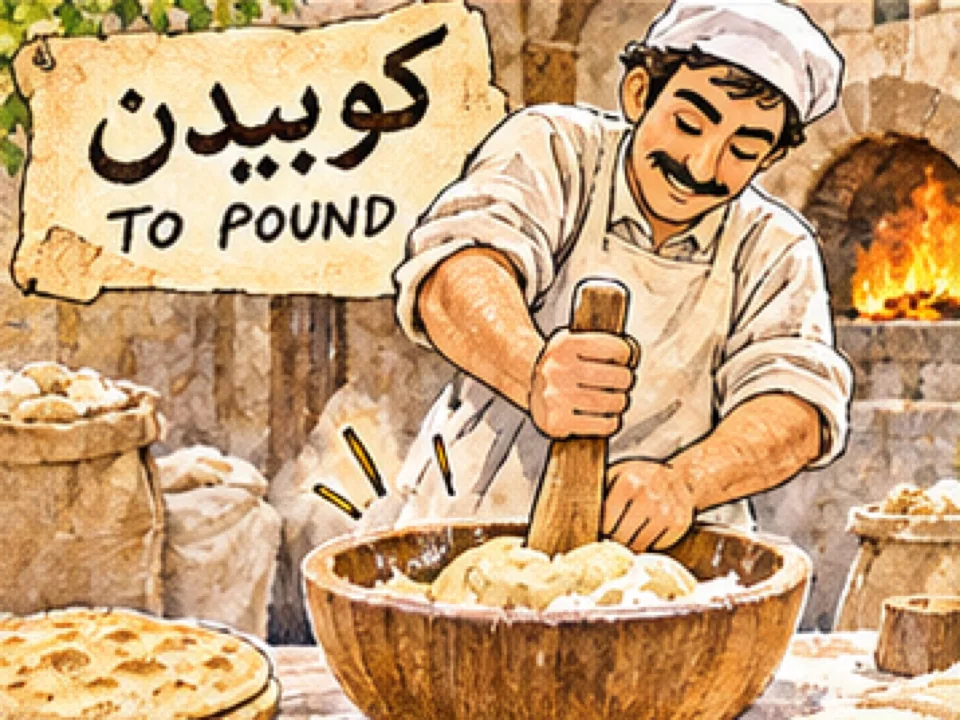
کوبیدَن
Watch and listen to Reza Nazari explain this verb. More in the free 200 Persian Verbs video course.
hammer – bruise
مُتَرادِفِ فارسی: لِه کَردَن
مُتَضادِ فارسی: اَرج نَهادَن – نَوازِش کَردَن
:صَرف
گُذَشتِه: کوبیدَم – کوبیدی – کوبید – کوبیدیم – کوبیدید – کوبیدَند
حال: می کوبَم – می کوبی – می کوبَد – می کوبیم – می کوبید – می کوبَند
:مِثال
.او میخ را بِه دیوار می کوبَد
.مَن چون عَصَبانی بودَم مُشتَم را بِه دیوار کوبیدَم
.مادَر دانِه هایِ گَندُم را کوبید وَ لِه کَرد
کوبیدن (kubidan) means "to pound", "to hammer" or "to bang". See its conjugation, examples, common phrases and a short quiz.
How to use کوبیدن (kubidan)
کوبیدن is a simple, transitive verb with regular stems: past کوبید (kubid), present کوب (kub). It means to hit something hard, often again and again: hammering a nail, banging on a door, or pounding grain or meat. The surface that is hit usually takes به: مشتش را به میز کوبید ("he banged his fist on the table").
The verb is neutral. Its past participle کوبیده (kubide, "pounded, minced") is famous from کباب کوبیده, Iran's minced-meat kebab. It can also mean to knock down a building, and in casual speech to slam someone with harsh criticism. For a gentle knock on a door, use در زدن (dar zadan) instead.
Verb stems
| Infinitive | کوبیدن | /kubidan/ | to pound, to hammer, to bang |
|---|---|---|---|
| Past stem | کوبید | /kubid/ | used for past tenses |
| Present stem | کوب | /kub/ | used for present, subjunctive and imperative |
Conjugation of کوبیدن
| Person | Simple past | Present | Future | Subjunctive |
|---|---|---|---|---|
| من I |
کوبیدم /kubidam/ |
میکوبم /mikubam/ |
خواهم کوبید /khâham kubid/ |
بکوبم /bekubam/ |
| تو you (sg.) |
کوبیدی /kubidi/ |
میکوبی /mikubi/ |
خواهی کوبید /khâhi kubid/ |
بکوبی /bekubi/ |
| او he / she |
کوبید /kubid/ |
میکوبد /mikubad/ |
خواهد کوبید /khâhad kubid/ |
بکوبد /bekubad/ |
| ما we |
کوبیدیم /kubidim/ |
میکوبیم /mikubim/ |
خواهیم کوبید /khâhim kubid/ |
بکوبیم /bekubim/ |
| شما you (pl./polite) |
کوبیدید /kubidid/ |
میکوبید /mikubid/ |
خواهید کوبید /khâhid kubid/ |
بکوبید /bekubid/ |
| آنها they |
کوبیدند /kubidand/ |
میکوبند /mikuband/ |
خواهند کوبید /khâhand kubid/ |
بکوبند /bekuband/ |
Negative and imperative
| Persian | Pronunciation | English |
|---|---|---|
| نکوبیدم | /nakubidam/ | I did not pound |
| نمیکوبم | /nemikubam/ | I do not pound / I am not pounding |
| بکوب! | /bekub!/ | Pound! (to one person) |
| بکوبید! | /bekubid!/ | Pound! (to several people, or politely) |
| نکوب! | /nakub!/ | Don't pound! |
The examples above, translated
| Persian | Pronunciation | English |
|---|---|---|
| او میخ را به دیوار میکوبد. | /u mikh râ be divâr mikubad/ | He is hammering the nail into the wall. |
| من چون عصبانی بودم مشتم را به دیوار کوبیدم. | /man chon asabâni budam moshtam râ be divâr kubidam/ | Because I was angry, I banged my fist against the wall. |
| مادر دانههای گندم را کوبید و له کرد. | /mâdar dâne-hâ-ye gandom râ kubid va leh kard/ | Mother pounded and crushed the wheat grains. |
More example sentences
| Persian | Pronunciation | English |
|---|---|---|
| کسی محکم به در میکوبید. | /kasi mohkam be dar mikubid/ | Someone was banging hard on the door. |
| گوشت را خوب بکوب. | /gusht râ khub bekub/ | Pound the meat well. |
| باران به پنجره میکوبید. | /bârân be panjare mikubid/ | The rain was beating against the window. |
| او با چکش میخ را کوبید. | /u bâ chakosh mikh râ kubid/ | He hammered in the nail with a hammer. |
Common phrases
| Persian | Pronunciation | English |
|---|---|---|
| کباب کوبیده | /kabâb-e kubide/ | minced-meat kebab |
| میخ کوبیدن | /mikh kubidan/ | to hammer in a nail |
| به در کوبیدن | /be dar kubidan/ | to bang on the door |
| پایکوبی | /pâykubi/ | dancing, stamping one's feet in celebration |
In spoken Persian
In speech the endings shorten: میکوبه (mikube) for میکوبد, and میکوبن (mikuban) for میکوبند. In casual talk the verb also means to criticize someone harshly: همه کوبیدنش (hame kubidanesh, "everyone slammed him").
Watch out for
- Use به for the surface you hit: به در کوبید ("he banged on the door"). With را the object is the thing being pounded: گوشت را کوبید ("she pounded the meat").
- Note: the page glosses the verb as "hammer – bruise", but "bruise" is not one of its meanings. Its antonyms (ارج نهادن, "to honor"; نوازش کردن, "to caress") only work for the figurative sense.
Practice
-
Translate into Persian: "He banged on the door."
Show answer
u be dar kubid. او به در کوبید.
-
What is the imperative singular?
Show answer
bekub بکوب
-
What does this sentence mean? باد پنجره را به دیوار کوبید.
Show answer
The wind banged the window against the wall.
Related verbs in this course
- زدن (zadan): to hit, to strike (also a very common light verb)
- ضربه زدن (zarbe zadan): to hit, to strike, to kick
This is lesson 180 of 200 Most Common Persian Verbs. For the sounds used in the pronunciation guide, see Persian pronunciation.


Take this lesson further

Study with the book
200 Absolutely Essential Persian Verbs
This free lesson is part of 200 Most Common Persian Verbs. The book puts the whole series in one printable PDF you can study offline.
Serious about Persian? Get all 30 of our Persian learning books for $199.99 (55% less than buying them one by one).
Free Persian Starter Kit (PDF)
The Persian alphabet chart and the 101 most common Persian words with pronunciation, in one printable PDF. You also get a one-time 15% code for any of our books.
We will email you new lessons and book news from Learn Persian Online. Unsubscribe any time.Free: 100 Core Persian Words + 20 Survival Phrases
Get the 14-page printable Starter Pack (all 32 letters, a 7-day reading plan, 100 core words and 20 survival phrases) and a short 5-email course. Free.
Practise with free Persian games