200 Most Common Persian Verbs
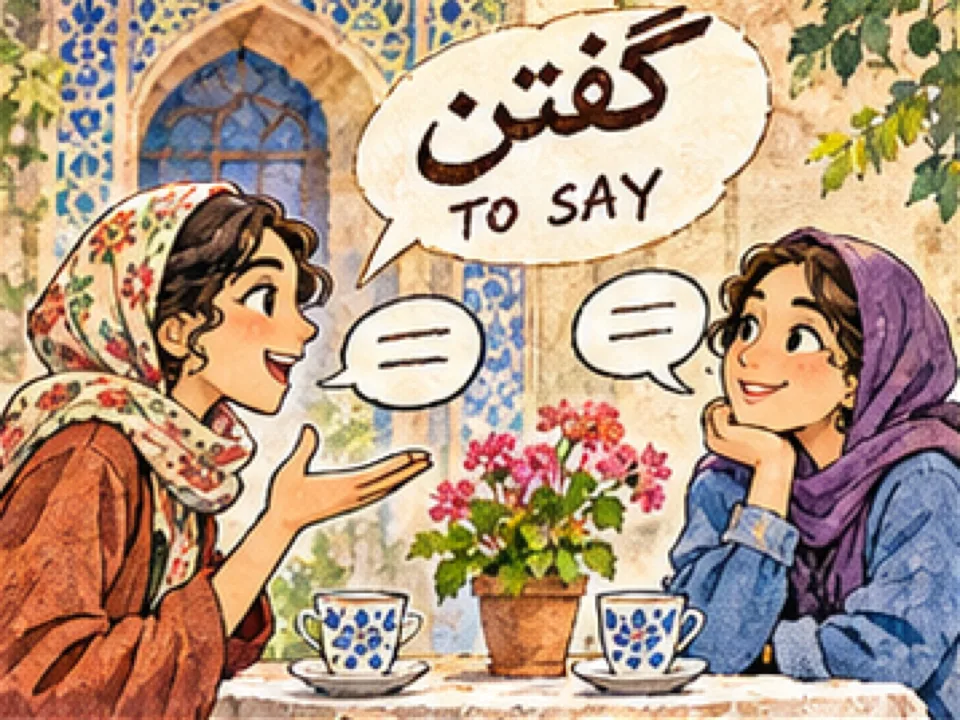
گُفتَن
Watch and listen to Reza Nazari explain this verb. More in the free 200 Persian Verbs video course.
Say – Tell
مُتَرادِفِ فارسی: بیان کردن – بازگو کردن
مُتَضادِ فارسی: سکوت کردن
:صَرف
گُذَشتِه: گُفتم – گُفتی – گُفت – گُفتیم – گُفتید – گُفتنَد
حال: می گویَم – می گویی – می گویَد – می گوییم – می گویید – می گویَند
:مِثال
.او بِه مَن گُفت کِه فَردا بِه مُسافِرَت می رَوَد
.مَن بِه مادَرَم گُفتَم کِه غَذا نِمی خورَم
گفتن (goftan) means "to say" or "to tell" in Persian. See its irregular stems, full conjugation, examples, phrases and a quiz.
How to use گفتن (goftan)
گفتن is one of the most common Persian verbs. It is simple and transitive, with an irregular present stem: the past stem is گفت (goft) and the present stem is گو (gu), written گوی before vowel endings. So "I said" is گفتم (goftam) and "I say" is میگویم (miguyam). The listener takes به: به او گفتم ("I told him").
Reported speech usually follows with که: گفت که خسته است ("he said that he was tired"). Persian keeps the original tense inside the reported clause, unlike English. گفتن also forms many compounds, such as دروغ گفتن ("to lie") and تبریک گفتن ("to congratulate"). For "to speak" or "to talk", use حرف زدن (harf zadan) or صحبت کردن instead.
Verb stems
| Infinitive | گفتن | /goftan/ | to say, to tell |
|---|---|---|---|
| Past stem | گفت | /goft/ | used for past tenses |
| Present stem | گو | /gu/ | used for present, subjunctive and imperative |
Conjugation of گفتن
| Person | Simple past | Present | Future | Subjunctive |
|---|---|---|---|---|
| من I |
گفتم /goftam/ |
میگویم /miguyam/ |
خواهم گفت /khâham goft/ |
بگویم /beguyam/ |
| تو you (sg.) |
گفتی /gofti/ |
میگویی /miguyi/ |
خواهی گفت /khâhi goft/ |
بگویی /beguyi/ |
| او he / she |
گفت /goft/ |
میگوید /miguyad/ |
خواهد گفت /khâhad goft/ |
بگوید /beguyad/ |
| ما we |
گفتیم /goftim/ |
میگوییم /miguyim/ |
خواهیم گفت /khâhim goft/ |
بگوییم /beguyim/ |
| شما you (pl./polite) |
گفتید /goftid/ |
میگویید /miguyid/ |
خواهید گفت /khâhid goft/ |
بگویید /beguyid/ |
| آنها they |
گفتند /goftand/ |
میگویند /miguyand/ |
خواهند گفت /khâhand goft/ |
بگویند /beguyand/ |
Negative and imperative
| Persian | Pronunciation | English |
|---|---|---|
| نگفتم | /nagoftam/ | I did not say |
| نمیگویم | /nemiguyam/ | I do not say / I am not saying |
| بگو! | /begu!/ | Say! (to one person) |
| بگویید! | /beguyid!/ | Say! (to several people, or politely) |
| نگو! | /nagu!/ | Don't say! |
The examples above, translated
| Persian | Pronunciation | English |
|---|---|---|
| او به من گفت که فردا به مسافرت میرود. | /u be man goft ke fardâ be mosâferat miravad/ | He told me that he is going on a trip tomorrow. |
| من به مادرم گفتم که غذا نمیخورم. | /man be mâdaram goftam ke ghazâ nemikhoram/ | I told my mother that I wasn't going to eat. |
| آنها میگویند فردا هوا بارانی است. | /ân-hâ miguyand fardâ havâ bârâni ast/ | They say it will be rainy tomorrow. |
More example sentences
| Persian | Pronunciation | English |
|---|---|---|
| به من بگو چه شده. | /be man begu che shode/ | Tell me what happened. |
| معلم گفت که امتحان سخت نیست. | /mo'allem goft ke emtehân sakht nist/ | The teacher said that the exam isn't hard. |
| این کلمه را به فارسی چطور میگویید؟ | /in kalame râ be fârsi chetowr miguyid?/ | How do you say this word in Persian? |
| او هرگز دروغ نمیگوید. | /u hargez dorugh nemiguyad/ | She never lies. |
Common phrases
| Persian | Pronunciation | English |
|---|---|---|
| دروغ گفتن | /dorugh goftan/ | to lie, to tell a lie |
| راست گفتن | /râst goftan/ | to tell the truth |
| تبریک گفتن | /tabrik goftan/ | to congratulate |
| گفتوگو | /goftogu/ | conversation, dialogue |
In spoken Persian
Spoken Persian drops most of the stem: میگم (migam, "I say"), میگی (migi), میگه (mige), میگیم (migim), میگین (migin), میگن (migan, "they say"). The imperative stays بگو (begu), and چی گفتی؟ (chi gofti?) means "what did you say?".
Watch out for
- The present stem is گو, not گفت. Before vowel endings it gains ی: میگویم, بگویید. In the singular imperative it stays short: بگو.
- Note: the page puts the vowel mark of the third-person plural past in the wrong place (گُفتنَد); the correct form is goftand.
Practice
-
Translate into Persian: "What did he say?"
Show answer
u che goft? او چه گفت؟
-
What is the present-tense form for "they"?
Show answer
miguyand میگویند
-
What does this sentence mean? به من راستش را بگو.
Show answer
Tell me the truth.
Related verbs in this course
This is lesson 185 of 200 Most Common Persian Verbs. For the sounds used in the pronunciation guide, see Persian pronunciation.
.آنها می گویَند فَردا هَوا بارانی اَست


Take this lesson further

Study with the book
200 Absolutely Essential Persian Verbs
This free lesson is part of 200 Most Common Persian Verbs. The book puts the whole series in one printable PDF you can study offline.
Serious about Persian? Get all 30 of our Persian learning books for $199.99 (55% less than buying them one by one).
Free Persian Starter Kit (PDF)
The Persian alphabet chart and the 101 most common Persian words with pronunciation, in one printable PDF. You also get a one-time 15% code for any of our books.
We will email you new lessons and book news from Learn Persian Online. Unsubscribe any time.Free: 100 Core Persian Words + 20 Survival Phrases
Get the 14-page printable Starter Pack (all 32 letters, a 7-day reading plan, 100 core words and 20 survival phrases) and a short 5-email course. Free.
Practise with free Persian games