200 Most Common Persian Verbs
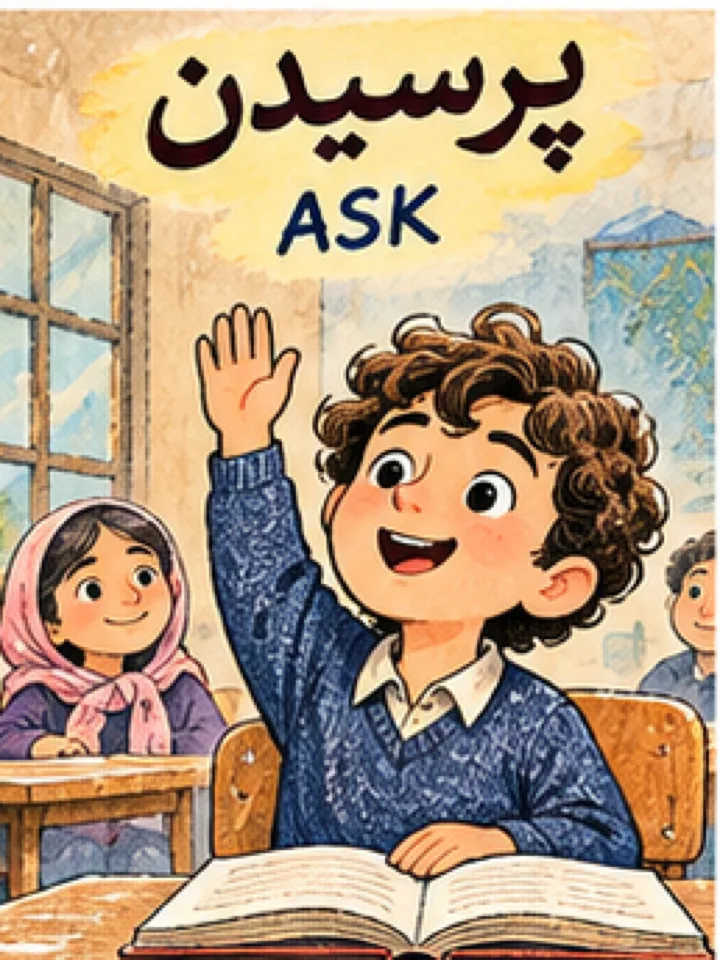
پُرسیدَن
Watch and listen to Reza Nazari explain this verb. More in the free 200 Persian Verbs video course.
Ask
مُتَرادِفِ فارسی: سوال کَردَن
مُتَضادِ فارسی: جَواب دادَن
:صَرف
گُذَشتِه: پُرسیدَم – پُرسیدی – پُرسید – پُرسیدیم – پُرسیدید – پُرسیدَند
حال: می پُرسَم – می پُرسی – می پُرسَد – می پُرسیم – می پُرسید – می پُرسَند
:مِثال
مَن اَز اُستاد پُرسیدَم، آن چیست؟
تو اَز مَن پُرسیدی، کُجا بُودَم؟
مادَر اَز بَچِه پُرسید کُجا بودی؟
پرسیدن (porsidan) means "to ask" a question in Persian. Learn its stems, full conjugation, new examples, common phrases and a short quiz.
How to use پرسیدن (porsidan)
پرسیدن is a simple verb meaning "to ask" a question. The person you ask is introduced with از (az), never را: از معلم پرسیدم, "I asked the teacher". The question itself can follow directly or be the object: سؤالی پرسید, "he asked a question". Its present stem is پرس (pors), so the present is میپرسم (miporsam).
It is an everyday, neutral verb. It only means asking for information; to ask someone to do something or to ask for something, Persian uses خواستن (khâstan) or خواهش کردن (khâhesh kardan): از او خواستم بیاید, "I asked him to come". A common synonym is سؤال کردن (so'âl kardan), and the noun is پرسش (porsesh, "question"), as in پرسش و پاسخ (porsesh-o pâsokh), "questions and answers".
Verb stems
| Infinitive | پرسیدن | /porsidan/ | to ask |
|---|---|---|---|
| Past stem | پرسید | /porsid/ | used for past tenses |
| Present stem | پرس | /pors/ | used for present, subjunctive and imperative |
Conjugation of پرسیدن
| Person | Simple past | Present | Future | Subjunctive |
|---|---|---|---|---|
| من I |
پرسیدم /porsidam/ |
میپرسم /miporsam/ |
خواهم پرسید /khâham porsid/ |
بپرسم /beporsam/ |
| تو you (sg.) |
پرسیدی /porsidi/ |
میپرسی /miporsi/ |
خواهی پرسید /khâhi porsid/ |
بپرسی /beporsi/ |
| او he / she |
پرسید /porsid/ |
میپرسد /miporsad/ |
خواهد پرسید /khâhad porsid/ |
بپرسد /beporsad/ |
| ما we |
پرسیدیم /porsidim/ |
میپرسیم /miporsim/ |
خواهیم پرسید /khâhim porsid/ |
بپرسیم /beporsim/ |
| شما you (pl./polite) |
پرسیدید /porsidid/ |
میپرسید /miporsid/ |
خواهید پرسید /khâhid porsid/ |
بپرسید /beporsid/ |
| آنها they |
پرسیدند /porsidand/ |
میپرسند /miporsand/ |
خواهند پرسید /khâhand porsid/ |
بپرسند /beporsand/ |
Negative and imperative
| Persian | Pronunciation | English |
|---|---|---|
| نپرسیدم | /naporsidam/ | I did not ask |
| نمیپرسم | /nemiporsam/ | I do not ask / I am not asking |
| بپرس! | /bepors!/ | Ask! (to one person) |
| بپرسید! | /beporsid!/ | Ask! (to several people, or politely) |
| نپرس! | /napors!/ | Don't ask! |
The examples above, translated
| Persian | Pronunciation | English |
|---|---|---|
| من از استاد پرسیدم، آن چیست؟ | /man az ostâd porsidam, ân chist?/ | I asked the professor, "What is that?" |
| تو از من پرسیدی، کجا بودم؟ | /to az man porsidi, kojâ budam?/ | You asked me where I had been. |
| مادر از بچه پرسید کجا بودی؟ | /mâdar az bachche porsid kojâ budi?/ | The mother asked the child, "Where were you?" |
More example sentences
| Persian | Pronunciation | English |
|---|---|---|
| میتوانم یک سؤال بپرسم؟ | /mitavânam yek so'âl beporsam?/ | May I ask a question? |
| از راننده پرسیدیم ایستگاه کجاست. | /az rânande porsidim istgâh kojâst/ | We asked the driver where the station was. |
| اگر چیزی را نمیدانی، از معلم بپرس. | /agar chizi râ nemidâni, az mo'allem bepors/ | If you don't know something, ask the teacher. |
| او همیشه حال مادربزرگش را میپرسد. | /u hamishe hâl-e mâdarbozorgash râ miporsad/ | She always asks how her grandmother is doing. |
Common phrases
| Persian | Pronunciation | English |
|---|---|---|
| حال کسی را پرسیدن | /hâl-e kasi râ porsidan/ | to ask how someone is |
| پرسش | /porsesh/ | question |
| سؤال کردن | /so'âl kardan/ | to ask (a question) |
| پرسوجو کردن | /pors-o ju kardan/ | to inquire, to ask around |
In spoken Persian
In Tehran speech: میپرسم (miporsam), میپرسه (miporse), بپرس (bepors, often heard as bopors). Asking about someone's well-being is part of every greeting: حالشو پرسیدم (hâlesho porsidam), "I asked how he was". بپرس is also a handy reply: هر چی میخوای بپرس (har chi mikhây bepors), "ask whatever you want".
Watch out for
- Use از for the person you ask: از پدرم پرسیدم (az pedaram porsidam), "I asked my father". Saying "پدرم را پرسیدم" is wrong.
- پرسیدن is for questions only. To ask for something, use خواستن: از او کمک خواستم, "I asked him for help".
Practice
-
Translate into Persian: "I asked my friend."
Show answer
az dustam porsidam. از دوستم پرسیدم.
-
What does this sentence mean? چرا از من نمیپرسی؟
Show answer
Why don't you ask me?
-
Give the singular imperative ("Ask!").
Show answer
bepors! بپرس!
Related verbs in this course
This is lesson 48 of 200 Most Common Persian Verbs. For the sounds used in the pronunciation guide, see Persian pronunciation.


Take this lesson further

Study with the book
200 Absolutely Essential Persian Verbs
This free lesson is part of 200 Most Common Persian Verbs. The book puts the whole series in one printable PDF you can study offline.
Serious about Persian? Get all 30 of our Persian learning books for $199.99 (55% less than buying them one by one).
Free Persian Starter Kit (PDF)
The Persian alphabet chart and the 101 most common Persian words with pronunciation, in one printable PDF. You also get a one-time 15% code for any of our books.
We will email you new lessons and book news from Learn Persian Online. Unsubscribe any time.Free: 100 Core Persian Words + 20 Survival Phrases
Get the 14-page printable Starter Pack (all 32 letters, a 7-day reading plan, 100 core words and 20 survival phrases) and a short 5-email course. Free.
Practise with free Persian games