200 Most Common Persian Verbs
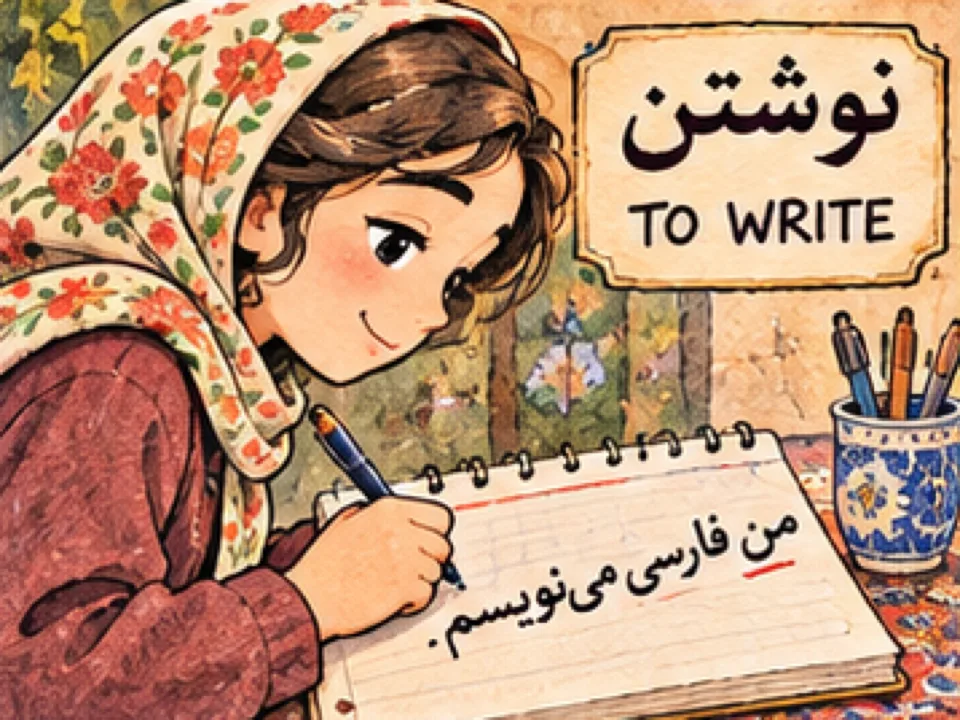
نِوِشتَن
Watch and listen to Reza Nazari explain this verb. More in the free 200 Persian Verbs video course.
Write
مُتَرادِفِ فارسی: تَحریر کَردَن
مُتَضادِ فارسی: پاک کَردَن
:صَرف
گُذَشتِه: نِوِشتَم – نِوِشتی – نِوِشت – نِوِشتیم – نِوِشتید – نِوِشتَند
حال: می نِویسَم – می نِویسی – می نِویسَد – می نِویسیم – می نِویسید – می نِویسنَد
:مِثال
.مَن تَمامِ تَکالیفِ مَدرِسِه را نِوِشتَم
.او بَرایِ مادَرَش نامِه می نِویسَد
.آن نویسَندِه یِک رُمانِ جَدید می نِویسَد
نوشتن (neveshtan) means "to write" in Persian. See its two different stems, full conjugation, new examples, common phrases and a quiz.
How to use نوشتن (neveshtan)
نوشتن is a simple, transitive verb meaning "to write". Its two stems look quite different, and that is the main challenge: the past stem is نوشت (nevesht), but the present stem is نویس (nevis). So "I wrote" is نوشتم (neveshtam), while "I write" is مینویسم (minevisam). The present stem also gives نویسنده (nevisande, "writer").
The verb is neutral and used in every register, from school homework to literature. A definite object takes را: نامه را نوشتم ("I wrote the letter"). The person you write to takes به or برای: برای مادرم نوشتم ("I wrote to my mother"). For typing on a keyboard people also say تایپ کردن (tâyp kardan), and a literary synonym is نگاشتن (negâshtan).
Verb stems
| Infinitive | نوشتن | /neveshtan/ | to write |
|---|---|---|---|
| Past stem | نوشت | /nevesht/ | used for past tenses |
| Present stem | نویس | /nevis/ | used for present, subjunctive and imperative |
Conjugation of نوشتن
| Person | Simple past | Present | Future | Subjunctive |
|---|---|---|---|---|
| من I |
نوشتم /neveshtam/ |
مینویسم /minevisam/ |
خواهم نوشت /khâham nevesht/ |
بنویسم /benevisam/ |
| تو you (sg.) |
نوشتی /neveshti/ |
مینویسی /minevisi/ |
خواهی نوشت /khâhi nevesht/ |
بنویسی /benevisi/ |
| او he / she |
نوشت /nevesht/ |
مینویسد /minevisad/ |
خواهد نوشت /khâhad nevesht/ |
بنویسد /benevisad/ |
| ما we |
نوشتیم /neveshtim/ |
مینویسیم /minevisim/ |
خواهیم نوشت /khâhim nevesht/ |
بنویسیم /benevisim/ |
| شما you (pl./polite) |
نوشتید /neveshtid/ |
مینویسید /minevisid/ |
خواهید نوشت /khâhid nevesht/ |
بنویسید /benevisid/ |
| آنها they |
نوشتند /neveshtand/ |
مینویسند /minevisand/ |
خواهند نوشت /khâhand nevesht/ |
بنویسند /benevisand/ |
Negative and imperative
| Persian | Pronunciation | English |
|---|---|---|
| ننوشتم | /nanveshtam/ | I did not write |
| نمینویسم | /neminevisam/ | I do not write / I am not writing |
| بنویس! | /benevis!/ | Write! (to one person) |
| بنویسید! | /benevisid!/ | Write! (to several people, or politely) |
| ننویس! | /nanevis!/ | Don't write! |
The examples above, translated
| Persian | Pronunciation | English |
|---|---|---|
| من تمام تکالیف مدرسه را نوشتم. | /man tamâm-e takâlif-e madrese râ neveshtam/ | I wrote out all my school homework. |
| او برای مادرش نامه مینویسد. | /u barâ-ye mâdarash nâme minevisad/ | She is writing a letter to her mother. |
| آن نویسنده یک رمان جدید مینویسد. | /ân nevisande yek român-e jadid minevisad/ | That writer is writing a new novel. |
More example sentences
| Persian | Pronunciation | English |
|---|---|---|
| اسمت را اینجا بنویس. | /esmat râ injâ benevis/ | Write your name here. |
| دیروز یک ایمیل به استادم نوشتم. | /diruz yek imeyl be ostâdam neveshtam/ | Yesterday I wrote an email to my professor. |
| بچهها با مداد مینویسند. | /bachche-hâ bâ medâd minevisand/ | The children write with pencils. |
| فردا گزارش را خواهم نوشت. | /fardâ gozâresh râ khâham nevesht/ | I will write the report tomorrow. |
Common phrases
| Persian | Pronunciation | English |
|---|---|---|
| نامه نوشتن | /nâme neveshtan/ | to write a letter |
| نویسنده | /nevisande/ | writer, author |
| نوشته | /neveshte/ | text, piece of writing |
| یادداشت نوشتن | /yâddâsht neveshtan/ | to write a note, to take notes |
In spoken Persian
In casual speech the present stem is often squeezed: مینویسم sounds like minvisam, and مینویسه (minvise) replaces مینویسد (minevisad). The imperative بنویس is usually pronounced benvis, and بنویسین (benvisin) is the spoken plural. The negative past ننوشتم is said nanveshtam.
Watch out for
- Don't build the present tense from the past stem. مینوشتم (mineveshtam) is the past progressive, "I was writing"; the present is مینویسم (minevisam), "I write".
- Note: the source page puts a vowel mark in the wrong place in مینویسند; the correct pronunciation is minevisand.
Practice
-
Translate into Persian: "I am writing a letter."
Show answer
man nâme minevisam. من نامه مینویسم.
-
What is the subjunctive form for "we" (that we write)?
Show answer
benevisim بنویسیم
-
What does this sentence mean? او اسمش را ننوشت.
Show answer
He did not write his name.
Related verbs in this course
- خواندن (khândan): to read; to sing; to study
- پاک کردن (pâk kardan): to clean, to wipe, to erase, to delete
This is lesson 200 of 200 Most Common Persian Verbs. For the sounds used in the pronunciation guide, see Persian pronunciation.

Take this lesson further

Study with the book
200 Absolutely Essential Persian Verbs
This free lesson is part of 200 Most Common Persian Verbs. The book puts the whole series in one printable PDF you can study offline.
Serious about Persian? Get all 30 of our Persian learning books for $199.99 (55% less than buying them one by one).
Free Persian Starter Kit (PDF)
The Persian alphabet chart and the 101 most common Persian words with pronunciation, in one printable PDF. You also get a one-time 15% code for any of our books.
We will email you new lessons and book news from Learn Persian Online. Unsubscribe any time.Free: 100 Core Persian Words + 20 Survival Phrases
Get the 14-page printable Starter Pack (all 32 letters, a 7-day reading plan, 100 core words and 20 survival phrases) and a short 5-email course. Free.
Practise with free Persian games