200 Most Common Persian Verbs
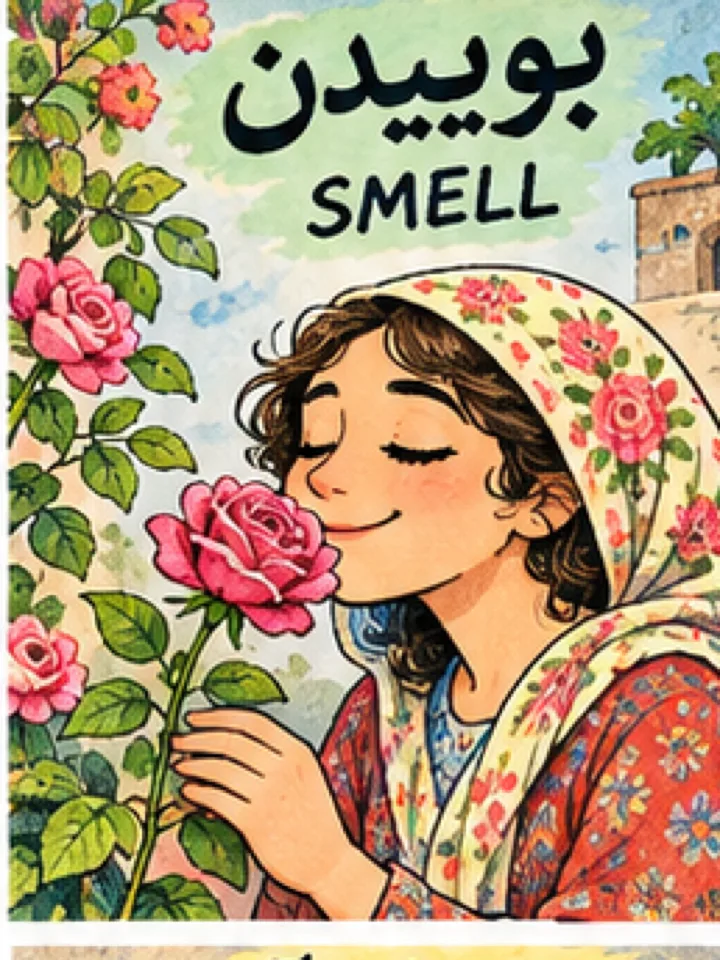
بوییدن
Watch and listen to Reza Nazari explain this verb. More in the free 200 Persian Verbs video course.
Smell
مُتَرادِفِ فارسی: اِستِشمام کَردَن
-:مُتَضادِ فارسی
:صَرف
گُذَشتِه: بوییدَم – بوییدی – بویید – بوییدیم – بوییدید – بوییدَند
حال: می بویَم – می بویی – می بویَد – می بوییم – می بویید – می بویَند
:مِثال
.مَن گُل را بوییدَم
.او آن عَطر را بویید
بوییدن (buyidan) means "to smell" or "to sniff" something in Persian. Learn its stems, conjugation, examples, common phrases and a quiz.
How to use بوییدن (buyidan)
بوییدن is a simple transitive verb meaning "to smell" something on purpose, to sniff it: گل را بویید, "she smelled the flower". It comes from the noun بو (bu, "smell"), and its present stem is بوی (buy), so the present is میبویم (mibuyam). It is not used for something giving off a smell; for that Persian says بو دادن: این اتاق بوی گل میدهد, "this room smells of flowers".
بوییدن is literary and formal. In everyday Persian the normal verb is بو کردن (bu kardan): این را بو کن, "smell this". To say that you can smell something, people use بوی … میآید: بوی نان میآید, "I can smell bread", literally "the smell of bread is coming". The adjectives خوشبو (khoshbu, "fragrant") and بدبو (badbu, "smelly") are very common.
Verb stems
| Infinitive | بوییدن | /buyidan/ | to smell (something), to sniff |
|---|---|---|---|
| Past stem | بویید | /buyid/ | used for past tenses |
| Present stem | بوی | /buy/ | used for present, subjunctive and imperative |
Conjugation of بوییدن
| Person | Simple past | Present | Future | Subjunctive |
|---|---|---|---|---|
| من I |
بوییدم /buyidam/ |
میبویم /mibuyam/ |
خواهم بویید /khâham buyid/ |
ببویم /bebuyam/ |
| تو you (sg.) |
بوییدی /buyidi/ |
میبویی /mibuyi/ |
خواهی بویید /khâhi buyid/ |
ببویی /bebuyi/ |
| او he / she |
بویید /buyid/ |
میبوید /mibuyad/ |
خواهد بویید /khâhad buyid/ |
ببوید /bebuyad/ |
| ما we |
بوییدیم /buyidim/ |
میبوییم /mibuyim/ |
خواهیم بویید /khâhim buyid/ |
ببوییم /bebuyim/ |
| شما you (pl./polite) |
بوییدید /buyidid/ |
میبویید /mibuyid/ |
خواهید بویید /khâhid buyid/ |
ببویید /bebuyid/ |
| آنها they |
بوییدند /buyidand/ |
میبویند /mibuyand/ |
خواهند بویید /khâhand buyid/ |
ببویند /bebuyand/ |
Negative and imperative
| Persian | Pronunciation | English |
|---|---|---|
| نبوییدم | /nabuyidam/ | I did not smell (it) |
| نمیبویم | /nemibuyam/ | I do not smell (it) / I am not smelling (it) |
| ببوی! | /bebuy!/ | Smell (it)! (to one person; literary) |
| ببویید! | /bebuyid!/ | Smell (it)! (to several people, or politely; literary) |
| نبوی! | /nabuy!/ | Don't smell (it)! (literary) |
The examples above, translated
| Persian | Pronunciation | English |
|---|---|---|
| من گل را بوییدم. | /man gol râ buyidam/ | I smelled the flower. |
| او آن عطر را بویید. | /u ân atr râ buyid/ | She smelled that perfume. |
| بوییدن گل لذتبخش است. | /buyidan-e gol lezzatbakhsh ast/ | Smelling flowers is pleasant. |
More example sentences
| Persian | Pronunciation | English |
|---|---|---|
| سگ زمین را بویید و رفت. | /sag zamin râ buyid va raft/ | The dog sniffed the ground and walked off. |
| او گل سرخ را آرام بویید. | /u gol-e sorkh râ ârâm buyid/ | She gently smelled the red rose. |
| مادربزرگ نان تازه را بویید و لبخند زد. | /mâdarbozorg nân-e tâze râ buyid va labkhand zad/ | Grandma smelled the fresh bread and smiled. |
| بچهها گلهای باغ را میبوییدند. | /bachche-hâ gol-hâ-ye bâgh râ mibuyidand/ | The children were smelling the flowers in the garden. |
Common phrases
| Persian | Pronunciation | English |
|---|---|---|
| بو کردن | /bu kardan/ | to smell, to sniff (everyday) |
| بو دادن | /bu dâdan/ | to give off a smell; to roast (nuts, seeds) |
| خوشبو | /khoshbu/ | fragrant |
| بدبو | /badbu/ | smelly |
In spoken Persian
بوییدن is almost never heard in Tehran speech. People say بو کردن: بوش کن (bush kon), "smell it", داره بو میکنه (dâre bu mikone), "he is sniffing it". Be careful with بو میده (bu mide), which means "it smells (bad)".
Watch out for
- بوییدن means you smell something on purpose. For a smell that something gives off, use بو دادن: این غذا بوی خوبی میدهد, "this food smells good".
- In conversation, use بو کردن instead of بوییدن: بو کن! (bu kon!), "smell it!". The imperatives ببوی and نبوی in the table are correct but sound bookish.
Practice
-
Translate into Persian: "I smelled the rose."
Show answer
man gol-e sorkh râ buyidam. من گل سرخ را بوییدم.
-
What does this sentence mean? بوی غذا میآید.
Show answer
I can smell food. (Literally: the smell of food is coming.)
-
Give the present tense of بوییدن for "she".
Show answer
mibuyad میبوید
This is lesson 39 of 200 Most Common Persian Verbs. For the sounds used in the pronunciation guide, see Persian pronunciation.
.بوییدَن گُل لَذَتبَخش اَست


Take this lesson further

Study with the book
200 Absolutely Essential Persian Verbs
This free lesson is part of 200 Most Common Persian Verbs. The book puts the whole series in one printable PDF you can study offline.
Serious about Persian? Get all 30 of our Persian learning books for $199.99 (55% less than buying them one by one).
Free Persian Starter Kit (PDF)
The Persian alphabet chart and the 101 most common Persian words with pronunciation, in one printable PDF. You also get a one-time 15% code for any of our books.
We will email you new lessons and book news from Learn Persian Online. Unsubscribe any time.Free: 100 Core Persian Words + 20 Survival Phrases
Get the 14-page printable Starter Pack (all 32 letters, a 7-day reading plan, 100 core words and 20 survival phrases) and a short 5-email course. Free.
Practise with free Persian games