200 Most Common Persian Verbs
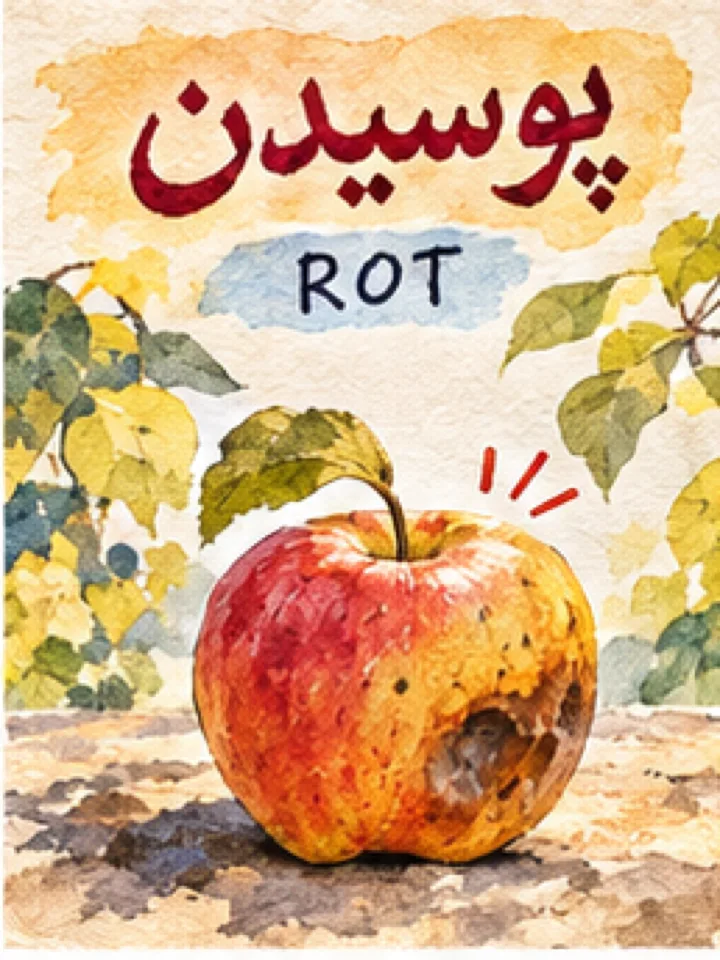
پوسیدَن
Watch and listen to Reza Nazari explain this verb. More in the free 200 Persian Verbs video course.
Putrefy – Decay
مُتَرادِفِ فارسی: خَراب شُدَن – پَژمُردِه شُدَن
مُتَضادِ فارسی: سالِم ماندَن
:صَرف
گُذَشتِه: پوسیدَم – پوسیدی – پوسید – پوسیدیم – پوسیدید – پوسیدَند
حال: می پوسَم – می پوسی – می پوسَد – می پوسیم – می پوسید – می پوسَند
:مِثال
.میوِه ها پوسیدَند
.دُکتُر بِه مَن گُفت دَندانَت پوسیدِه اَست
.ریشِه دِرَخت پوسیدِه اَست
پوسیدن (pusidan) means "to rot" or "to decay" in Persian. Learn its stems, full conjugation, examples, common phrases and a short quiz.
How to use پوسیدن (pusidan)
پوسیدن is a simple intransitive verb meaning "to rot" or "to decay". It is used for wood, fruit, bones, teeth and other things that slowly break down: چوب در آب پوسید, "the wood rotted in the water". Its present stem is regular, پوس (pus). The past participle پوسیده (puside) is a common adjective: دندان پوسیده (dandân-e puside), "a decayed tooth".
The verb is neutral. With people as subject it is figurative and a little dramatic: دارم اینجا میپوسم (dâram injâ mipusam), "I'm rotting away here", said about boredom or a dead-end place. For food that has gone bad, everyday Persian prefers خراب شدن (kharâb shodan) or گندیدن (gandidan, "to rot and smell"). Teeth also have their own phrase: دندانم کرم خورده, "my tooth has a cavity".
Verb stems
| Infinitive | پوسیدن | /pusidan/ | to rot, to decay |
|---|---|---|---|
| Past stem | پوسید | /pusid/ | used for past tenses |
| Present stem | پوس | /pus/ | used for present, subjunctive and imperative |
Conjugation of پوسیدن
| Person | Simple past | Present | Future | Subjunctive |
|---|---|---|---|---|
| من I |
پوسیدم /pusidam/ |
میپوسم /mipusam/ |
خواهم پوسید /khâham pusid/ |
بپوسم /bepusam/ |
| تو you (sg.) |
پوسیدی /pusidi/ |
میپوسی /mipusi/ |
خواهی پوسید /khâhi pusid/ |
بپوسی /bepusi/ |
| او he / she |
پوسید /pusid/ |
میپوسد /mipusad/ |
خواهد پوسید /khâhad pusid/ |
بپوسد /bepusad/ |
| ما we |
پوسیدیم /pusidim/ |
میپوسیم /mipusim/ |
خواهیم پوسید /khâhim pusid/ |
بپوسیم /bepusim/ |
| شما you (pl./polite) |
پوسیدید /pusidid/ |
میپوسید /mipusid/ |
خواهید پوسید /khâhid pusid/ |
بپوسید /bepusid/ |
| آنها they |
پوسیدند /pusidand/ |
میپوسند /mipusand/ |
خواهند پوسید /khâhand pusid/ |
بپوسند /bepusand/ |
Negative and imperative
| Persian | Pronunciation | English |
|---|---|---|
| نپوسیدم | /napusidam/ | I did not rot (rare; usually "it did not rot") |
| نمیپوسم | /nemipusam/ | I do not rot (rare) |
| بپوس! | /bepus!/ | Rot! (grammatical only, not used) |
| بپوسید! | /bepusid!/ | Rot! (grammatical only, not used) |
| نپوس! | /napus!/ | Don't rot! (grammatical only, not used) |
The examples above, translated
| Persian | Pronunciation | English |
|---|---|---|
| میوهها پوسیدند. | /mive-hâ pusidand/ | The fruit rotted. |
| دکتر به من گفت دندانت پوسیده است. | /doktor be man goft dandânat puside ast/ | The doctor told me my tooth was decayed. |
| ریشهی درخت پوسیده است. | /rishe-ye derakht puside ast/ | The tree's roots have rotted. |
More example sentences
| Persian | Pronunciation | English |
|---|---|---|
| در باران، این در چوبی کمکم پوسید. | /dar bârân, in dar-e chubi kamkam pusid/ | In the rain, this wooden door slowly rotted. |
| اگر سیبها را در جای گرم بگذاری، میپوسند. | /agar sib-hâ râ dar jâ-ye garm begozâri, mipusand/ | If you leave the apples in a warm place, they will rot. |
| این نردبان پوسیده است؛ از آن بالا نرو. | /in nardebân puside ast; az ân bâlâ naro/ | This ladder is rotten; don't climb it. |
| اگر مسواک نزنی، دندانهایت میپوسند. | /agar mesvâk nazani, dandân-hâyat mipusand/ | If you don't brush, your teeth will decay. |
Common phrases
| Persian | Pronunciation | English |
|---|---|---|
| پوسیده | /puside/ | rotten, decayed; outdated (figurative) |
| پوسیدگی دندان | /pusidegi-ye dandân/ | tooth decay |
| افکار پوسیده | /afkâr-e puside/ | outdated ideas |
| گندیدن | /gandidan/ | to rot, to go putrid |
In spoken Persian
In speech: میپوسه (mipuse), پوسیده (puside). Young people use the verb figuratively for boredom: تو خونه پوسیدم (tu khune pusidam), "I've been rotting at home", meaning "I'm so bored of staying in".
Watch out for
- پوسیدن is intransitive, so it has no object and no را. To say that something made the wood rot, use باعث پوسیدن شد (bâ'es-e pusidan shod), "it caused it to rot".
- The imperative forms (بپوس, نپوس) are grammatical but are not used in real speech, since nobody is told to rot. The first and second person forms are mostly figurative.
Practice
-
Translate into Persian: "The apples rotted."
Show answer
sib-hâ pusidand. سیبها پوسیدند.
-
What does this sentence mean? این چوب پوسیده است.
Show answer
This wood is rotten.
-
Give the present tense of پوسیدن for "they".
Show answer
mipusand میپوسند
This is lesson 52 of 200 Most Common Persian Verbs. For the sounds used in the pronunciation guide, see Persian pronunciation.


Take this lesson further

Study with the book
200 Absolutely Essential Persian Verbs
This free lesson is part of 200 Most Common Persian Verbs. The book puts the whole series in one printable PDF you can study offline.
Serious about Persian? Get all 30 of our Persian learning books for $199.99 (55% less than buying them one by one).
Free Persian Starter Kit (PDF)
The Persian alphabet chart and the 101 most common Persian words with pronunciation, in one printable PDF. You also get a one-time 15% code for any of our books.
We will email you new lessons and book news from Learn Persian Online. Unsubscribe any time.Free: 100 Core Persian Words + 20 Survival Phrases
Get the 14-page printable Starter Pack (all 32 letters, a 7-day reading plan, 100 core words and 20 survival phrases) and a short 5-email course. Free.
Practise with free Persian games