200 Most Common Persian Verbs
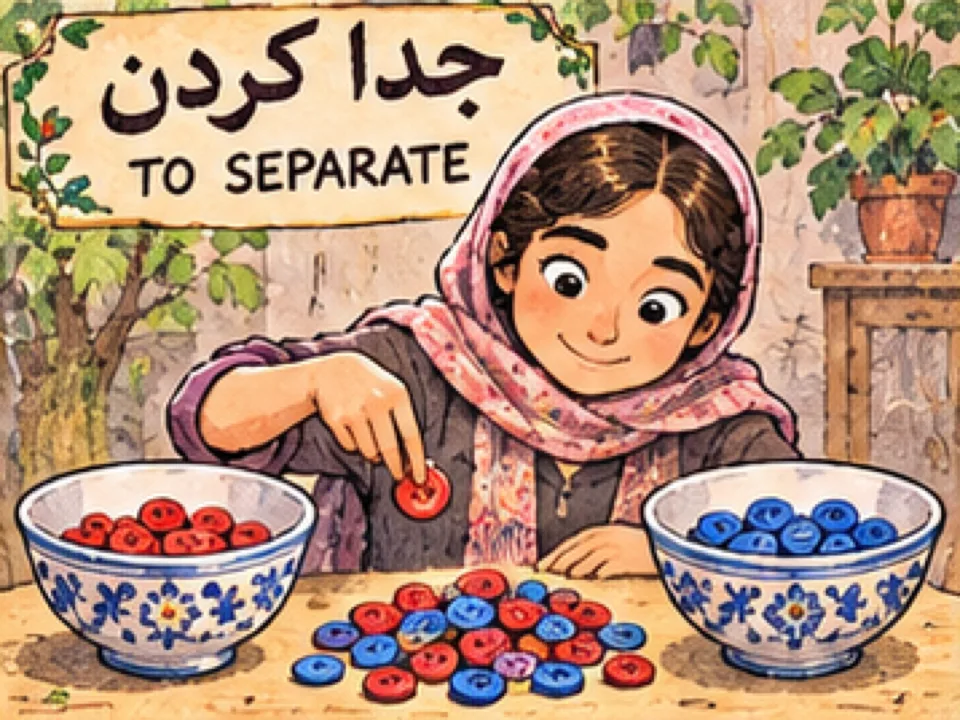
جُدا کَردَن
Watch and listen to Reza Nazari explain this verb. More in the free 200 Persian Verbs video course.
Separate – Divide
مُتَرادِفِ فارسی: سَوا کَردَن – تَقسیم کَردَن
مُتَضادِ فارسی: وَصل کَردَن
:صَرف
گُذَشتِه: جُدا کَردَم – جُدا کَردی – جُدا کَرد – جُدا کَردیم – جُدا کَردید – جُدا کَردَند
حال: جُدا می کُنَم – جُدا می کُنی – جُدا می کُنَد – جُدا می کُنیم – جُدا می کُنید – جُدا می کُنَند
:مِثال
.مَن میوِه هایِ خَراب وَ خوب را اَز هَم جُدا کَردَم
.او سَهمِ مَن را اَز سود جُدا کَرد
.سَرنِوِشت آن دو نَفَر را اَز هَم جُدا کَرد
جدا کردن (jodâ kardan) means "to separate" in Persian. Learn its stems, full conjugation, examples, common phrases and a short quiz.
How to use جدا کردن (jodâ kardan)
جدا کردن is a compound verb: the adjective جدا (jodâ, "separate, apart") plus کردن. It is transitive. "From" is از: زرده را از سفیده جدا کن, "separate the yolk from the white," and two things are separated از هم (az ham), "from each other." The intransitive partner is جدا شدن (jodâ shodan), "to come apart, to separate."
The verb is everyday: sorting laundry or recycling, pulling apart two kids who are fighting, setting aside someone's share. جدا شدن is also the usual way to say a couple broke up or divorced: از هم جدا شدند. A colloquial synonym for sorting is سوا کردن (savâ kardan), and a formal one for dividing is تقسیم کردن (taghsim kardan). The opposite is وصل کردن (vasl kardan), "to connect."
Verb stems
| Infinitive | جدا کردن | /jodâ kardan/ | to separate, to divide, to detach |
|---|---|---|---|
| Past stem | جدا کرد | /jodâ kard/ | used for past tenses |
| Present stem | جدا کن | /jodâ kon/ | used for present, subjunctive and imperative |
Conjugation of جدا کردن
| Person | Simple past | Present | Future | Subjunctive |
|---|---|---|---|---|
| من I |
جدا کردم /jodâ kardam/ |
جدا میکنم /jodâ mikonam/ |
جدا خواهم کرد /jodâ khâham kard/ |
جدا کنم /jodâ konam/ |
| تو you (sg.) |
جدا کردی /jodâ kardi/ |
جدا میکنی /jodâ mikoni/ |
جدا خواهی کرد /jodâ khâhi kard/ |
جدا کنی /jodâ koni/ |
| او he / she |
جدا کرد /jodâ kard/ |
جدا میکند /jodâ mikonad/ |
جدا خواهد کرد /jodâ khâhad kard/ |
جدا کند /jodâ konad/ |
| ما we |
جدا کردیم /jodâ kardim/ |
جدا میکنیم /jodâ mikonim/ |
جدا خواهیم کرد /jodâ khâhim kard/ |
جدا کنیم /jodâ konim/ |
| شما you (pl./polite) |
جدا کردید /jodâ kardid/ |
جدا میکنید /jodâ mikonid/ |
جدا خواهید کرد /jodâ khâhid kard/ |
جدا کنید /jodâ konid/ |
| آنها they |
جدا کردند /jodâ kardand/ |
جدا میکنند /jodâ mikonand/ |
جدا خواهند کرد /jodâ khâhand kard/ |
جدا کنند /jodâ konand/ |
Negative and imperative
| Persian | Pronunciation | English |
|---|---|---|
| جدا نکردم | /jodâ nakardam/ | I did not separate |
| جدا نمیکنم | /jodâ nemikonam/ | I do not separate / I am not separating |
| جدا کن! | /jodâ kon!/ | Separate! (to one person) |
| جدا کنید! | /jodâ konid!/ | Separate! (to several people, or politely) |
| جدا نکن! | /jodâ nakon!/ | Don't separate! |
The examples above, translated
| Persian | Pronunciation | English |
|---|---|---|
| من میوههای خراب و خوب را از هم جدا کردم. | /man mive-hâ-ye kharâb va khub râ az ham jodâ kardam./ | I separated the bad fruit from the good. |
| او سهم من را از سود جدا کرد. | /u sahm-e man râ az sud jodâ kard./ | He set aside my share of the profit. |
| سرنوشت آن دو نفر را از هم جدا کرد. | /sarnevesht ân do nafar râ az ham jodâ kard./ | Fate separated those two people. |
More example sentences
| Persian | Pronunciation | English |
|---|---|---|
| زبالههای خشک را از زبالههای تر جدا کنید. | /zobâle-hâ-ye khoshk râ az zobâle-hâ-ye tar jodâ konid./ | Separate the dry waste from the wet waste. |
| معلم دو دانشآموز را از هم جدا کرد. | /mo'allem do dâneshâmuz râ az ham jodâ kard./ | The teacher separated the two students. |
| زرده را از سفیدهی تخممرغ جدا کن. | /zarde râ az sefide-ye tokhm-e morgh jodâ kon./ | Separate the yolk from the egg white. |
| آنها پارسال از هم جدا شدند. | /ânhâ pârsâl az ham jodâ shodand./ | They split up last year. |
Common phrases
| Persian | Pronunciation | English |
|---|---|---|
| جدا شدن | /jodâ shodan/ | to separate; to break up, to divorce |
| جداگانه | /jodâgâne/ | separately |
| جدایی | /jodâyi/ | separation |
| سوا کردن | /savâ kardan/ | to sort out, to pick out (colloquial) |
In spoken Persian
In speech the endings shorten: جدا میکنم (jodâ mikonam), جدا میکنه (jodâ mikone), جدا میکنن (jodâ mikonan). For sorting, سوا کردن is common: سیبای خوبو سوا کن (sibâ-ye khubo savâ kon), "Pick out the good apples."
Watch out for
- Use از for "from" and از هم for "from each other." جدا کردن has an object; جدا شدن does not: دکمه جدا شد, "the button came off."
Practice
-
Translate into Persian: "I separated the white clothes."
Show answer
man lebâs-hâ-ye sefid râ jodâ kardam. من لباسهای سفید را جدا کردم.
-
Give the imperative for one person ("Separate!").
Show answer
jodâ kon! جدا کن!
-
What does this sentence mean? بچهها را از هم جدا نکن.
Show answer
Don't separate the children.
Related verbs in this course
This is lesson 75 of 200 Most Common Persian Verbs. For the sounds used in the pronunciation guide, see Persian pronunciation.


Take this lesson further

Study with the book
200 Absolutely Essential Persian Verbs
This free lesson is part of 200 Most Common Persian Verbs. The book puts the whole series in one printable PDF you can study offline.
Serious about Persian? Get all 30 of our Persian learning books for $199.99 (55% less than buying them one by one).
Free Persian Starter Kit (PDF)
The Persian alphabet chart and the 101 most common Persian words with pronunciation, in one printable PDF. You also get a one-time 15% code for any of our books.
We will email you new lessons and book news from Learn Persian Online. Unsubscribe any time.Free: 100 Core Persian Words + 20 Survival Phrases
Get the 14-page printable Starter Pack (all 32 letters, a 7-day reading plan, 100 core words and 20 survival phrases) and a short 5-email course. Free.
Practise with free Persian games