200 Most Common Persian Verbs
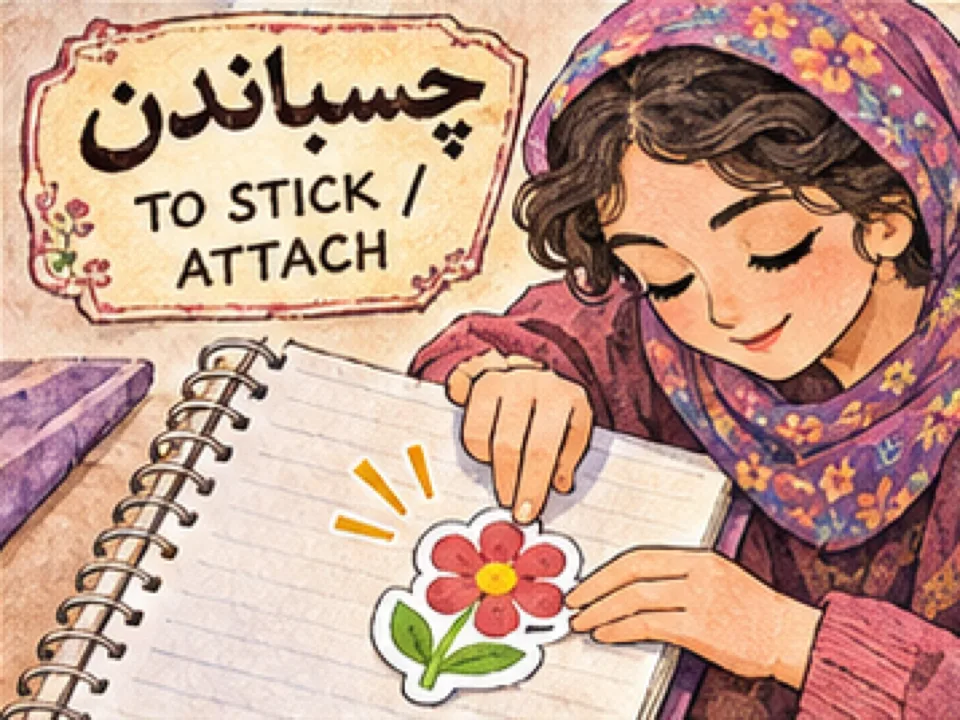
چَسباندَن
Watch and listen to Reza Nazari explain this verb. More in the free 200 Persian Verbs video course.
Stick- Attach
مُتَرادِفِ فارسی: مُتَصِل کَردَن
مُتَضادِ فارسی: جُدا کَردَن
:صَرف
گُذَشتِه: چَسباندَم – چَسباندی – چَسباند – چَسباندیم – چَسباندید – چَسباندَند
حال: می چَسبانَم – می چَسبانی – می چَسبانَد – می چَسبانیم – می چَسبانید
می چَسبانَند
:مِثال
.او کاغَذ را بِه دیوار چَسبانید
.مَن بَرگِه هایِ پارِه شُدِه را بِهَم چَسباندَم
چسباندن (chasbândan) means "to stick, to glue" in Persian. Learn its stems, full conjugation, examples, common phrases and a short quiz.
How to use چسباندن (chasbândan)
چسباندن is a simple transitive verb, the causative of چسبیدن (chasbidan, "to stick"). It means making something stick: you stick, glue or attach an object to something else. Its past stem is چسباند (chasbând) and its present stem is چسبان (chasbân). The surface follows به or روی: عکس را به دیوار چسباندم, "I stuck the photo on the wall."
The verb is everyday: stamps, labels, posters, notes on the fridge, pieces glued together. An older form, چسبانیدن (chasbânidan), is still seen in writing, which is why the page's first example has چسبانید (chasbânid), "he stuck." Keep the pair apart: چسبیدن has no object (something sticks), چسباندن has one (you stick something). The same pattern appears in جوشیدن / جوشاندن.
Verb stems
| Infinitive | چسباندن | /chasbândan/ | to stick, to attach, to glue |
|---|---|---|---|
| Past stem | چسباند | /chasbând/ | used for past tenses |
| Present stem | چسبان | /chasbân/ | used for present, subjunctive and imperative |
Conjugation of چسباندن
| Person | Simple past | Present | Future | Subjunctive |
|---|---|---|---|---|
| من I |
چسباندم /chasbândam/ |
میچسبانم /michasbânam/ |
خواهم چسباند /khâham chasbând/ |
بچسبانم /bechasbânam/ |
| تو you (sg.) |
چسباندی /chasbândi/ |
میچسبانی /michasbâni/ |
خواهی چسباند /khâhi chasbând/ |
بچسبانی /bechasbâni/ |
| او he / she |
چسباند /chasbând/ |
میچسباند /michasbânad/ |
خواهد چسباند /khâhad chasbând/ |
بچسباند /bechasbânad/ |
| ما we |
چسباندیم /chasbândim/ |
میچسبانیم /michasbânim/ |
خواهیم چسباند /khâhim chasbând/ |
بچسبانیم /bechasbânim/ |
| شما you (pl./polite) |
چسباندید /chasbândid/ |
میچسبانید /michasbânid/ |
خواهید چسباند /khâhid chasbând/ |
بچسبانید /bechasbânid/ |
| آنها they |
چسباندند /chasbândand/ |
میچسبانند /michasbânand/ |
خواهند چسباند /khâhand chasbând/ |
بچسبانند /bechasbânand/ |
Negative and imperative
| Persian | Pronunciation | English |
|---|---|---|
| نچسباندم | /nachasbândam/ | I did not stick it |
| نمیچسبانم | /nemichasbânam/ | I do not stick it / I am not sticking it |
| بچسبان! | /bechasbân!/ | Stick it! (to one person) |
| بچسبانید! | /bechasbânid!/ | Stick it! (to several people, or politely) |
| نچسبان! | /nachasbân!/ | Don't stick it! |
The examples above, translated
| Persian | Pronunciation | English |
|---|---|---|
| او کاغذ را به دیوار چسبانید. | /u kâghaz râ be divâr chasbânid./ | He stuck the paper on the wall. |
| من برگههای پاره شده را بهم چسباندم. | /man barge-hâ-ye pâre shode râ beham chasbândam./ | I stuck the torn pages together. |
| ما تبلیغات را روی تابلو چسباندیم. | /mâ tablighât râ ru-ye tâblo chasbândim./ | We stuck the ads on the board. |
More example sentences
| Persian | Pronunciation | English |
|---|---|---|
| تمبر را روی پاکت بچسبان. | /tambr râ ru-ye pâkat bechasbân./ | Stick the stamp on the envelope. |
| بچهها عکسها را در دفترشان میچسبانند. | /bachche-hâ aks-hâ râ dar daftarshân michasbânand./ | The kids glue the pictures into their notebooks. |
| او یک یادداشت روی یخچال چسباند. | /u yek yâddâsht ru-ye yakhchâl chasbând./ | She stuck a note on the fridge. |
| این دو تکه را با چسب به هم بچسبانید. | /in do tekke râ bâ chasb be ham bechasbânid./ | Glue these two pieces together. |
Common phrases
| Persian | Pronunciation | English |
|---|---|---|
| به هم چسباندن | /be ham chasbândan/ | to stick together |
| برچسب | /barchasb/ | label, sticker |
| چسب زخم | /chasb-e zakhm/ | adhesive bandage |
| چسب نواری | /chasb-e navâri/ | adhesive tape |
In spoken Persian
In Tehran speech the â before n turns into u: میچسبونم (michasbunam), میچسبونه (michasbune), میچسبونن (michasbunan), and the imperative is بچسبون (bechasbun), "Stick it."
Watch out for
- چسباندن needs an object (you stick something); چسبیدن has none (something sticks).
- Note: the page's third example has a typo, چساندیم; the correct form is چسباندیم (chasbândim), "we stuck."
Practice
-
Translate into Persian: "I stuck the photo on the wall."
Show answer
man aks râ be divâr chasbândam. من عکس را به دیوار چسباندم.
-
Give the imperative for several people or polite use.
Show answer
bechasbânid! بچسبانید!
-
What does this sentence mean? برچسب را روی جعبه نچسباند.
Show answer
He (or she) didn't stick the label on the box.
Related verbs in this course
- چسبیدن (chasbidan): to stick, to adhere, to cling
- جدا کردن (jodâ kardan): to separate, to divide, to detach
- کندن (kandan): to dig; to pull off, to tear off, to peel
This is lesson 86 of 200 Most Common Persian Verbs. For the sounds used in the pronunciation guide, see Persian pronunciation.
.ما تَبلیغات را رویِ تابلو چَساندیم


Take this lesson further

Study with the book
200 Absolutely Essential Persian Verbs
This free lesson is part of 200 Most Common Persian Verbs. The book puts the whole series in one printable PDF you can study offline.
Serious about Persian? Get all 30 of our Persian learning books for $199.99 (55% less than buying them one by one).
Free Persian Starter Kit (PDF)
The Persian alphabet chart and the 101 most common Persian words with pronunciation, in one printable PDF. You also get a one-time 15% code for any of our books.
We will email you new lessons and book news from Learn Persian Online. Unsubscribe any time.Free: 100 Core Persian Words + 20 Survival Phrases
Get the 14-page printable Starter Pack (all 32 letters, a 7-day reading plan, 100 core words and 20 survival phrases) and a short 5-email course. Free.
Practise with free Persian games