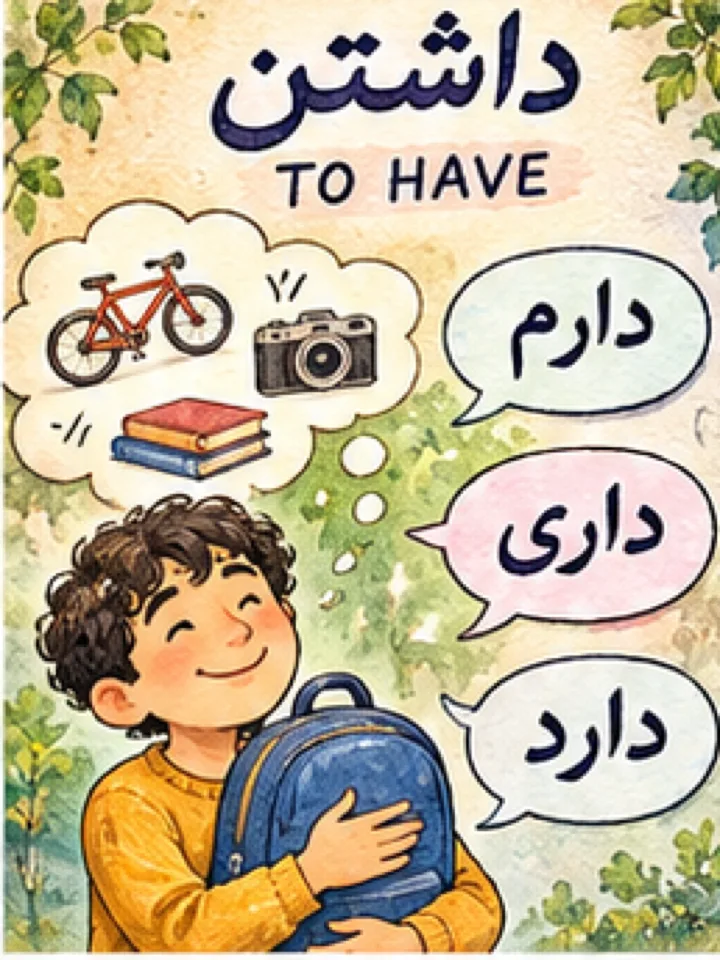
Conjugate dâshtan, “to have”, in the present tense, make it negative, use it for age and “
Simple Present of “to have”
دار + (م، ی، د، یم، ید، ند)
| دارَم | /dâram/ | I have | |
| داری | /dâri/ | You (singular)have | |
| دارَد | /dârad/ | She/he has | |
| داریم | /dârim/ | We have | |
| دارید | /dârid/ | You (Plural) have | |
| دارَند | /dârand/ | They have |
Negative format of “to have”:
Negative prefix “ نـ” change the positive verbs to negative.
نـ + دار + (م، ی، د، یم، ید، ند)
| ندارَم | /nadâram/ | I have not | |
| نداری | /nadâri/ | You (singular)have not | |
| ندارَد | /nadârad/ | She/he has not | |
| نداریم | /nadârim/ | We have not | |
| ندارید | /nadârid/ | You (Plural) have not | |
| ندارَند | /nadârand/ | They have not |
Conjugate dâshtan, "to have", in the present tense, make it negative, use it for age and "to like", and hear the spoken forms dâre and dârin.
The present tense of "to have": dâshtan
The verb داشتن (dâshtan), "to have", is one of the most useful verbs in Persian. Its present stem is دار (dâr), and you add the six present endings to it. Unlike almost every other verb, داشتن does not take the prefix می in the simple present when it means "to have": you say دارم (dâram), never میدارم.
Positive and negative forms
To make the verb negative, add نـ (na-) to the front and write it joined to the verb: ندارم (nadâram), "I don't have".
| Persian | Pronunciation | English |
|---|---|---|
| دارم / ندارم | /dâram / nadâram/ | I have / I don't have |
| داری / نداری | /dâri / nadâri/ | you have / you don't have |
| دارد / ندارد | /dârad / nadârad/ | he, she has / doesn't have |
| داریم / نداریم | /dârim / nadârim/ | we have / we don't have |
| دارید / ندارید | /dârid / nadârid/ | you (pl.) have / don't have |
| دارند / ندارند | /dârand / nadârand/ | they have / they don't have |
When to use dâshtan
- Possession: من ماشین دارم (man mâshin dâram), "I have a car".
- Family and relationships: دو خواهر دارم (do khâhar dâram), "I have two sisters".
- Having time, class, work or a plan: امروز کلاس داریم (emruz kelâs dârim), "We have class today".
- Age: بیست سال دارم (bist sâl dâram), "I am twenty years old".
- Compound verbs: دوست داشتن (dust dâshtan), "to like, to love": چای دوست دارم (chây dust dâram), "I like tea".
Asking questions
To turn a sentence into a yes/no question, keep the same word order and raise your voice at the end: برادر داری؟ (barâdar dâri?), "Do you have a brother?" In formal writing the sentence may start with آیا (âyâ): آیا شما برادر دارید؟. The short answers are بله، دارم (bale, dâram), "Yes, I do", and نه، ندارم (na, nadâram), "No, I don't". Notice that Persian repeats the verb in the short answer, where English uses "do".
Example sentences
| Persian | Pronunciation | English |
|---|---|---|
| من یک برادر دارم. | /man yek barâdar dâram./ | I have one brother. |
| تو ماشین داری؟ | /to mâshin dâri?/ | Do you have a car? |
| او دو بچه دارد. | /u do bache dârad./ | He / She has two children. |
| ما امروز کلاس داریم. | /mâ emruz kelâs dârim./ | We have class today. |
| شما وقت دارید؟ | /shomâ vaght dârid?/ | Do you have time? |
| آنها خانهی بزرگی دارند. | /ânhâ khâne-ye bozorgi dârand./ | They have a big house. |
| من پول ندارم. | /man pul nadâram./ | I don't have any money. |
| او بیست سال دارد. | /u bist sâl dârad./ | He / She is twenty years old. |
| من چای دوست دارم. | /man chây dust dâram./ | I like tea. |
| شما سؤال ندارید؟ | /shomâ so'âl nadârid?/ | Don't you have any questions? |
Dâshtan in spoken Persian
In Tehran speech the third person and plural endings change as in other verbs: داره (dâre), دارین (dârin), دارن (dâran). Spoken Persian also uses داشتن as a helper for actions happening right now: دارم میرم (dâram miram), "I'm going (right now)"; داره بارون میاد (dâre bârun miyâd), "It's raining". This helper is only used in positive sentences.
| Speaker | Persian | Pronunciation | English |
|---|---|---|---|
| Reza | فردا وقت داری؟ | /fardâ vaght dâri?/ | Do you have time tomorrow? |
| Mina | نه، فردا کلاس دارم. | /na, fardâ kelâs dâram./ | No, I have class tomorrow. |
| Reza | پس کی وقت داری؟ | /pas key vaght dâri?/ | So when do you have time? |
Common mistakes
- Adding می for possession: say دارم, not میدارم.
- Writing the negative as two words. نه دارم is wrong; write ندارم.
- Using داشتن for "have to". Obligation uses باید (bâyad): باید بروم (bâyad beravam), "I have to go".
- Mixing person and ending: او دارم is wrong; او دارد is correct.
Practice
-
How do you say "we have"?
Show answer
dârim داریم
-
Make negative: {{آنها پول دارند.}} آنها پول دارند.
Show answer
ânhâ pul nadârand. آنها پول ندارند.
-
Translate: "Do you (singular) have a pen?"
Show answer
to khodkâr dâri? تو خودکار داری؟
-
How would you say "I am thirty years old" using dâshtan?
Show answer
si sâl dâram. سی سال دارم.
-
What is the spoken form of {{دارد}}? دارد
Show answer
dâre داره
See all the lessons in this series on the Persian grammar page.


Take this lesson further

Study with the book
Farsi Grammar in Use: For Beginners
This free lesson is part of Persian grammar lessons. The book puts the whole series in one printable PDF you can study offline.
Serious about Persian? Get all 30 of our Persian learning books for $199.99 (0% less than buying them one by one).
Free Persian Starter Kit (PDF)
The Persian alphabet chart and the 101 most common Persian words with pronunciation, in one printable PDF. You also get a one-time 15% code for any of our books.
We will email you new lessons and book news from Learn Persian Online. Unsubscribe any time.Free: Persian Alphabet + 100 Core Words (PDF)
Get the 14-page printable Starter Pack (all 32 letters, a 7-day reading plan, 100 core words and 20 survival phrases) and a short 5-email course. Free.