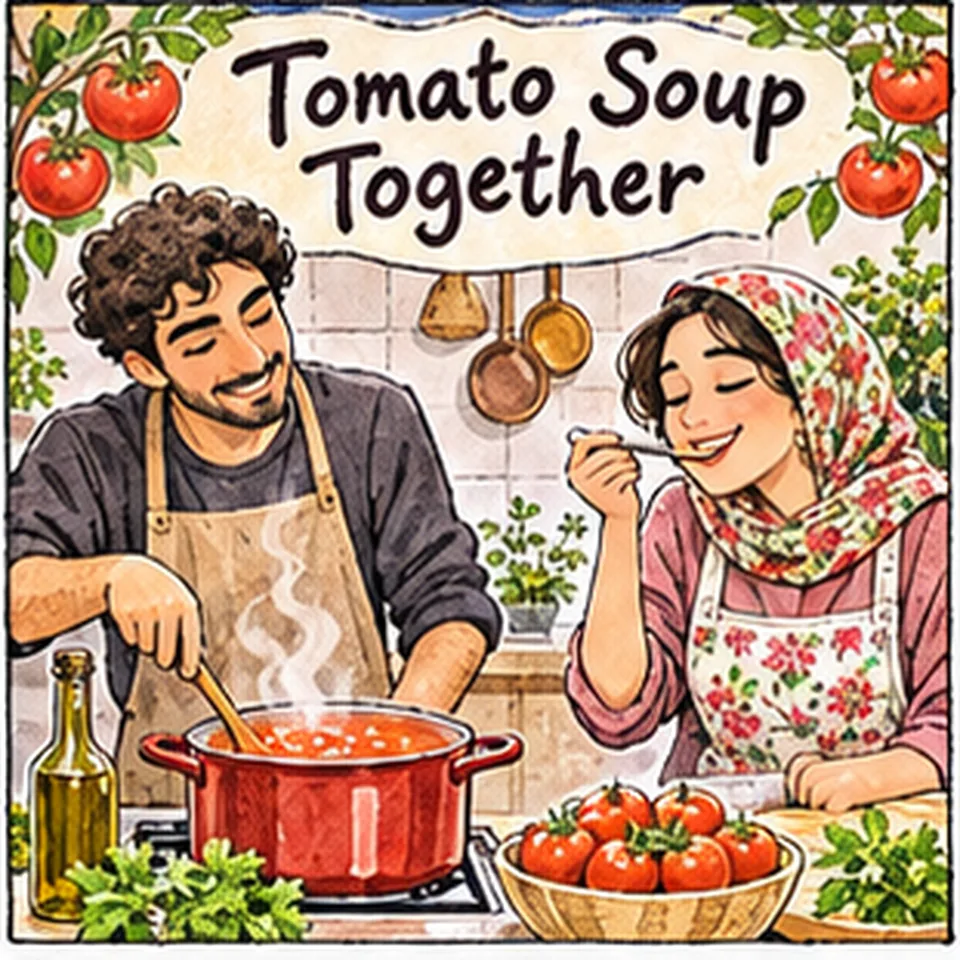
Talk about food and cooking in Persian: a kitchen dialogue on making tomato soup, ingredie
speaking
Conversation About food ⇒ گفتگو راجب غذا

| English | Pronunciation | Persian | ||
| Sara: | How about tomato soup? | /nazaret râjebe sope goje chiye?/ | نظرت راجب سوپ گوجه چیه؟ | :سارا |
| Puya: | Tomato soup? That’s so delicious. | /sope goje? Khili khoshmazas/ | سوپ گوجه؟ خیلی خوشمزس | :پویا |
| Sara: | Then Lets cook | /pas biyâ dorost konim/ | پس بیا درست کنیم | :سارا |
| Puya: | Ok, do we have any tomato? | /bâshe, goje dârim?/ | باشه، گوجه داریم؟ | :پویا |
| Sara: | Yes, we have, it is in refrigerator. | /âre dârim, tu yakhchâle/ | آره داریم، تو یخچاله | :سارا |
| Puya: | what about onions | /piyâz chi?/ | پیاز چی؟ | پویا |
| Sara: | I don’t know, let me check, I find it, it is in shelf. | /nemidonam, bezâr negâh konam, peydâsh kardam tu ghafase bud/ | نمیدونم، بزار نگاه کنم، پیداش کردم تو قفسه بود | :سارا |
Talk about food and cooking in Persian: a kitchen dialogue on making tomato soup, ingredients, spoken vs written forms and a quiz.
Talking about food: let's make tomato soup
Sara and Puya decide what to cook. Sara suggests tomato soup, Puya loves the idea, and they check whether they have tomatoes and onions. The dialogue is full of everyday spoken forms that you will hear in any Iranian kitchen.
Two useful patterns are نظرت راجع به … چیه؟ (nazaret râje' be … chiye?), "what do you think about …?", and بیا … کنیم (biyâ … konim), "let's …".
The dialogue
| Speaker | Persian | Pronunciation | English |
|---|---|---|---|
| Sara | نظرت راجع به سوپ گوجه چیه؟ | /nazaret râje' be sup-e goje chiye?/ | How about tomato soup? |
| Puya | سوپ گوجه؟ خیلی خوشمزهست. | /sup-e goje? kheyli khoshmazast./ | Tomato soup? It's really tasty. |
| Sara | پس بیا درست کنیم. | /pas biyâ dorost konim./ | Then let's make it. |
| Puya | باشه، گوجه داریم؟ | /bâshe, goje dârim?/ | OK. Do we have any tomatoes? |
| Sara | آره داریم، تو یخچاله. | /âre dârim, tu yakhchâle./ | Yes, we do. They're in the fridge. |
| Puya | پیاز چی؟ | /piyâz chi?/ | What about onions? |
| Sara | نمیدونم، بذار نگاه کنم… پیداش کردم، تو قفسه بود. | /nemidunam, bezâr negâh konam… peydâsh kardam, tu ghafase bud./ | I don't know, let me look… Found them. They were on the shelf. |
Key words and phrases
| Persian | Pronunciation | English |
|---|---|---|
| نظر | /nazar/ | opinion |
| نظرت راجع به … چیه؟ | /nazaret râje' be … chiye?/ | what do you think about …? |
| سوپ | /sup/ | soup |
| گوجه | /goje/ | tomato |
| خوشمزه | /khoshmaze/ | tasty, delicious |
| پس | /pas/ | so, then |
| بیا … کنیم | /biyâ … konim/ | let's … |
| درست کردن | /dorost kardan/ | to make, to cook |
| یخچال | /yakhchâl/ | refrigerator |
| پیاز | /piyâz/ | onion |
| بذار نگاه کنم | /bezâr negâh konam/ | let me look |
| پیدا کردن | /peydâ kardan/ | to find |
| قفسه | /ghafase/ | shelf, cupboard |
Spoken vs written Persian
Nearly every line uses spoken forms. Here they are next to the forms you would read in a cookbook or a newspaper.
| Spoken / written | Pronunciation | Meaning |
|---|---|---|
| راجع به / دربارهی | /râje' be (spoken râjeb) / darbâre-ye/ | about |
| خوشمزهست / خوشمزه است | /khoshmazast / khoshmaze ast/ | it's tasty |
| گوجه / گوجهفرنگی | /goje / goje-farangi/ | tomato |
| تو یخچاله / در یخچال است | /tu yakhchâle / dar yakhchâl ast/ | it's in the fridge |
| نمیدونم / نمیدانم | /nemidunam / nemidânam/ | I don't know |
| بذار / بگذار | /bezâr / begozâr/ | let (me) |
| پیداش کردم / آن را پیدا کردم | /peydâsh kardam / ân râ peydâ kardam/ | I found it |
Usage notes
گوجه (goje) is the everyday short form of گوجهفرنگی (goje-farangi), "tomato". In پیداش کردم the ending ـش (-esh) means "it" and replaces آن را (ân râ), which is very common in speech.
بذار (bezâr), "let", comes from گذاشتن (gozâshtan), so it is written with ذ. The spelling بزار with ز is frequent online but is a misspelling. In the same way, راجب is a common misspelling of راجع به.
بیا درست کنیم, literally "come, let us make", is how Persian says "let's make it": بیا (biyâ) plus a verb in the subjunctive with ـیم (-im).
Try it yourself
- Suggest a dish to a friend: نظرت راجع به کباب چیه؟
- Ask whether you have an ingredient: پیاز داریم؟ (piyâz dârim?).
Other common ingredients for the same kind of kitchen talk are سیبزمینی (sib-zamini), "potato", هویج (havij), "carrot", نمک (namak), "salt", and سیر (sir), "garlic".
Practice
-
Ask a friend what they think about tomato soup.
Show answer
nazaret râje' be sup-e goje chiye? نظرت راجع به سوپ گوجه چیه؟
-
Where were the tomatoes and where were the onions?
Show answer
The tomatoes were in the fridge; the onions were on the shelf.
-
Say "Let's make it."
Show answer
biyâ dorost konim بیا درست کنیم
-
Give the written form of {{نمیدونم}}.
Show answer
nemidânam نمیدانم
-
Why is {{بذار}} spelled with {{ذ}}?
Show answer
It comes from the verb gozâshtan, written with ذ. گذاشتن
Find more dialogues in the Farsi conversation lessons series, and review the sounds behind the transliteration on the Persian pronunciation page.


Take this lesson further
Study with the book
Farsi Conversations: Learn the Most Common Words and Phrases Farsi Speakers use Every Day
This free lesson is part of Farsi conversation lessons. The book puts the whole series in one printable PDF you can study offline.
Serious about Persian? Get all 30 of our Persian learning books for $199.99 (55% less than buying them one by one).
Free Persian Starter Kit (PDF)
The Persian alphabet chart and the 101 most common Persian words with pronunciation, in one printable PDF. You also get a one-time 15% code for any of our books.
We will email you new lessons and book news from Learn Persian Online. Unsubscribe any time.Free: 100 Core Persian Words + 20 Survival Phrases
Get the 14-page printable Starter Pack (all 32 letters, a 7-day reading plan, 100 core words and 20 survival phrases) and a short 5-email course. Free.