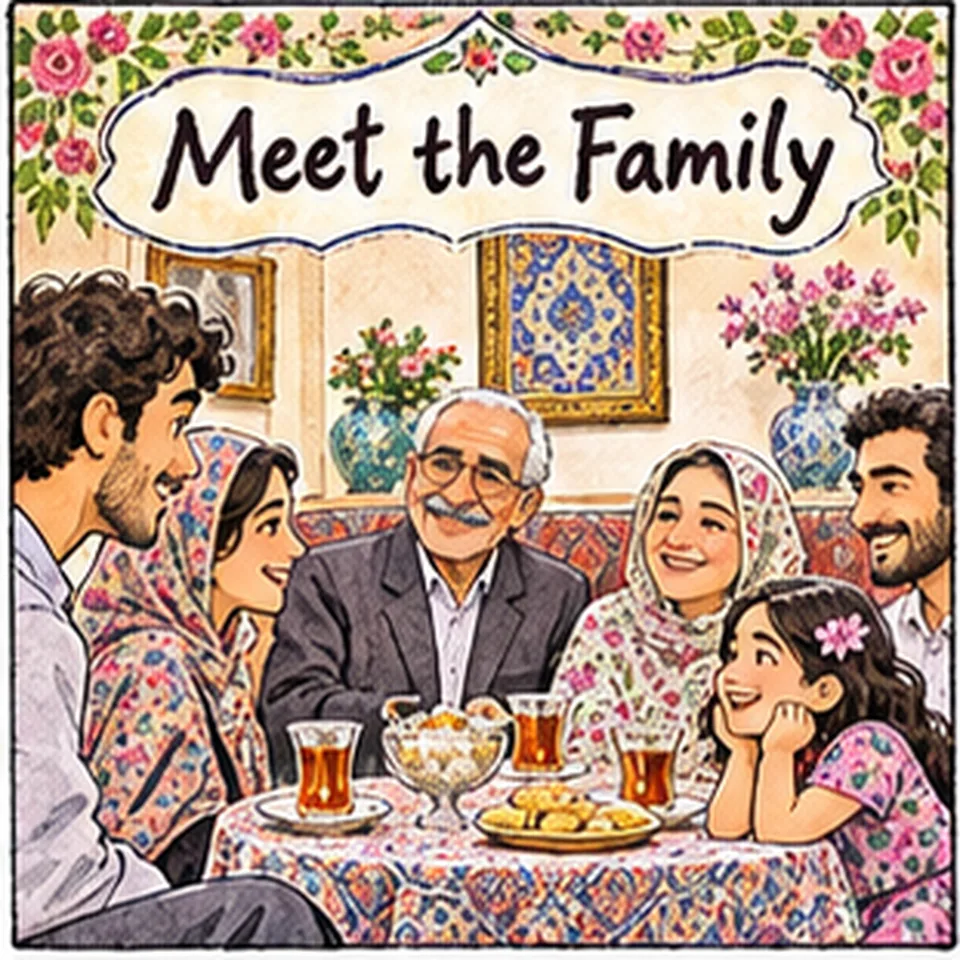
Make polite introductions in Persian: introduce your teacher, your wife and your daughter
speaking
| English | Pronunciation | Persian | ||
| Sara: | Mom,this is my teacher, Mr Kiyani. | /mâmân, ishon ostâde man hastand, âghâye kiyâni/ |
مامان، ایشون استاد من هستند، آقای کیانی |
:سارا |
| MRS Javid: | Nice to meet you, Mr Kiyani. | /az didaneton khoshbakhtam âghaye kiyâni/ |
از دیدنتون خوشبختم آقای کیانی |
خانوم جاوید |
| MR Kiyani: | Me too, let me introduce you to my wife Maryam,…Maryam this is Mrs Javid and her daughter. | /hamchenin, ejâze bedid shomâ ro be hamsaram maryam moarefi konam,…. Maryam ishon khânome jâvid hastand va dokhtareshon/ | همچنین، اجازه بدید شما رو به همسرم مریم معرفی کنم،….مریم ایشون خانوم جاوید هستند و دخترشون | :آقای کیانی |
| MRS Kiyani: | Nice to meet you. | /az didaneton khoshbakhtam/ | از دیدنتون خوشبختم |
خانوم کیانی |
Make polite introductions in Persian: introduce your teacher, your wife and your daughter with ishun, hamsar and ejâze bedid, plus a quiz.
Formal introductions: meeting a teacher and his wife
Sara introduces her mother, Mrs. Javid, to her teacher, Mr. Kiyani. Mr. Kiyani then introduces his wife, Maryam, to Mrs. Javid and her daughter. Because the adults are meeting for the first time, everyone uses polite language: the respectful pronoun ایشون (ishun), "he, she", plural verbs for one person, and the courteous اجازه بدید (ejâze bedid), "allow me".
This is the kind of exchange you might have at a school event or a family gathering in Iran.
The dialogue
| Speaker | Persian | Pronunciation | English |
|---|---|---|---|
| Sara | مامان، ایشون استاد من هستند، آقای کیانی. | /mâmân, ishun ostâd-e man hastand, âghâ-ye kiyâni./ | Mom, this is my teacher, Mr. Kiyani. |
| Mrs. Javid | از دیدنتون خوشبختم آقای کیانی. | /az didanetun khoshbakhtam âghâ-ye kiyâni./ | Nice to meet you, Mr. Kiyani. |
| Mr. Kiyani | همچنین. اجازه بدید شما رو به همسرم مریم معرفی کنم… مریم، ایشون خانم جاوید هستند و دخترشون. | /hamchenin. ejâze bedid shomâ ro be hamsaram maryam mo'arrefi konam… maryam, ishun khânom-e jâvid hastand va dokhtareshun./ | Likewise. Let me introduce you to my wife, Maryam… Maryam, this is Mrs. Javid and her daughter. |
| Mrs. Kiyani | از دیدنتون خوشبختم. | /az didanetun khoshbakhtam./ | Nice to meet you. |
Key words and phrases
| Persian | Pronunciation | English |
|---|---|---|
| مامان | /mâmân/ | mom |
| ایشون | /ishun/ | he, she (respectful, spoken) |
| استاد | /ostâd/ | teacher, professor |
| آقای … | /âghâ-ye …/ | Mr. … |
| خانم … | /khânom-e …/ | Mrs., Ms. … |
| همچنین | /hamchenin/ | likewise |
| اجازه بدید | /ejâze bedid/ | allow me, let me |
| معرفی کردن | /mo'arrefi kardan/ | to introduce |
| همسر | /hamsar/ | spouse, wife, husband |
| همسرم | /hamsaram/ | my wife, my husband |
| دختر | /dokhtar/ | daughter; girl |
| دخترشون | /dokhtareshun/ | her daughter (respectful) |
Spoken vs written Persian
Formal speech still uses spoken pronunciations. Here are the words as they are said and as they are written.
| Spoken / written | Pronunciation | Meaning |
|---|---|---|
| ایشون / ایشان | /ishun / ishân/ | he, she (respectful) |
| هستند | /hastan (spoken) / hastand/ | are |
| بدید / بدهید | /bedid / bedahid/ | give, allow (polite) |
| رو / را | /ro / râ/ | object marker |
| دخترشون / دخترشان | /dokhtareshun / dokhtareshân/ | their or her daughter |
| دیدنتون / دیدنتان | /didanetun / didanetân/ | seeing you |
| خانوم / خانم | /khânum / khânom/ | Mrs., lady |
Respect in Persian
ایشون (written ایشان) is used instead of او (u), "he, she", to show respect, and it takes a plural verb: ایشون استاد من هستند, not هست. The plural ending ـشون (-eshun) works the same way: دخترشون means "her daughter" here, said respectfully.
استاد (ostâd) is used for a university teacher or a master of a skill. A school teacher is معلم (mo'allem). Titles come before the family name: آقای کیانی, خانم جاوید. In speech خانم is pronounced khânum, which is why it is sometimes written خانوم.
همسر (hamsar), "spouse", is the polite word for both wife and husband. Everyday alternatives are خانمم (khânumam), "my wife", and شوهرم (shoharam), "my husband".
Try it yourself
- Introduce your friend to your mother: مامان، ایشون دوست من هستند.
- Begin a polite introduction with اجازه بدید … رو معرفی کنم.
When you are introduced, it is polite to stand up, and the reply از آشناییتون خوشبختم (az âshnâyitun khoshbakhtam), "pleased to make your acquaintance", is another common alternative to از دیدنتون خوشبختم.
Practice
-
How does Sara introduce her teacher to her mother?
Show answer
mâmân, ishun ostâd-e man hastand, âghâ-ye kiyâni. مامان، ایشون استاد من هستند، آقای کیانی
-
Why is the verb {{هستند}} plural when it refers to one person?
Show answer
It goes with the respectful pronoun ishun.
-
Say "Let me introduce my wife."
Show answer
ejâze bedid hamsaram ro mo'arrefi konam اجازه بدید همسرم رو معرفی کنم
-
What is the reply to {{از دیدنتون خوشبختم}} in one word?
Show answer
hamchenin همچنین
-
What is the written form of {{ایشون}}?
Show answer
ishân ایشان
Find more dialogues in the Farsi conversation lessons series, and review the sounds behind the transliteration on the Persian pronunciation page.


Take this lesson further
Study with the book
Farsi Conversations: Learn the Most Common Words and Phrases Farsi Speakers use Every Day
This free lesson is part of Farsi conversation lessons. The book puts the whole series in one printable PDF you can study offline.
Serious about Persian? Get all 30 of our Persian learning books for $199.99 (55% less than buying them one by one).
Free Persian Starter Kit (PDF)
The Persian alphabet chart and the 101 most common Persian words with pronunciation, in one printable PDF. You also get a one-time 15% code for any of our books.
We will email you new lessons and book news from Learn Persian Online. Unsubscribe any time.Free: 100 Core Persian Words + 20 Survival Phrases
Get the 14-page printable Starter Pack (all 32 letters, a 7-day reading plan, 100 core words and 20 survival phrases) and a short 5-email course. Free.