200 Most Common Persian Verbs
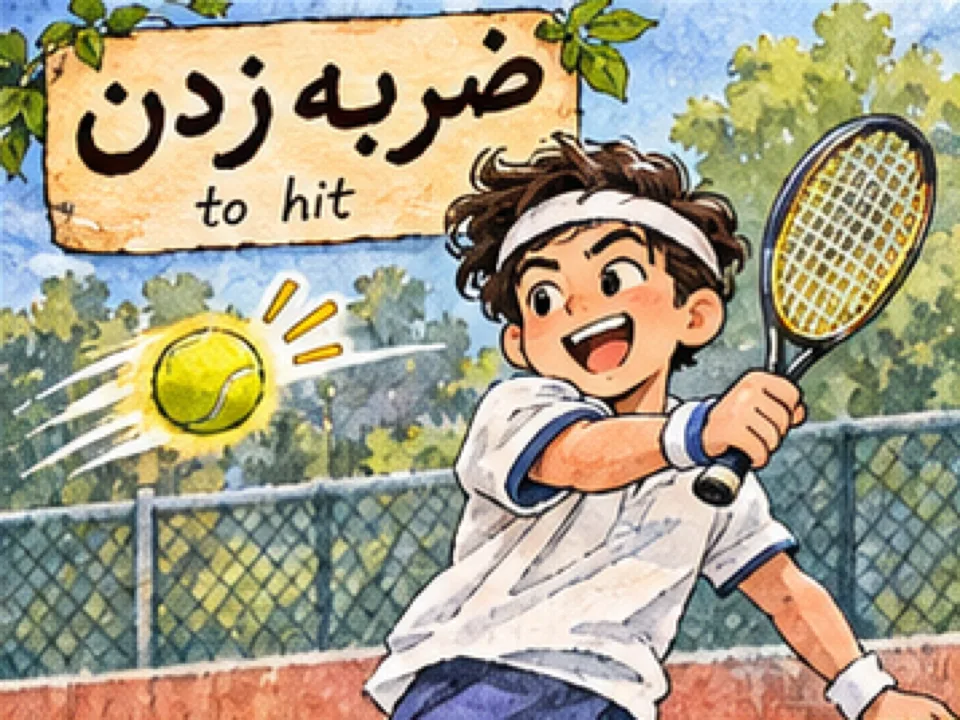
ضَربِه زَدَن
Watch and listen to Reza Nazari explain this verb. More in the free 200 Persian Verbs video course.
Dabber – Layon
مُتَرادِفِ فارسی: شِکَستَن – خَراب کَردَن
مُتَضادِ فارسی: درست کَردَن
:صَرف
گُذَشتِه: ضَربِه زَدَم – ضَربِه زَدی – ضَربِه زَد – ضَربِه زَدیم – ضَربِه زَدید – ضَربِه زَدَند
حال: ضَربِه می زَنَم – ضَربِه می زَنی – ضَربِه می زَنَد – ضَربِه می زَنیم – ضَربِه می زَنید – ضَربِه میزَنَند
:مِثال
.او بِه دیوار ضَربِه می زَد
.سارِق اَز پُشت بِه مَن ضَربِه زَد
ضربه زدن (zarbe zadan) means "to hit, to strike" in Persian. Here are its stems, full conjugation, examples with English, common phrases and a short quiz.
How to use ضربه زدن (zarbe zadan)
ضربه زدن is a compound verb: ضربه (zarbe, "blow, hit, kick") plus زدن (zadan, "to hit"). It means "to strike" or "to hit" something or someone, and in sport "to kick" or "to shoot" the ball. The target takes به: به توپ ضربه زد, "he kicked the ball". Like other compounds with زدن, it keeps ب in the subjunctive: ضربه بزنم.
It also has a common figurative use, "to harm, to damage": این تصمیم به اقتصاد ضربه زد, "this decision hurt the economy". The register is neutral and frequent in news and sports reporting. In everyday speech, for simply hitting a person, people often just say زدن: منو زد (mano zad, "he hit me").
Verb stems
| Infinitive | ضربه زدن | /zarbe zadan/ | to hit, to strike, to kick |
|---|---|---|---|
| Past stem | ضربه زد | /zarbe zad/ | used for past tenses |
| Present stem | ضربه زن | /zarbe zan/ | used for present, subjunctive and imperative |
Conjugation of ضربه زدن
| Person | Simple past | Present | Future | Subjunctive |
|---|---|---|---|---|
| من I |
ضربه زدم /zarbe zadam/ |
ضربه میزنم /zarbe mizanam/ |
ضربه خواهم زد /zarbe khâham zad/ |
ضربه بزنم /zarbe bezanam/ |
| تو you (sg.) |
ضربه زدی /zarbe zadi/ |
ضربه میزنی /zarbe mizani/ |
ضربه خواهی زد /zarbe khâhi zad/ |
ضربه بزنی /zarbe bezani/ |
| او he / she |
ضربه زد /zarbe zad/ |
ضربه میزند /zarbe mizanad/ |
ضربه خواهد زد /zarbe khâhad zad/ |
ضربه بزند /zarbe bezanad/ |
| ما we |
ضربه زدیم /zarbe zadim/ |
ضربه میزنیم /zarbe mizanim/ |
ضربه خواهیم زد /zarbe khâhim zad/ |
ضربه بزنیم /zarbe bezanim/ |
| شما you (pl./polite) |
ضربه زدید /zarbe zadid/ |
ضربه میزنید /zarbe mizanid/ |
ضربه خواهید زد /zarbe khâhid zad/ |
ضربه بزنید /zarbe bezanid/ |
| آنها they |
ضربه زدند /zarbe zadand/ |
ضربه میزنند /zarbe mizanand/ |
ضربه خواهند زد /zarbe khâhand zad/ |
ضربه بزنند /zarbe bezanand/ |
Negative and imperative
| Persian | Pronunciation | English |
|---|---|---|
| ضربه نزدم | /zarbe nazadam/ | I did not hit |
| ضربه نمیزنم | /zarbe nemizanam/ | I do not hit / I am not hitting |
| ضربه بزن! | /zarbe bezan!/ | Hit (it)! (to one person) |
| ضربه بزنید! | /zarbe bezanid!/ | Hit (it)! (to several people, or politely) |
| ضربه نزن! | /zarbe nazan!/ | Don't hit (it)! |
The examples above, translated
| Persian | Pronunciation | English |
|---|---|---|
| او به دیوار ضربه میزد. | /u be divâr zarbe mizad./ | He was hitting the wall. |
| سارق از پشت به من ضربه زد. | /sâregh az posht be man zarbe zad./ | The thief hit me from behind. |
| او با چکش به فلز ضربه میزد. | /u bâ chakosh be felez zarbe mizad./ | He was hammering the metal. |
More example sentences
| Persian | Pronunciation | English |
|---|---|---|
| بازیکن با سر به توپ ضربه زد. | /bâzikon bâ sar be tup zarbe zad./ | The player headed the ball. |
| کسی به در ضربه میزند. | /kasi be dar zarbe mizanad./ | Someone is knocking on the door. |
| بیکاری به خانوادهها ضربه میزند. | /bikâri be khânevâde-hâ zarbe mizanad./ | Unemployment hurts families. |
| مراقب باش سرت به در ضربه نخورد. | /morâgheb bâsh sarat be dar zarbe nakhorad./ | Be careful not to bang your head on the door. |
Common phrases
| Persian | Pronunciation | English |
|---|---|---|
| ضربه خوردن | /zarbe khordan/ | to be hit, to take a blow |
| ضربهی پنالتی | /zarbe-ye penâlti/ | penalty kick |
| ضربهی آزاد | /zarbe-ye âzâd/ | free kick |
| ضربهی روحی | /zarbe-ye ruhi/ | emotional blow, trauma |
In spoken Persian
In Tehran speech زدن shortens to میزنه (mizane): یکی داره به در ضربه میزنه (yeki dâre be dar zarbe mizane), "someone's knocking on the door". For hitting a person, plain زدن is more natural: زدش (zadesh), "he hit him".
Watch out for
- Use به for the thing hit, not را: به توپ ضربه زد. With plain زدن the object takes را: توپ را زد.
- Note: the page's English meanings "Dabber – Layon" are not English words, and the synonyms شکستن and خراب کردن (to break, to ruin) do not fit. Better synonyms are زدن and کوبیدن (kubidan, "to pound, to bang").
Practice
-
Translate into Persian: "He kicked the ball."
Show answer
u be tup zarbe zad. او به توپ ضربه زد.
-
Give the negative imperative (to one person).
Show answer
zarbe nazan! ضربه نزن!
-
What does this sentence mean? این خبر به او ضربه زد.
Show answer
This news was a blow to him.
Related verbs in this course
- زدن (zadan): to hit, to strike (also a very common light verb)
- کوبیدن (kubidan): to pound, to hammer, to bang
- آسیب زدن (âsib zadan): to damage, to harm, to hurt
This is lesson 152 of 200 Most Common Persian Verbs. For the sounds used in the pronunciation guide, see Persian pronunciation.
.او با چَکُش بِه فِلِز ضَربِه می زَد
Common questions
What does zarbe zadan mean in Persian?
ضربه زدن (zarbe zadan) means “to hit” or “to strike”. In sport it also means “to kick” or “to shoot” the ball, as in به توپ ضربه زد, “he kicked the ball”. It is a compound of ضربه (zarbe, “blow”) and زدن (zadan).
What is the present stem of zarbe zadan?
The present stem is ضربه زن (zarbe zan), used for the present, subjunctive and imperative. The present for “I” is ضربه میزنم (zarbe mizanam). Like other compounds with زدن, it keeps ب in the subjunctive: ضربه بزنم (zarbe bezanam).
Can zarbe zadan mean to harm something?
Yes. It has a common figurative use, “to harm, to damage”: این تصمیم به اقتصاد ضربه زد means “this decision hurt the economy”. The verb is neutral in register and frequent in news and sports reporting.
Which word marks the thing being hit with ضربه زدن?
- را (râ)
- به (be)
- از (az)
- با (bâ)
Use به for the thing hit, not را: به توپ ضربه زد.
What does ضربهی آزاد (zarbe-ye âzâd) mean?
- penalty kick
- emotional blow
- to be hit
- free kick
ضربهی آزاد (zarbe-ye âzâd) is a free kick; a penalty kick is ضربهی پنالتی.
How do you say “Don’t hit (it)!” to one person?
- ضربه نزن! (zarbe nazan!)
- ضربه بزن! (zarbe bezan!)
- ضربه نزدم (zarbe nazadam)
- ضربه بزنید! (zarbe bezanid!)
The negative imperative to one person is ضربه نزن! (zarbe nazan!).


Take this lesson further

Study with the book
200 Absolutely Essential Persian Verbs
This free lesson is part of 200 Most Common Persian Verbs. The book puts the whole series in one printable PDF you can study offline.
Serious about Persian? Get all 30 of our Persian learning books for $199.99 (55% less than buying them one by one).
Free Persian Starter Kit (PDF)
The Persian alphabet chart and the 101 most common Persian words with pronunciation, in one printable PDF. You also get a one-time 15% code for any of our books.
We will email you new lessons and book news from Learn Persian Online. Unsubscribe any time.Free: 100 Core Persian Words + 20 Survival Phrases
Get the 14-page printable Starter Pack (all 32 letters, a 7-day reading plan, 100 core words and 20 survival phrases) and a short 5-email course. Free.
Practise with free Persian games