200 Most Common Persian Verbs
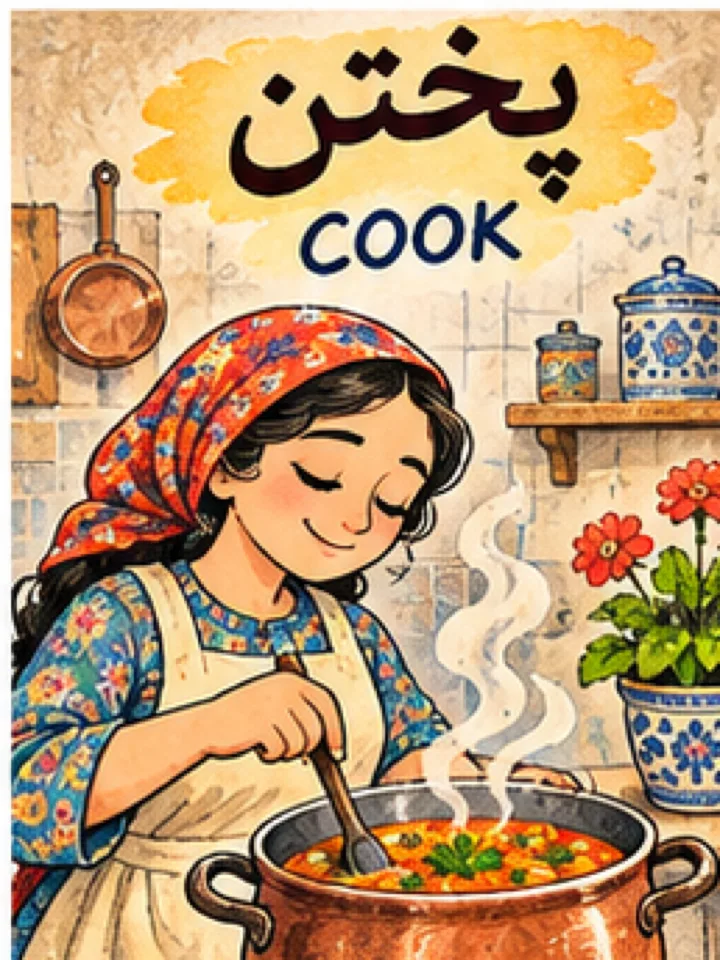
پُختَن
Watch and listen to Reza Nazari explain this verb. More in the free 200 Persian Verbs video course.
Cook
مُتَرادِفِ فارسی: درست کردن – طبخ کردن
-:مُتَضادِ فارسی
:صَرف
گُذَشتِه: پُختَم – پُختی – پُخت – پُختیم – پُختید – پُختَند
حال: می پَزَم – می پَزی – می پَزَد – می پَزیم – می پَزید – می پَزَند
:مِثال
.مادَر غَذا پُخت
.مَن اِمشَب غَذا می پَزَم
پختن (pokhtan) means "to cook" or "to bake" in Persian. Learn its irregular stems, full conjugation, examples, phrases and a quiz.
How to use پختن (pokhtan)
پختن is a simple verb meaning "to cook" and also "to bake". It is usually transitive, with the food as the object: مادرم آش پخت, "my mother cooked ash (a thick soup)". It can also be intransitive, meaning "to get cooked": برنج هنوز نپخته است, "the rice isn't cooked yet". Its present stem is irregular, پز (paz), so the present is میپزم (mipazam).
The verb is everyday and neutral. For general cooking people also say غذا درست کردن (ghazâ dorost kardan), literally "to make food", which is even more common in speech. The stem پز appears in آشپز (âshpaz, "cook") and آشپزخانه (âshpazkhâne, "kitchen"), and the participle پخته (pokhte) means "cooked" or, about a person, "mature, experienced".
Verb stems
| Infinitive | پختن | /pokhtan/ | to cook, to bake |
|---|---|---|---|
| Past stem | پخت | /pokht/ | used for past tenses |
| Present stem | پز | /paz/ | used for present, subjunctive and imperative |
Conjugation of پختن
| Person | Simple past | Present | Future | Subjunctive |
|---|---|---|---|---|
| من I |
پختم /pokhtam/ |
میپزم /mipazam/ |
خواهم پخت /khâham pokht/ |
بپزم /bepazam/ |
| تو you (sg.) |
پختی /pokhti/ |
میپزی /mipazi/ |
خواهی پخت /khâhi pokht/ |
بپزی /bepazi/ |
| او he / she |
پخت /pokht/ |
میپزد /mipazad/ |
خواهد پخت /khâhad pokht/ |
بپزد /bepazad/ |
| ما we |
پختیم /pokhtim/ |
میپزیم /mipazim/ |
خواهیم پخت /khâhim pokht/ |
بپزیم /bepazim/ |
| شما you (pl./polite) |
پختید /pokhtid/ |
میپزید /mipazid/ |
خواهید پخت /khâhid pokht/ |
بپزید /bepazid/ |
| آنها they |
پختند /pokhtand/ |
میپزند /mipazand/ |
خواهند پخت /khâhand pokht/ |
بپزند /bepazand/ |
Negative and imperative
| Persian | Pronunciation | English |
|---|---|---|
| نپختم | /napokhtam/ | I did not cook |
| نمیپزم | /nemipazam/ | I do not cook / I am not cooking |
| بپز! | /bepaz!/ | Cook! (to one person) |
| بپزید! | /bepazid!/ | Cook! (to several people, or politely) |
| نپز! | /napaz!/ | Don't cook! |
The examples above, translated
| Persian | Pronunciation | English |
|---|---|---|
| مادر غذا پخت. | /mâdar ghazâ pokht/ | Mother cooked a meal. |
| من امشب غذا میپزم. | /man emshab ghazâ mipazam/ | I'm cooking tonight. |
| آشپز در آشپزخانه غذا میپزد. | /âshpaz dar âshpazkhâne ghazâ mipazad/ | The cook is cooking in the kitchen. |
More example sentences
| Persian | Pronunciation | English |
|---|---|---|
| مادربزرگم بهترین قورمهسبزی را میپزد. | /mâdarbozorgam behtarin ghormesabzi râ mipazad/ | My grandmother makes the best ghormeh sabzi. |
| دیروز برای تولد دوستم کیک پختم. | /diruz barâye tavallod-e dustam keyk pokhtam/ | Yesterday I baked a cake for my friend's birthday. |
| برنج را بیست دقیقه بپزید. | /berenj râ bist daghighe bepazid/ | Cook the rice for twenty minutes. |
| این نانوایی صبحها نان تازه میپزد. | /in nânvâyi sobh-hâ nân-e tâze mipazad/ | This bakery bakes fresh bread in the mornings. |
Common phrases
| Persian | Pronunciation | English |
|---|---|---|
| آشپز | /âshpaz/ | cook, chef |
| پخته | /pokhte/ | cooked; mature, experienced |
| غذا درست کردن | /ghazâ dorost kardan/ | to cook, to make food (everyday) |
| آشپزی کردن | /âshpazi kardan/ | to cook, to do the cooking |
In spoken Persian
In Tehran speech: میپزم (mipazam), میپزه (mipaze), بپز (bepaz). Food talk often uses درست کردن instead: امشب ماکارونی درست میکنم (emshab mâkâruni dorost mikonam), "I'm making pasta tonight". پختن stays common for baking and in the question پخته؟ (pokhte?), "is it cooked?".
Watch out for
- The past and present stems look very different: پخت (pokht) and پز (paz). So "I cooked" is پختم (pokhtam) but "I cook" is میپزم (mipazam).
- In speech, غذا درست کردن is more common than غذا پختن for ordinary cooking: شام چی درست کنم؟ (shâm chi dorost konam?), "what should I make for dinner?".
Practice
-
Translate into Persian: "I baked bread."
Show answer
man nân pokhtam. من نان پختم.
-
What does this sentence mean? پدرم یکشنبهها غذا میپزد.
Show answer
My father cooks on Sundays.
-
Give the present tense of پختن for "we".
Show answer
mipazim میپزیم
Related verbs in this course
This is lesson 44 of 200 Most Common Persian Verbs. For the sounds used in the pronunciation guide, see Persian pronunciation.
.آشپَز دَر آشپَزخانِه غَذا می پَزد
Common questions
What does پختن (pokhtan) mean?
To cook or to bake.
What is the present stem of پختن?
پز (paz), so “I cook” is میپزم (mipazam).
How do you say “kitchen” in Persian?
آشپزخانه (âshpazkhâne), built on the same stem پز.
What does پختن (pokhtan) mean?
- to eat
- to cook
- to buy
- to wash
پختن means to cook or to bake.
What is “I cook” in Persian?
- میپختم (mipokhtam)
- میپزم (mipazam)
- پختم (pokhtam)
- بپز (bepaz)
The present stem is پز (paz): میپزم. پختم is “I cooked”.
Which word comes from the same stem and means “cook” (the person)?
- آشپزخانه
- آشپز
- پخته
- غذا
آشپز (âshpaz) is a cook. آشپزخانه is the kitchen and پخته means cooked.


Take this lesson further

Study with the book
200 Absolutely Essential Persian Verbs
This free lesson is part of 200 Most Common Persian Verbs. The book puts the whole series in one printable PDF you can study offline.
Serious about Persian? Get all 30 of our Persian learning books for $199.99 (55% less than buying them one by one).
Free Persian Starter Kit (PDF)
The Persian alphabet chart and the 101 most common Persian words with pronunciation, in one printable PDF. You also get a one-time 15% code for any of our books.
We will email you new lessons and book news from Learn Persian Online. Unsubscribe any time.Free: 100 Core Persian Words + 20 Survival Phrases
Get the 14-page printable Starter Pack (all 32 letters, a 7-day reading plan, 100 core words and 20 survival phrases) and a short 5-email course. Free.
Practise with free Persian games