200 Most Common Persian Verbs
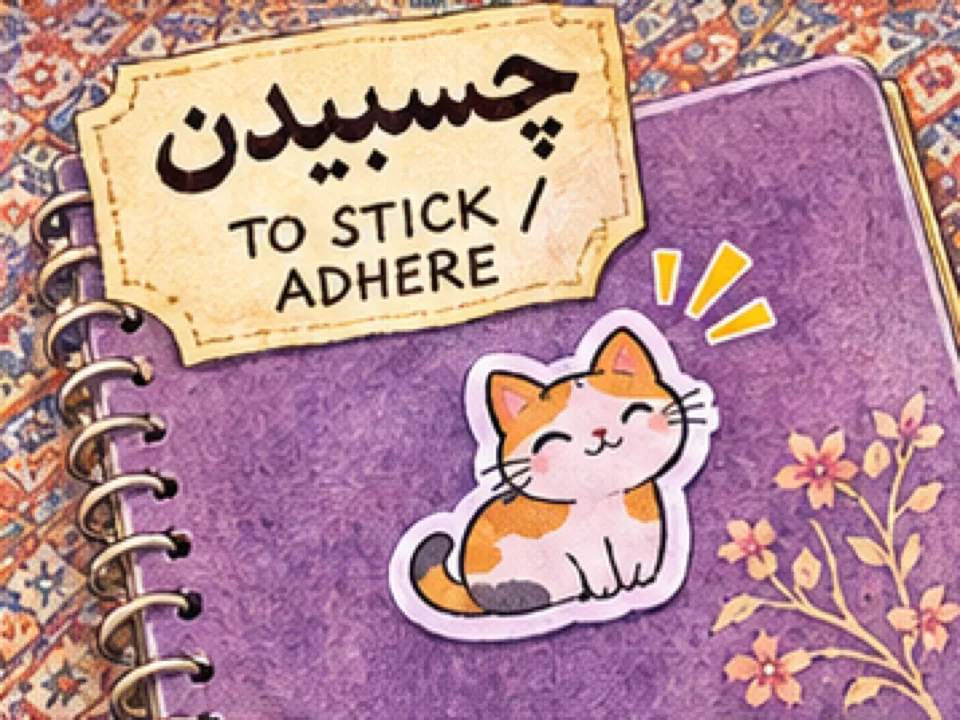
چَسبیدَن
Watch and listen to Reza Nazari explain this verb. More in the free 200 Persian Verbs video course.
Hold – Adhere
مُتَرادِفِ فارسی: مُتَصِل شُدَن – پیوَستَن
مُتَضادِ فارسی: رَها شُدَن
:صَرف
گُذَشتِه: چَسبیدَم – چَسبیدی – چَسبید – چَسبیدیم – چَسبیدید – چَسبیدَند
حال: می چَسبَم – می چَسبی – می چَسبَد – می چَسبیم – می چَسبید – می چَسبَند
:مِثال
.آن دو بَچِه دوقلو بِهَم چَسبیدِه بودَند
.بَرگِه هایِ دَفتَرَم بِهَم چَسبیدِه بودَند
.یِک کاغَذ بِه دیوار چَسبیدِه بود
چسبیدن (chasbidan) means "to stick, to cling" in Persian. Learn its stems, full conjugation, examples, common phrases and a short quiz.
How to use چسبیدن (chasbidan)
چسبیدن is a simple intransitive verb: something sticks by itself, with no object. Its past stem is چسبید (chasbid) and its present stem is چسب (chasb), which is also the word for "glue." What it sticks to follows به: آدامس به کفشم چسبید, "gum stuck to my shoe." To stick something onto something, use the causative چسباندن (chasbândan).
The verb is everyday and has a few useful extended senses. A child can به مادرش بچسبد, "cling to his mother." Things that are joined or right next to each other are چسبیده (chasbide). In casual speech, food, drink or rest that really satisfies you "sticks": خیلی چسبید (kheyli chasbid), "That really hit the spot." The page's gloss "Hold" is misleading.
Verb stems
| Infinitive | چسبیدن | /chasbidan/ | to stick, to adhere, to cling |
|---|---|---|---|
| Past stem | چسبید | /chasbid/ | used for past tenses |
| Present stem | چسب | /chasb/ | used for present, subjunctive and imperative |
Conjugation of چسبیدن
| Person | Simple past | Present | Future | Subjunctive |
|---|---|---|---|---|
| من I |
چسبیدم /chasbidam/ |
میچسبم /michasbam/ |
خواهم چسبید /khâham chasbid/ |
بچسبم /bechasbam/ |
| تو you (sg.) |
چسبیدی /chasbidi/ |
میچسبی /michasbi/ |
خواهی چسبید /khâhi chasbid/ |
بچسبی /bechasbi/ |
| او he / she |
چسبید /chasbid/ |
میچسبد /michasbad/ |
خواهد چسبید /khâhad chasbid/ |
بچسبد /bechasbad/ |
| ما we |
چسبیدیم /chasbidim/ |
میچسبیم /michasbim/ |
خواهیم چسبید /khâhim chasbid/ |
بچسبیم /bechasbim/ |
| شما you (pl./polite) |
چسبیدید /chasbidid/ |
میچسبید /michasbid/ |
خواهید چسبید /khâhid chasbid/ |
بچسبید /bechasbid/ |
| آنها they |
چسبیدند /chasbidand/ |
میچسبند /michasband/ |
خواهند چسبید /khâhand chasbid/ |
بچسبند /bechasband/ |
Negative and imperative
| Persian | Pronunciation | English |
|---|---|---|
| نچسبیدم | /nachasbidam/ | I did not stick |
| نمیچسبم | /nemichasbam/ | I do not stick / I am not sticking |
| بچسب! | /bechasb!/ | Stick! (to one person) |
| بچسبید! | /bechasbid!/ | Stick! (to several people, or politely) |
| نچسب! | /nachasb!/ | Don't stick! |
The examples above, translated
| Persian | Pronunciation | English |
|---|---|---|
| آن دو بچه دوقلو بهم چسبیده بودند. | /ân do bachche-ye doghulu beham chasbide budand./ | Those twin babies were joined together. |
| برگههای دفترم بهم چسبیده بودند. | /barge-hâ-ye daftaram beham chasbide budand./ | The pages of my notebook were stuck together. |
| یک کاغذ به دیوار چسبیده بود. | /yek kâghaz be divâr chasbide bud./ | A piece of paper was stuck to the wall. |
More example sentences
| Persian | Pronunciation | English |
|---|---|---|
| آدامس به کفشم چسبید. | /âdâms be kafsham chasbid./ | Gum stuck to my shoe. |
| بچه به مادرش چسبیده بود و گریه میکرد. | /bachche be mâdarash chasbide bud va gerye mikard./ | The child was clinging to his mother and crying. |
| این چای بعد از کار خیلی چسبید. | /in châi ba'd az kâr kheyli chasbid./ | This tea really hit the spot after work. |
| برنج به ته قابلمه میچسبد. | /berenj be tah-e ghâblame michasbad./ | The rice sticks to the bottom of the pot. |
Common phrases
| Persian | Pronunciation | English |
|---|---|---|
| چسب | /chasb/ | glue, tape |
| چسبناک | /chasbnâk/ | sticky |
| چسبیده | /chasbide/ | stuck, attached; right next to |
| خیلی چسبید | /kheyli chasbid/ | that really hit the spot (about food, drink or rest) |
In spoken Persian
In Tehran speech the present is میچسبم (michasbam), میچسبه (michasbe), میچسبن (michasban). A favorite spoken use: after a good meal or a nap, people say خیلی چسبید (kheyli chasbid), "That was just what I needed."
Watch out for
- چسبیدن never takes an object. "I stuck the photo on the wall" needs چسباندن: عکس را به دیوار چسباندم (aks râ be divâr chasbândam).
Practice
-
Translate into Persian: "The paper stuck to my hand."
Show answer
kâghaz be dastam chasbid. کاغذ به دستم چسبید.
-
Give the present form for "it".
Show answer
michasbad میچسبد
-
What does this sentence mean? این غذا خیلی چسبید.
Show answer
This food really hit the spot.
Related verbs in this course
This is lesson 87 of 200 Most Common Persian Verbs. For the sounds used in the pronunciation guide, see Persian pronunciation.


Take this lesson further

Study with the book
200 Absolutely Essential Persian Verbs
This free lesson is part of 200 Most Common Persian Verbs. The book puts the whole series in one printable PDF you can study offline.
Serious about Persian? Get all 30 of our Persian learning books for $199.99 (55% less than buying them one by one).
Free Persian Starter Kit (PDF)
The Persian alphabet chart and the 101 most common Persian words with pronunciation, in one printable PDF. You also get a one-time 15% code for any of our books.
We will email you new lessons and book news from Learn Persian Online. Unsubscribe any time.Free: 100 Core Persian Words + 20 Survival Phrases
Get the 14-page printable Starter Pack (all 32 letters, a 7-day reading plan, 100 core words and 20 survival phrases) and a short 5-email course. Free.
Practise with free Persian games