200 Most Common Persian Verbs
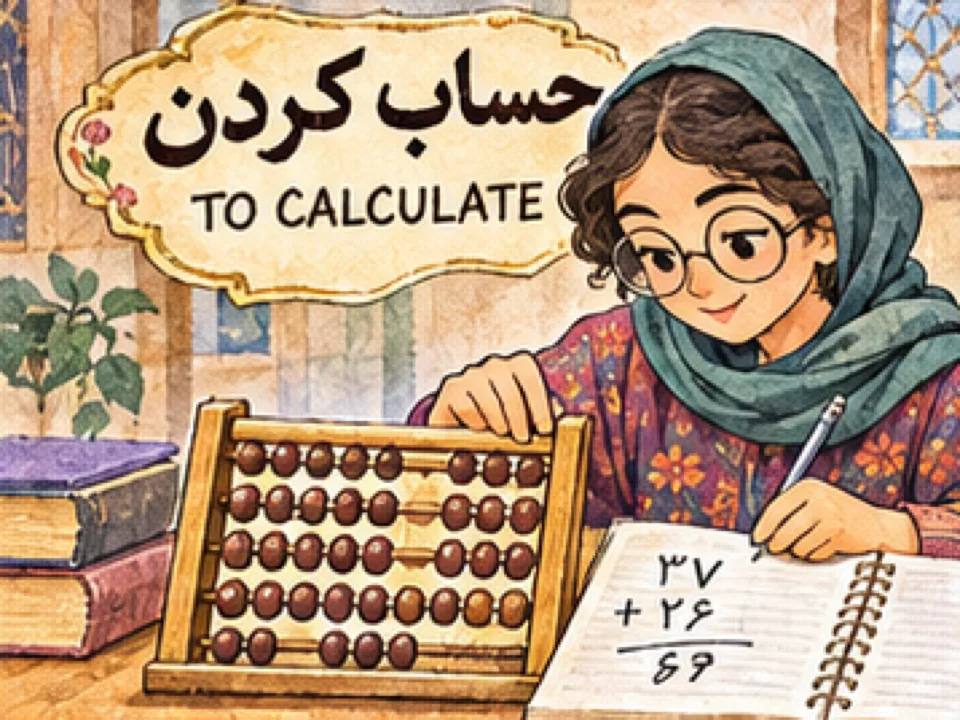
حِساب کَردَن
Watch and listen to Reza Nazari explain this verb. More in the free 200 Persian Verbs video course.
Compute – Calculate
مُتَرادِفِ فارسی: مُحاسِبِه کَردَن – بَرآورد کَردَن
-:مُتَضادِ فارسی
:صَرف
گُذَشتِه: حِساب کَردَم – حِساب کَردی – حِساب کَرد – حِساب کَردیم – حِساب کَردید – حِساب کَردَند
حال: حِساب می کُنَم – حِساب می کُنی – حِساب می کُنَد – حِساب می کُنیم – حِساب می کُنید – حِساب می کُنَند
:مِثال
.مَن هَزینِهِ هایِ سَفَر را حِساب کَردَم
.او هَزینِه رِستوران را حِساب کَرد
.آنها با ماشین حِساب جَمع اَعداد را حِساب کَردَند
حساب کردن (hesâb kardan) means "to calculate" in Persian. Learn its stems, full conjugation, examples, common phrases and a short quiz.
How to use حساب کردن (hesâb kardan)
حساب کردن is a compound verb: the Arabic-origin noun حساب (hesâb, "account, calculation") plus کردن. It is transitive: هزینهها را حساب کردم, "I calculated the costs." In formal and technical writing you will also see محاسبه کردن (mohâsebe kardan), which means the same thing.
In daily life the verb has two more useful meanings. In a restaurant or shop it often means "to pay": من حساب میکنم (man hesâb mikonam), "I'll pay (the bill)." With روی (ru-ye) it means "to count on" someone: روی تو حساب میکنم, "I'm counting on you." The noun حساب also means a bank account, as in حساب بانکی (hesâb-e bânki).
Verb stems
| Infinitive | حساب کردن | /hesâb kardan/ | to calculate, to count; to pay (a bill) |
|---|---|---|---|
| Past stem | حساب کرد | /hesâb kard/ | used for past tenses |
| Present stem | حساب کن | /hesâb kon/ | used for present, subjunctive and imperative |
Conjugation of حساب کردن
| Person | Simple past | Present | Future | Subjunctive |
|---|---|---|---|---|
| من I |
حساب کردم /hesâb kardam/ |
حساب میکنم /hesâb mikonam/ |
حساب خواهم کرد /hesâb khâham kard/ |
حساب کنم /hesâb konam/ |
| تو you (sg.) |
حساب کردی /hesâb kardi/ |
حساب میکنی /hesâb mikoni/ |
حساب خواهی کرد /hesâb khâhi kard/ |
حساب کنی /hesâb koni/ |
| او he / she |
حساب کرد /hesâb kard/ |
حساب میکند /hesâb mikonad/ |
حساب خواهد کرد /hesâb khâhad kard/ |
حساب کند /hesâb konad/ |
| ما we |
حساب کردیم /hesâb kardim/ |
حساب میکنیم /hesâb mikonim/ |
حساب خواهیم کرد /hesâb khâhim kard/ |
حساب کنیم /hesâb konim/ |
| شما you (pl./polite) |
حساب کردید /hesâb kardid/ |
حساب میکنید /hesâb mikonid/ |
حساب خواهید کرد /hesâb khâhid kard/ |
حساب کنید /hesâb konid/ |
| آنها they |
حساب کردند /hesâb kardand/ |
حساب میکنند /hesâb mikonand/ |
حساب خواهند کرد /hesâb khâhand kard/ |
حساب کنند /hesâb konand/ |
Negative and imperative
| Persian | Pronunciation | English |
|---|---|---|
| حساب نکردم | /hesâb nakardam/ | I did not calculate |
| حساب نمیکنم | /hesâb nemikonam/ | I do not calculate / I am not calculating |
| حساب کن! | /hesâb kon!/ | Calculate! (to one person) |
| حساب کنید! | /hesâb konid!/ | Calculate! (to several people, or politely) |
| حساب نکن! | /hesâb nakon!/ | Don't calculate! |
The examples above, translated
| Persian | Pronunciation | English |
|---|---|---|
| من هزینههای سفر را حساب کردم. | /man hazine-hâ-ye safar râ hesâb kardam./ | I calculated the travel costs. |
| او هزینه رستوران را حساب کرد. | /u hazine-ye resturân râ hesâb kard./ | He worked out (or paid) the restaurant bill. |
| آنها با ماشین حساب جمع اعداد را حساب کردند. | /ânhâ bâ mâshin hesâb jam'-e a'dâd râ hesâb kardand./ | They worked out the sum of the numbers with a calculator. |
More example sentences
| Persian | Pronunciation | English |
|---|---|---|
| امشب شام را من حساب میکنم. | /emshab shâm râ man hesâb mikonam./ | Tonight I'm paying for dinner. |
| میتوانی روی من حساب کنی. | /mitavâni ru-ye man hesâb koni./ | You can count on me. |
| فروشنده قیمتها را دوباره حساب کرد. | /forushande gheymat-hâ râ dobâre hesâb kard./ | The salesperson calculated the prices again. |
| بچهها با انگشت حساب میکنند. | /bachche-hâ bâ angosht hesâb mikonand./ | Children count on their fingers. |
Common phrases
| Persian | Pronunciation | English |
|---|---|---|
| ماشین حساب | /mâshin hesâb/ | calculator |
| حساب بانکی | /hesâb-e bânki/ | bank account |
| روی کسی حساب کردن | /ru-ye kasi hesâb kardan/ | to count on someone |
| حسابداری | /hesâbdâri/ | accounting |
In spoken Persian
In speech the endings shorten: حساب میکنه (hesâb mikone), حساب میکنن (hesâb mikonan). At a café you will hear the friendly argument over the bill: نه، من حساب میکنم (na, man hesâb mikonam), "No, I'll pay." To ask for the total, say لطفاً حساب کنید (lotfan hesâb konid).
Watch out for
- In restaurants and shops حساب کردن usually means "to pay," not just "to calculate," so the page's second example can mean either "he worked out the bill" or "he paid the bill."
- "To count on someone" needs روی: روی او حساب کن (ru-ye u hesâb kon), not "u râ hesâb kon."
Practice
-
Translate into Persian: "I calculated the cost."
Show answer
man hazine râ hesâb kardam. من هزینه را حساب کردم.
-
Give the imperative for several people or polite use.
Show answer
hesâb konid! حساب کنید!
-
What does this sentence mean? روی او حساب نکن.
Show answer
Don't count on him (or her).
Related verbs in this course
This is lesson 92 of 200 Most Common Persian Verbs. For the sounds used in the pronunciation guide, see Persian pronunciation.


Take this lesson further

Study with the book
200 Absolutely Essential Persian Verbs
This free lesson is part of 200 Most Common Persian Verbs. The book puts the whole series in one printable PDF you can study offline.
Serious about Persian? Get all 30 of our Persian learning books for $199.99 (55% less than buying them one by one).
Free Persian Starter Kit (PDF)
The Persian alphabet chart and the 101 most common Persian words with pronunciation, in one printable PDF. You also get a one-time 15% code for any of our books.
We will email you new lessons and book news from Learn Persian Online. Unsubscribe any time.Free: 100 Core Persian Words + 20 Survival Phrases
Get the 14-page printable Starter Pack (all 32 letters, a 7-day reading plan, 100 core words and 20 survival phrases) and a short 5-email course. Free.
Practise with free Persian games