200 Most Common Persian Verbs
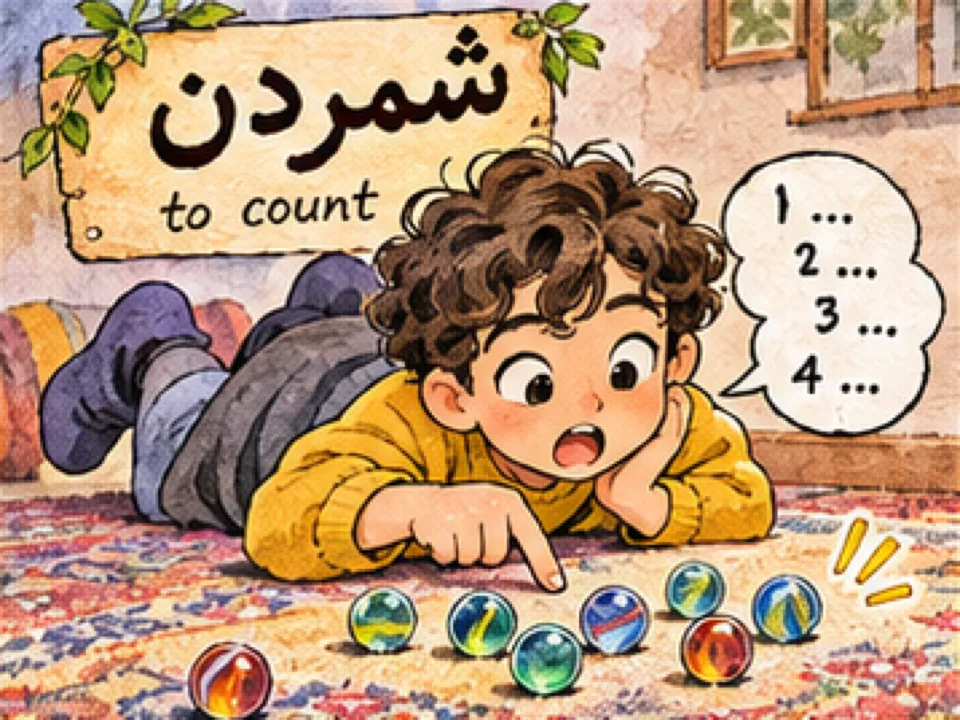
شِمُردَن
Enumerate – Count
مُتَرادِفِ فارسی: مُحاسِبِه کَردَن
مُتَضادِ فارسی: حَدس زَدَن
:صَرف
گُذَشتِه: شِمُردَم – شِمُردی – شِمُرد – شِمُردیم – شِمُردید – شِمُردَند
حال: می شِمُرَم – می شِمُری – می شِمُرَد – می شِمُریم – می شِمُرید – می شِمُرَند
:مِثال
.مَن اَز یِک تا دَه شِمُردَم
.کارگَر تَمامِ اَجناسِ دَر اَنبار را شِمُرد
شمردن (shemordan) means "to count" in Persian. Here are its stems, full conjugation, examples with English, common phrases and a short quiz.
How to use شمردن (shemordan)
شمردن is a simple transitive verb meaning "to count". You count money, people, days or numbers: تا ده بشمار, "count to ten". In formal style it also means "to consider, to regard": او را دوست خود میشمارد, "he regards him as his friend". The infinitive is pronounced shemordan or shomordan; both are heard.
The present stem is irregular: شمار (shomâr), so "I count" is میشمارم (mishomâram). From the same root come شماره (shomâre, "number") and شمارش (shomâresh, "counting"). The phrase روزها را شمردن (ruz-hâ râ shemordan) means "to count the days" while waiting eagerly for something, just as in English.
Verb stems
| Infinitive | شمردن | /shemordan/ | to count |
|---|---|---|---|
| Past stem | شمرد | /shemord/ | used for past tenses |
| Present stem | شمار | /shomâr/ | used for present, subjunctive and imperative |
Conjugation of شمردن
| Person | Simple past | Present | Future | Subjunctive |
|---|---|---|---|---|
| من I |
شمردم /shemordam/ |
میشمارم /mishomâram/ |
خواهم شمرد /khâham shemord/ |
بشمارم /beshomâram/ |
| تو you (sg.) |
شمردی /shemordi/ |
میشماری /mishomâri/ |
خواهی شمرد /khâhi shemord/ |
بشماری /beshomâri/ |
| او he / she |
شمرد /shemord/ |
میشمارد /mishomârad/ |
خواهد شمرد /khâhad shemord/ |
بشمارد /beshomârad/ |
| ما we |
شمردیم /shemordim/ |
میشماریم /mishomârim/ |
خواهیم شمرد /khâhim shemord/ |
بشماریم /beshomârim/ |
| شما you (pl./polite) |
شمردید /shemordid/ |
میشمارید /mishomârid/ |
خواهید شمرد /khâhid shemord/ |
بشمارید /beshomârid/ |
| آنها they |
شمردند /shemordand/ |
میشمارند /mishomârand/ |
خواهند شمرد /khâhand shemord/ |
بشمارند /beshomârand/ |
Negative and imperative
| Persian | Pronunciation | English |
|---|---|---|
| نشمردم | /nashemordam/ | I did not count |
| نمیشمارم | /nemishomâram/ | I do not count / I am not counting |
| بشمار! | /beshomâr!/ | Count! (to one person) |
| بشمارید! | /beshomârid!/ | Count! (to several people, or politely) |
| نشمار! | /nashomâr!/ | Don't count! |
The examples above, translated
| Persian | Pronunciation | English |
|---|---|---|
| من از یک تا ده شمردم. | /man az yek tâ dah shemordam./ | I counted from one to ten. |
| کارگر تمام اجناس در انبار را شمرد. | /kârgar tamâm-e ajnâs-e dar anbâr râ shemord./ | The worker counted all the goods in the warehouse. |
| او پولهایش را شمرد. | /u pul-hâyash râ shemord./ | He counted his money. |
More example sentences
| Persian | Pronunciation | English |
|---|---|---|
| بچه تا بیست شمرد. | /bachche tâ bist shemord./ | The child counted to twenty. |
| صندوقدار پولها را دوباره میشمارد. | /sandughdâr pul-hâ râ dobâre mishomârad./ | The cashier counts the money again. |
| لطفاً صندلیها را بشمارید. | /lotfan sandali-hâ râ beshomârid./ | Please count the chairs. |
| روزها را میشمارم تا تو برگردی. | /ruz-hâ râ mishomâram tâ to bargardi./ | I'm counting the days until you come back. |
Common phrases
| Persian | Pronunciation | English |
|---|---|---|
| شماره | /shomâre/ | number |
| شمارش | /shomâresh/ | counting, count |
| روزها را شمردن | /ruz-hâ râ shemordan/ | to count the days |
| انگشتشمار | /angoshtshomâr/ | very few (countable on one's fingers) |
In spoken Persian
In Tehran speech the stem is shortened: میشمارم sounds like "mishmâram", میشماره like "mishmâre", and بشمار like "beshmâr". You will also hear forms built on شمر, such as تا سه میشمرم (tâ se mishmoram), "I'll count to three".
Watch out for
- Note: the page gives the present tense as میشمرم, میشمری and so on. These forms are heard in casual speech, but the standard present stem is شمار: میشمارم, میشماری, میشمارد.
Practice
-
Translate into Persian: "Count to five."
Show answer
tâ panj beshomâr. تا پنج بشمار.
-
What is the standard present stem of this verb? شمردن
Show answer
shomâr شمار
-
What does this sentence mean? او پولها را شمرد.
Show answer
He counted the money.
Related verbs in this course
This is lesson 148 of 200 Most Common Persian Verbs. For the sounds used in the pronunciation guide, see Persian pronunciation.
.او پول هایَش را شِمُرد


Take this lesson further

Study with the book
200 Absolutely Essential Persian Verbs
This free lesson is part of 200 Most Common Persian Verbs. The book puts the whole series in one printable PDF you can study offline.
Serious about Persian? Get all 30 of our Persian learning books for $199.99 (55% less than buying them one by one).
Free Persian Starter Kit (PDF)
The Persian alphabet chart and the 101 most common Persian words with pronunciation, in one printable PDF. You also get a one-time 15% code for any of our books.
We will email you new lessons and book news from Learn Persian Online. Unsubscribe any time.Free: 100 Core Persian Words + 20 Survival Phrases
Get the 14-page printable Starter Pack (all 32 letters, a 7-day reading plan, 100 core words and 20 survival phrases) and a short 5-email course. Free.
Practise with free Persian games