Persian Words in English: 38 Words You Already Know, and Their Stories

Many everyday English words come from Persian: paradise, bazaar, caravan, pajamas, khaki, checkmate, jasmine, lemon and spinach are a few. Khaki, for example, comes from Persian خاک (khâk), “soil, dust.” Most of these words did not travel straight from Iran to England; they passed through Greek, Arabic, Turkish, French or Hindi-Urdu on the way.
Below you will find each word with its Persian source written in Persian script, how to pronounce it, what it means in Persian today, and the route it took into English. Only etymologies that dictionaries agree on are included, and a short section at the end covers popular claims that are uncertain or wrong.
How Persian words reached English
Persian has been a language of empire, trade and poetry for more than two thousand years, so its words spread far beyond Iran. English picked them up along five main routes:
- Greek and Latin. The oldest borrowings, from the time of the ancient Persian Empire. Words like paradise, magic and satrap came this way.
- Arabic. After the 7th century, Arabic borrowed many Persian words for plants, foods, colors and science. Europe then took them from Arabic, often through Spain, Italy or France: orange, lemon, jasmine, azure, spinach.
- Ottoman Turkish. Turkish absorbed a great deal of Persian, and European travelers and traders brought words back from the Ottoman world: kiosk, divan, turban, tulip, jackal.
- Hindi-Urdu (British India). Persian was a court and administrative language in India for centuries. The British met Persian words there and took them home: pajamas, khaki, shawl, cummerbund, seersucker.
- Directly from Persian. Travelers and scholars borrowed a smaller number of words straight from Persian, such as shah and dervish.
Because of these detours, the English word often looks quite different from the Persian one. Knowing the route explains why tulip and turban are related, and why van is a Persian word in disguise.
English words from Persian: the full table
The Persian column shows the source word in modern Persian spelling where one exists. If you are still learning the script, our guide to the 32 letters of the Persian alphabet will help you read them.
| English word | Persian | Pronunciation | Persian meaning | Route into English |
|---|---|---|---|---|
| paradise | پردیس | pardis | originally a walled garden or park | Old Persian, then Greek, Latin, French |
| bazaar | بازار | bâzâr | market | Persian, via Italian and Turkish |
| caravan | کاروان | kârvân | a group of travelers with pack animals | Persian, via Italian and French |
| van | کاروان | kârvân | (short for caravan) | English shortening of caravan |
| pajamas | پا + جامه | pâ + jâme | leg + garment | Persian, via Hindi-Urdu |
| khaki | خاکی | khâki | dusty, earth-colored (from khâk, soil) | Persian, via Hindi-Urdu |
| shawl | شال | shâl | shawl, scarf | Persian, via Hindi-Urdu |
| cummerbund | کمربند | kamarband | belt (kamar “waist” + band “band”) | Persian, via Hindi-Urdu |
| seersucker | شیر و شکر | shir-o shekar | “milk and sugar” | Persian, via Hindi-Urdu |
| pashmina | پشمینه | pashmine | woolen (from pashm, wool) | Persian, via Hindi-Urdu |
| taffeta | تافته | tâfte | twisted, woven (silk cloth) | Persian, via Italian and French |
| turban | دلبند | dolband | a wound head cloth | Persian, via Turkish and French |
| tulip | دلبند | dolband | turban (the flower looks like one) | Persian, via Turkish and Latin |
| kiosk | کوشک | kushk | pavilion, small palace | Persian, via Turkish and French |
| divan | دیوان | divân | a council or office; a poet’s collected works | Persian, via Arabic, Turkish and French |
| checkmate | شاه مات | shâh mât | “the king is helpless” | Persian, via Arabic and Old French |
| check, chess | شاه | shâh | king | Persian, via Arabic, Latin and French |
| rook (chess) | رخ | rokh | the castle piece in Persian chess | Persian, via Arabic and Old French |
| orange | نارنج | nâranj | bitter orange | Persian (from Sanskrit), via Arabic and Romance languages |
| lemon | لیمو | limu | lemon, lime | Persian, via Arabic, Italian and French |
| spinach | اسفناج | esfenâj | spinach | Persian, via Arabic, Latin and French |
| pistachio | پسته | peste | pistachio | Persian, via Greek, Latin and Italian |
| sugar | شکر | shekar | sugar | Sanskrit, via Persian, Arabic, Latin and French |
| candy | قند | ghand | lump sugar | Persian, via Arabic and French |
| julep | گلاب | golâb | rose water (gol “rose” + âb “water”) | Persian, via Arabic and Latin |
| jasmine | یاسمن | yâsaman | jasmine | Persian, via Arabic and French |
| lilac | (lilak) | lilak | bluish flower, from nil, indigo | Persian, via Arabic and French |
| azure, lapis lazuli | لاجورد | lâjvard | lapis lazuli, deep blue | Persian, via Arabic and Latin |
| musk | مشک | moshk | musk | Persian, via Greek and Latin |
| mummy | موم | mum | wax | Persian, via Arabic and Latin |
| jackal | شغال | shoghâl | jackal | Persian, via Turkish |
| magic | مغ | mogh | a Magian (Zoroastrian) priest | Old Persian, via Greek, Latin and French |
| satrap | (Old Persian) | khshathrapâvan | governor, “protector of the realm” | Old Persian, via Greek and Latin |
| shah | شاه | shâh | king | directly from Persian |
| dervish | درویش | darvish | Sufi ascetic; a poor person | Persian, via Turkish |
| baksheesh | بخشش | bakhshesh | gift; forgiveness | Persian, via Turkish and others |
| sitar | سهتار | setâr | “three strings” (se “three” + târ “string”) | Persian, via Hindi-Urdu |
| algorithm | خوارزمی | khârazmi | name of the mathematician al-Khwarizmi | Persian scholar’s name, via Arabic and Latin |
Two notes on the table. Musk is spelled مشک (moshk) in Persian. And in the case of satrap and lilac, the source word is not used in everyday modern Persian, so only the transliteration is given.
The stories behind the best-known words
Paradise: from a walled garden to heaven
The ancient Persian word behind paradise meant a walled enclosure, the kind of royal park Persian kings were known for. Greek writers borrowed it as paradeisos for those parks, Greek translations of the Bible used it for the Garden of Eden, and from there it came to mean heaven. Modern Persian has its own descendant, پردیس (pardis) , used for a park, a campus, or paradise in poetry. The everyday Persian word for garden is باغ (bâgh) .
Pajamas: “leg garment”
Pajamas combines Persian پا (pâ), “leg, foot,” and جامه (jâme), “garment.” In India the word described loose trousers, and the British brought both the clothing and the name to England. The story has a fun ending: modern Persian took the word back from European languages, and Iranians today call pajamas پیژامه (pizhâme) .
Khaki: the color of dust
خاک (khâk) means soil or dust, and خاکی (khâki) means dusty or earth-colored. British soldiers in India dyed their uniforms this color, and the word followed the uniforms. In spoken Persian, خاکی also describes a person who is humble and down to earth, a nice compliment. For more color words, see our list of colors in Persian.
Checkmate, chess and the rook
Chess came to Europe from the Persian and Arab world, and so did its vocabulary. شاه (shâh) means king. Checkmate goes back to the Persian phrase شاه مات (shâh mât), “the king is helpless” or “stunned”; it passed through Arabic and Old French. English check and chess grew out of the same word for king. The rook is from رخ (rokh), the name of that piece in Persian chess. Iranian players today say کیش و مات (kish-o mât) for checkmate.
Bazaar, caravan and van
بازار (bâzâr) is still the everyday Persian word for a market; the old covered markets of Iranian cities, like the Tehran Bazaar, are called by this name. کاروان (kârvân) is a group of travelers moving together, and a کاروانسرا (kârvânsarâ) is the inn where they stopped for the night (English caravanserai). English later shortened caravan to van, so every delivery van carries a little Persian with it.
Orange, lemon, sugar and candy
Many fruit and food words came west through Arabic. Orange goes back to نارنج (nâranj), the bitter orange, a word Persian itself had taken from Sanskrit. Lemon comes from لیمو (limu) . Candy is from قند (ghand), the lump sugar Iranians still put on the saucer next to their tea, and sugar traveled from Sanskrit through Persian شکر (shekar) and Arabic. Here is a twist: the sweet orange in modern Persian is پرتقال (porteghâl) , named after Portugal. You can find more fruit names in our fruits and vegetables list.
Tulip and turban: one word, two meanings
You might expect tulip to come from the Persian word for tulip, لاله (lâle) . It does not. Both tulip and turban come from Persian دلبند (dolband), a wound head cloth, which Turkish passed to Europe. Europeans thought the flower looked like a turban, and the name stuck. Persian flower names are lovely in their own right; see our flower names in Persian.
Jasmine, julep and lilac
Jasmine is from یاسمن (yâsaman), and the name Yasmin is the same word. A mint julep started life as گلاب (golâb) , rose water: گل (gol) “flower, rose” plus آب (âb) “water.” Lilac comes from a Persian word for a bluish flower, related to نیل (nil), indigo.
Algorithm: a Persian scholar’s name
The word algorithm comes from the name of the 9th-century mathematician Muhammad ibn Musa al-Khwarizmi, whose family name points to Khwarazm, a region of Central Asia. He wrote in Arabic, the language of science in his time, and Latin translations of his work turned his name into algorismus. In Persian he is called خوارزمی (khârazmi).
Flashcards: tap to flip
soil, dust (khaki)
market (bazaar)
caravan
king (check, chess)
pistachio
spinach
rose water (julep)
shawl
Borrowed words vs. cognates
There is a second, older link between the two languages. Persian and English both belong to the Indo-European family, so some words look alike because they share an ancestor thousands of years old, not because one language borrowed from the other. These are called cognates. If you want the bigger picture of where Persian sits among languages, read our overview of the Farsi language.
| Persian | Pronunciation | English | Note |
|---|---|---|---|
| مادر | mâdar | mother | shared ancestor, not a loan |
| پدر | pedar | father | p in Persian, f in English |
| برادر | barâdar | brother | very close in shape |
| دختر | dokhtar | daughter | the old English “gh” was once pronounced |
| نام | nâm | name | formal; everyday Persian usually says اسم (esm) |
| ستاره | setâre | star | also a popular girl’s name |
| نو | now | new | as in Nowruz, “new day” |
| در | dar | door | also means “in” |
A good way to remember family words is to learn them as a set; our list of family members in Persian has the rest.
Try it: loanword or cognate?
English “daughter” and Persian دختر (dokhtar) look alike. So do English “bazaar” and Persian بازار (bâzâr). Which pair is a borrowing and which is a cognate? Decide first, then check.
Bazaar is a loanword: English took it from Persian a few centuries ago, through Italian and Turkish. Daughter is a cognate: English and Persian both inherited it from their common Indo-European ancestor, so neither language borrowed it from the other.
Popular claims that are uncertain or wrong
Lists of “English words from Persian” online often include words whose history is less clear. Here is what is safe to say about the most common ones.
- Sherbet. Persian has شربت (sharbat), a sweet drink, and English got the word through Turkish. But the word itself is Arabic in origin, so Persian was a stop on the way rather than the source.
- Peach. The word is about Persia rather than from Persian: Latin called the fruit the “Persian apple.” The Persian word for peach is هلو (holu).
- Tiger. English got it from Greek and Latin. A link to an old Iranian word is often suggested, but it is not certain.
- Kebab. The word exists in Persian (کباب, kabâb), Turkish, Arabic and Urdu, and dictionaries do not agree on which language it started in.
- Scarlet. Some dictionaries connect it to a Persian cloth name, others are cautious. Treat it as possible, not proven.
How these words help you learn Persian
Loanwords are a free head start. When you meet بازار, شال, پسته or شاه in a Persian text, you already know what they mean, and reading them is good practice for the script. Start with the words you already half know and build from there with our most common Persian words. If you enjoy word stories, you will also like 11 beautiful Persian words and these interesting facts about the Persian language.
Practice: choose the Persian source word
The English color word “khaki” comes from Persian (soil, dust).خاک (khâk) means soil or dust; خاکی (khâki) is “dusty, earth-colored.”
The chess word “checkmate” goes back to Persian .شاه مات (shâh mât): “the king is helpless.”
“Candy” comes from , the lump sugar served with tea.قند (ghand) is lump sugar.
A mint julep is named after Persian , rose water.گلاب (golâb) = gol (rose) + âb (water).
“Tulip” and “turban” both come from Persian .دلبند (dolband), a wound head cloth. لاله (lâle) is the Persian word for tulip, but it is not the source of the English word.
“Kiosk” reached English through Turkish from Persian , a pavilion.کوشک (kushk) is a pavilion or small palace.
Iranians call the sweet orange , named after Portugal.پرتقال (porteghâl). نارنج (nâranj), the source of English “orange,” is the bitter orange.
Quick quiz: Persian words in English
1. Which English word comes from Persian خاک (khâk), “soil”?
- caravan
- kiosk
- khaki
- candy
Why
خاکی (khâki) means dusty or earth-colored, from خاک, soil.
2. What did the ancient Persian word behind “paradise” originally mean?
- a walled garden or park
- a temple
- the sky
- a king’s crown
Why
It meant a walled enclosure, such as a royal park; the meaning “heaven” came later.
3. “Pajamas” literally means:
- night clothes
- leg garment
- soft cloth
- sleeping robe
Why
پا (pâ) “leg” + جامه (jâme) “garment.”
4. Through which language did “pajamas,” “khaki” and “shawl” reach English?
- Greek
- French
- Turkish
- Hindi-Urdu
Why
The British met these words in India, where Persian had long been a court language.
5. The English word “tulip” comes from the Persian word for:
- tulip
- red
- turban
- garden
Why
It comes from دلبند (dolband), a turban, via Turkish. The Persian word for tulip is لاله (lâle).
6. Which English word is a shortened form of a Persian loanword?
- bus
- van
- car
- cab
Why
“Van” is short for “caravan,” from Persian کاروان (kârvân).
7. English “mother” and Persian مادر (mâdar) are:
- cognates from a shared ancestor
- a Persian loanword in English
- an English loanword in Persian
- unrelated look-alikes
Why
Both languages inherited the word from Proto-Indo-European.
8. What do Iranians call the sweet orange today?
- نارنج (nâranj)
- لیمو (limu)
- هلو (holu)
- پرتقال (porteghâl)
Why
پرتقال is named after Portugal; نارنج is the bitter orange.
Want to keep building vocabulary from here? Test yourself with our Persian vocabulary quiz, or learn the next layer of everyday words with Top 1,500 Persian Words.
Common questions
What English words come from Persian?
Common ones include paradise, bazaar, caravan, van, pajamas, khaki, shawl, kiosk, divan, turban, tulip, checkmate, chess, orange, lemon, spinach, pistachio, candy, jasmine, lilac, azure, julep, seersucker, cummerbund, sitar, dervish and shah.
Is “paradise” a Persian word?
Yes. It goes back to an ancient Persian word for a walled garden or park. Greek borrowed it as paradeisos, and it reached English through Latin and French. Modern Persian still uses its descendant, پردیس (pardis).
Is “checkmate” from Persian?
Yes. It comes from Persian شاه مات (shâh mât), “the king is helpless,” which passed through Arabic and Old French. In Iran today, chess players say کیش و مات (kish-o mât).
Did “pajamas” come from Persian or Hindi?
Both, in a way. The word is Persian, پا “leg” plus جامه “garment,” but English borrowed it from Hindi-Urdu in British India, where Persian words were widely used.
How many English words come from Persian?
There is no single agreed number. Short lists like this one cover the everyday words, while scholarly dictionaries include many rare, technical and historical terms that most English speakers never use.
Are Persian and English related?
Yes. Both are Indo-European languages, which is why words like مادر (mâdar) “mother” and برادر (barâdar) “brother” look familiar. These cognates are separate from the later loanwords listed above. For how Persian relates to its neighbors, see Farsi vs Persian vs Dari vs Tajik.
Learn Persian with our bestseller
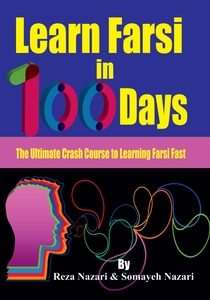
Serious about Persian? Get all 30 of our Persian learning books for $199.99 (55% less than buying them one by one).
Free Persian Starter Kit (PDF)
The Persian alphabet chart and the 101 most common Persian words with pronunciation, in one printable PDF. You also get a one-time 15% code for any of our books.
We will email you new lessons and book news from Learn Persian Online. Unsubscribe any time.Free: 100 Core Persian Words + 20 Survival Phrases
Get the 14-page printable Starter Pack (all 32 letters, a 7-day reading plan, 100 core words and 20 survival phrases) and a short 5-email course. Free.
by: Learn Persian Online Team about (category: Blog)




What people say about "Persian Words in English: 38 Words You Already Know, and Their Stories"?
No one replied yet.