Cyaxares, in Old Persian Uvakhshtra, was the Median king who turned the Medes into a great power. Allied with Nabopolassar of Babylon, he sacked the Assyrian holy city of Assur in 614 BCE and shared in the destruction of Nineveh in 612 BCE, ending the Assyrian Empire. Herodotus credits him with a 40-year reign, roughly 625 to 585 BCE, and with reorganising the Median army.
| Names | Greek Kyaxares; Babylonian Umakishtar; Old Persian Uvakhshtra |
|---|---|
| Reign | c. 625–585 BCE (40 years in Herodotus) |
| Father | Phraortes, according to Herodotus |
| Ally | Nabopolassar, king of Babylon (626–605 BCE) |
| Key victories | Assur 614 BCE; Nineveh 612 BCE; Harran 610 BCE |
| Successor | Astyages, his son |

A new kind of Median army
Herodotus (Histories 1.103) says Cyaxares was “much more warlike than his forefathers” and the first to organise the armies of Asia into separate units. Before him, he writes, spearmen, archers and horsemen were all mixed together; Cyaxares divided them by weapon. Whether he was really the first is doubtful, since the Assyrians had long used specialised troops, but the remark suggests that the Medes now fought as a disciplined army rather than as a crowd of tribal levies.
Many historians link the change to the Medes’ experience with Scythian horsemen during the 7th century (see Scythians and Cimmerians in Iran). Herodotus places the Scythian domination early in Cyaxares’s reign and says it ended when the Median king killed the Scythian leaders at a feast; that episode is told on Phraortes and the Scythian interregnum.
The war against Assyria
Assyria in the 620s BCE was weakened by civil war after the death of Ashurbanipal. In 626 BCE a Chaldean leader, Nabopolassar, made himself king of Babylon and spent ten years driving the Assyrians out of southern Mesopotamia. The Medes joined the war soon after.
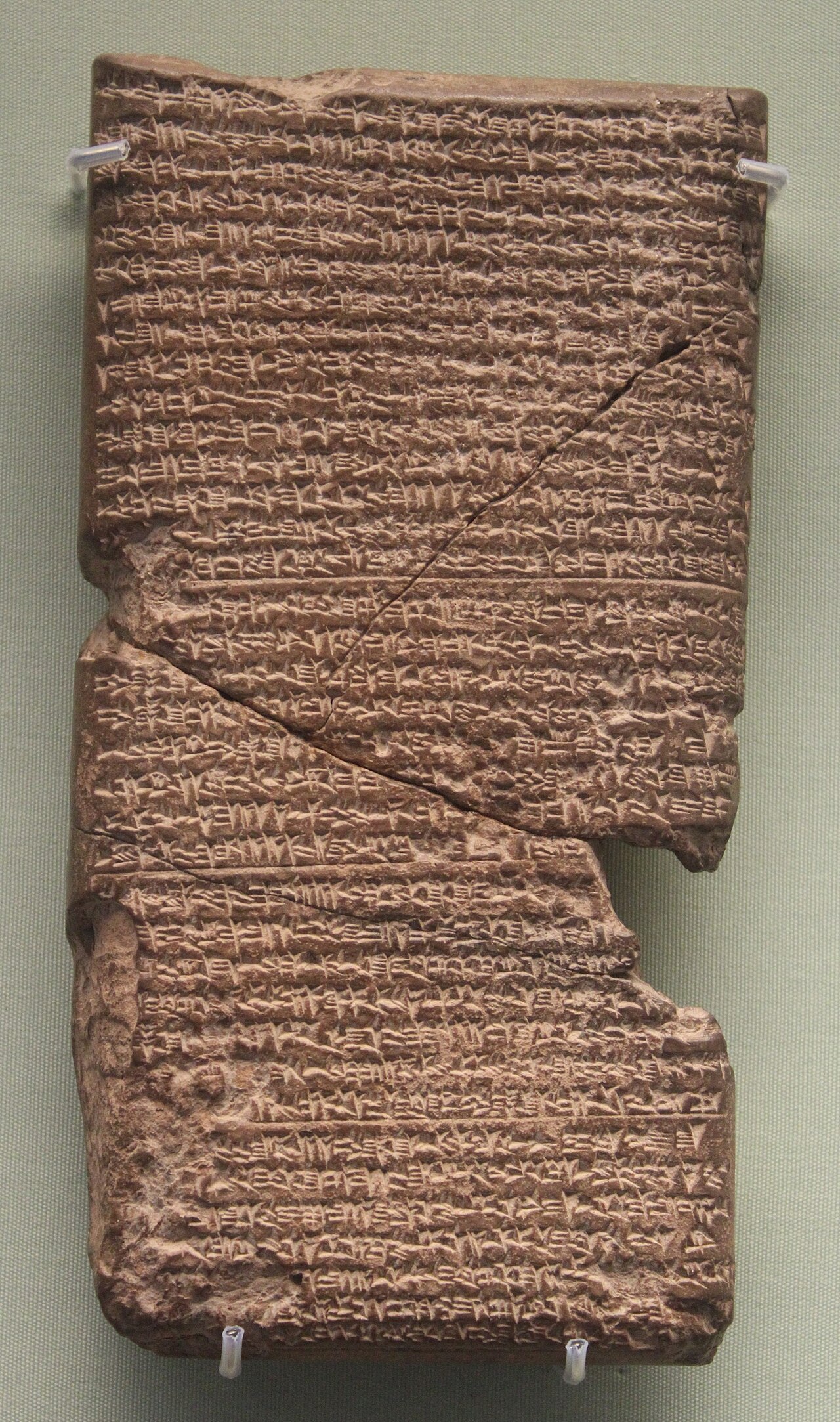
The most reliable account of what followed is a Babylonian chronicle, a dry year-by-year record kept by Babylonian scribes and now in the British Museum. It does not mention Cyaxares by his Greek name. It calls him Umakishtar and calls the Medes, in one passage, by the old literary term Umman-manda, “hordes from afar”.
Assur, 614 BCE
The chronicle says the Medes first came down to the region of Arrapha (modern Kirkuk) late in 615 BCE. The following summer Umakishtar marched on Nineveh, took the nearby town of Tarbisu and then attacked Assur, the old religious capital of Assyria. The city was taken, plundered and its people massacred. Nabopolassar arrived with the Babylonian army only after the fighting was over. The two kings met in the ruins of Assur and made a pact of friendship and peace.
Nineveh, 612 BCE
In 612 BCE the allies combined their armies and advanced up the Tigris to Nineveh, the largest city of the Assyrian Empire. The siege lasted about three months, from early summer to August. The chronicle says the city was taken, a great slaughter was made of its nobles, and the Assyrian king Sin-sharra-ishkun died. Great quantities of plunder were carried off and the city was turned into ruin heaps.
Excavations at Nineveh support the picture of violent destruction: skeletons of defenders were found in the Halzi Gate, and the great palaces were burned. Herodotus knew only that Cyaxares “took Nineveh” and subjected the Assyrians except for the Babylonian part of their land (1.106).
Harran, 610 BCE
A member of the Assyrian royal family, Ashur-uballit II, escaped and set up a last Assyrian court at Harran in northern Mesopotamia, backed by Egypt. In 610 BCE the Medes and Babylonians marched on Harran, and Ashur-uballit fled. An Assyrian and Egyptian attempt to retake the city in 609 BCE failed. Assyria disappeared as a state.
Dividing the spoils
The Babylonians took over the cities and plains of Mesopotamia and soon the Assyrian territories in Syria and Palestine. The Medes seem to have carried off booty and taken control of the highlands to the north and east of Assyria, including the old lands of the Mannaeans and Urartu, and the region around Harran. Why the Medes did not hold the rich Assyrian heartland is one of the puzzles of the period; some historians think they were raiders seeking plunder more than builders of a centralised state.
The alliance with Babylon was sealed by a marriage, according to the Babylonian priest Berossus, writing in Greek around 280 BCE. He says Nebuchadnezzar, Nabopolassar’s son, married a Median princess called Amytis and built the famous Hanging Gardens to remind her of her mountain homeland. Later sources disagree on whether her father was Cyaxares or Astyages, and no Babylonian text of the time confirms the story.
War in the west and death
The Median advance into eastern Anatolia brought Cyaxares into conflict with Lydia, the kingdom of western Asia Minor. A five-year war ended in a battle interrupted by a solar eclipse, after which the two kings made peace and fixed their border on the Halys River (see the Battle of the Eclipse). Herodotus says Cyaxares died soon after, having reigned 40 years including the Scythian years. His son Astyages succeeded him around 585 BCE.
A remembered founder
Cyaxares’s name lived on in Iran long after the fall of his dynasty. When revolts broke out against Darius I in 522 BCE, two rebels, one in Media and one in Sagartia, claimed to be descendants of Uvakhshtra, according to the Behistun inscription. For the Medes he was the king who had made them a power. Modern Iranian writers often call him Hovakhshatareh, from the Old Persian form of his name.
- 626 BCE Nabopolassar becomes king of Babylon
- 615 BCE Medes advance to Arrapha
- 614 BCE Medes sack Assur; Cyaxares and Nabopolassar make an alliance
- 612 BCE Medes and Babylonians destroy Nineveh
- 610 BCE The last Assyrian king flees Harran
- 585 BCE Battle of the Eclipse; peace with Lydia
Persian words from this page
| هووخشتره | Hovakhshatareh | Cyaxares |
| نینوا | Neynavâ | Nineveh |
| بابل | Bâbel | Babylon |
| آشور | Âshur | Assur, Assyria |
| سپاه | sepâh | army |
| دجله | Dejleh | the Tigris |
Sources and further reading
- The Babylonian “Fall of Nineveh” Chronicle (BM 21901), translated in A. K. Grayson, Assyrian and Babylonian Chronicles (1975), Chronicle 3.
- Herodotus, Histories, Book 1, chapters 73–74 and 103–106.
- Encyclopaedia Iranica, “Cyaxares“.
- J. Reade, “Why did the Medes invade Assyria?”, in Continuity of Empire (?): Assyria, Media, Persia (2003).
- Amélie Kuhrt, The Ancient Near East c. 3000–330 BC (1995), vol. 2.
Want to learn Persian? Get the free Starter Pack
Get the 14-page printable Starter Pack (all 32 letters, a 7-day reading plan, 100 core words and 20 survival phrases) and a short 5-email course. Free.
More in The Median Empire (c. 728–550 BCE)
- The Rise of the Medes and Deioces
- Ecbatana (Hamadan): Capital of the Medes
- Phraortes, the Scythian Interregnum and Median Expansion
- Scythians and Cimmerians in Iran
- Cyaxares the Great and the Fall of Nineveh
- The Battle of the Eclipse: Medes against Lydia
- Astyages, the Last Median King
- The Fall of Media and the Persian Revolt
- Median Society, Magi and Religion
- Herodotus and the Medes: Myth or History?