Phraortes is the second Median king in Herodotus’s list, said to have ruled for 22 years, conquered the Persians and died attacking Assyria. Assyrian documents of the 670s BCE name a Median leader, Kashtaritu, who led the first known Median revolt against Assyria, and many historians identify the two. Herodotus then describes a period of about 28 years when Scythian nomads dominated the Medes, an episode whose length and reality are still debated.
| Name in Herodotus | Phraortes, son of Deioces |
|---|---|
| Reign in Herodotus | 22 years (traditionally c. 675–653 BCE) |
| Assyrian figure | Kashtaritu (Iranian Khshathrita), city lord of Karkashshi, c. 672 BCE |
| Opponent | Esarhaddon of Assyria (680–669 BCE) |
| Scythian rule | 28 years in Herodotus, under Madyes son of Protothyes |
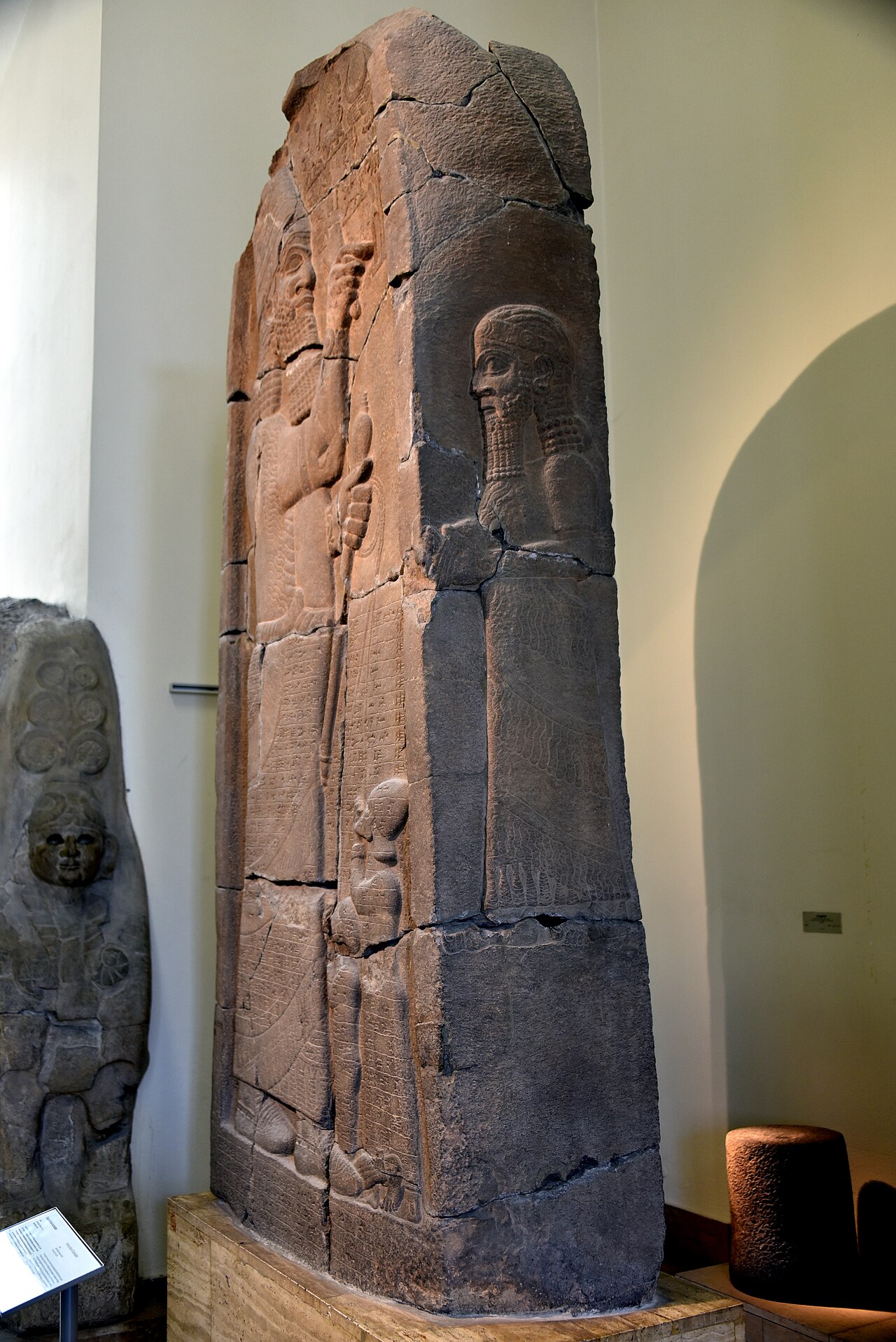

Phraortes in Herodotus
Herodotus gives Phraortes only a few lines (Histories 1.102). The son of Deioces, he was not satisfied with ruling the Medes alone. He attacked the Persians first and made them his subjects, then went on to conquer other peoples of Asia one after another. Finally he marched against the Assyrians of Nineveh, who, Herodotus says, had lost their allies but were still strong. Phraortes was killed in the campaign together with much of his army, after a reign of 22 years.
The conquest of the Persians is doubtful. The Persians of this period lived far to the south-east, in Anshan and the area of Fars, and their own royal family traced an independent line of kings (see Achaemenes and the early Persian kings of Anshan). Herodotus may have projected the later Median overlordship of Persia back to an earlier king.
Kashtaritu and the revolt of the 670s
Much firmer evidence comes from Assyria. About twenty questions put by the Assyrian king Esarhaddon to the sun god Shamash, through diviners reading the entrails of sacrificed sheep, survive from around 672 BCE. They ask, again and again, about one man: Kashtaritu, city lord of Karkashshi in the central Zagros.
The questions show the king’s anxiety. Will Kashtaritu, with the Cimmerians, the Medes and the Mannaeans, capture the Assyrian fortress towns of the border? Will he send messengers to other Median chiefs proposing a joint war? Should the Assyrian army be sent against him? Will Assyrian troops be able to escape from the Median forces? Another Median chief, Mamitiarshu, appears beside him.
The answers are not recorded, but the outcome is clear enough. The Assyrian provinces set up in western Media by Sargon II disappear from the records after this period, and Assyria never again controlled the Median highlands. Kashtaritu had created the first coalition of Medes, allied with neighbours and with steppe horsemen, strong enough to push Assyria back.
Treaties sworn by Median chiefs
In the same year, 672 BCE, Esarhaddon made his vassals swear to support the succession of his son Ashurbanipal. Copies of these oaths were excavated at Nimrud in 1955, and several are sworn by Median city lords, such as Ramataia of Urakazabanu. The tablets show that some Medes still served Assyria, possibly as guards at the royal court, even while others were in revolt. Median society at this time was divided among many chiefs, and not all followed Kashtaritu.
Phraortes, Kashtaritu and Khshathrita
Kashtaritu is the Assyrian spelling of an Iranian name, Khshathrita. Phraortes is the Greek form of a different Iranian name, Fravartish. The Russian historian Igor Diakonoff and others argued that they were the same man, known by a throne name and a personal name, and that Herodotus’s Phraortes is a memory of the leader of the 670s revolt.
A clue comes from much later. In 522 BCE a Median rebel against Darius I took the name Khshathrita and claimed descent from Cyaxares, according to the Behistun inscription, which also calls him Fravartish. That both names were linked to one pretender suggests that both belonged to the memory of the Median royal house. Not every scholar accepts the identification, and some think the Median dynasty of Herodotus was assembled later from such remembered names. The 522 revolt is told on the great revolts of 522–521 BCE.
The Scythian interregnum
According to Herodotus (1.103–106), when Phraortes’s son Cyaxares was besieging Nineveh, a great army of Scythians arrived from the north under their king Madyes, son of Protothyes. They had entered Asia in pursuit of the Cimmerians. The Scythians defeated the Medes and became masters of Asia for 28 years. They took tribute from every people, and in addition rode around seizing whatever they wanted. They reached as far as Egypt, where the pharaoh Psammetichus bought them off, and on their way back some of them plundered the temple of Aphrodite at Ascalon.
The domination ended, Herodotus says, through a trick. Cyaxares and the Medes invited most of the Scythians to a feast, made them drunk and killed them. The Medes then recovered their power.
How historians read the 28 years
Assyrian records confirm that Scythians were active in north-western Iran in the 670s, and that their king Partatua, whose name matches Herodotus’s Protothyes, asked for an Assyrian princess in marriage. That suggests Scythian ties with Assyria, which could explain why the Scythians turned on the Medes. But there is no contemporary record of a Scythian empire over Media, and the dates are hard to fit: if Cyaxares was already besieging Nineveh, the Scythian period would fall in the 620s, close to the Median-Babylonian victory of 612 BCE.
Some historians accept a real period of Scythian supremacy in the mid-7th century, perhaps c. 653–625 BCE. Others think Herodotus inflated a series of raids and alliances into an empire, or that the 28 years were a device to fill his chronology. The wider story of the steppe peoples in Iran is told on Scythians and Cimmerians in Iran, and the reign of Cyaxares on Cyaxares and the fall of Nineveh.
- c. 676 BCE Esarhaddon fights the Scythians under Ishpakai
- c. 672 BCE Oracle questions about Kashtaritu’s revolt; Median chiefs swear Esarhaddon’s succession oaths
- c. 670s–660s BCE Assyrian provinces in Media disappear from the records
- c. 653 BCE Death of Phraortes in Herodotus’s chronology
- c. 653–625 BCE Scythian domination as often reconstructed from Herodotus
Persian words from this page
| فرورتیش | Fravartish | Phraortes |
| سکاها | Sakâ-hâ | the Scythians |
| نینوا | Neynavâ | Nineveh |
| شورش | shuresh | revolt |
| پیمان | peymân | treaty, oath |
Sources and further reading
- Herodotus, Histories, Book 1, chapters 102–106.
- Ivan Starr, Queries to the Sungod: Divination and Politics in Sargonid Assyria, State Archives of Assyria IV (1990).
- Encyclopaedia Iranica, “Kashtariti” (M. Dandamayev).
- I. M. Diakonoff, “Media”, in The Cambridge History of Iran, vol. 2 (1985).
- The Behistun inscription of Darius I, column II.
Want to learn Persian? Get the free Starter Pack
Get the 14-page printable Starter Pack (all 32 letters, a 7-day reading plan, 100 core words and 20 survival phrases) and a short 5-email course. Free.
More in The Median Empire (c. 728–550 BCE)
- The Rise of the Medes and Deioces
- Ecbatana (Hamadan): Capital of the Medes
- Phraortes, the Scythian Interregnum and Median Expansion
- Scythians and Cimmerians in Iran
- Cyaxares the Great and the Fall of Nineveh
- The Battle of the Eclipse: Medes against Lydia
- Astyages, the Last Median King
- The Fall of Media and the Persian Revolt
- Median Society, Magi and Religion
- Herodotus and the Medes: Myth or History?