The Medes were an Iranian people of the central Zagros, around modern Hamadan, who in the 7th century BCE formed the first large state created by Iranians. Herodotus credits the start of their kingdom to a judge named Deioces, who he says was chosen king and built Ecbatana around 700 BCE; Assyrian records, written at the time, show a slower process in which many small chiefdoms lived under Assyrian pressure before a single Median power emerged.
| People | Medes (Assyrian Madai, Old Persian Māda) |
|---|---|
| Homeland | Central Zagros: the plains of Hamadan, Kermanshah and Malayer |
| First recorded | c. 835 BCE, annals of Shalmaneser III |
| Founder in Greek tradition | Deioces, reign of 53 years in Herodotus (traditionally c. 728–675 BCE) |
| Possible historical match | Daiukku, a local ruler deported by Sargon II in 715 BCE |
| Main sources | Assyrian royal annals and letters; Herodotus, Histories 1.95–101 |

A land of horse breeders and fortified villages
When Assyrian armies first pushed east into the Zagros in the 9th century BCE they met a patchwork of peoples. Some were older inhabitants of the mountains, others were Iranian speakers who had arrived over the previous centuries (the background is on the arrival of the Iranian peoples). The Medes held the high valleys along the great road that later ran from Mesopotamia through Kermanshah to Hamadan and on to the east, the route that became the Khorasan Road.
The land was good for horses. Assyrian scribes repeatedly list Median horses among the tribute and booty their kings carried home, and the Assyrian army depended on these mountain-bred animals for its chariots and cavalry. That made Media a target every campaigning season.
What the Assyrian annals show
Under Tiglath-pileser III (744–727 BCE) and Sargon II (721–705 BCE), Assyrian inscriptions name dozens of Median rulers, each called a “city lord” and each controlling a fortified settlement with its own district. There is no sign of a Median king in these texts. Assyrian commanders dealt with the chiefs one by one, taking tribute from some and attacking others. Tiglath-pileser claims to have reached as far as “Mount Bikni”, a snow-covered peak that scholars place either at Alvand above Hamadan or at Damavand.
Sargon went further and turned part of Media into Assyrian provinces. Around 716 BCE he took the town of Harhar, renamed it Kar-Sharrukin (“Fort Sargon”), settled deportees there and set up governors. For a few decades the western edge of Media was under direct Assyrian control.
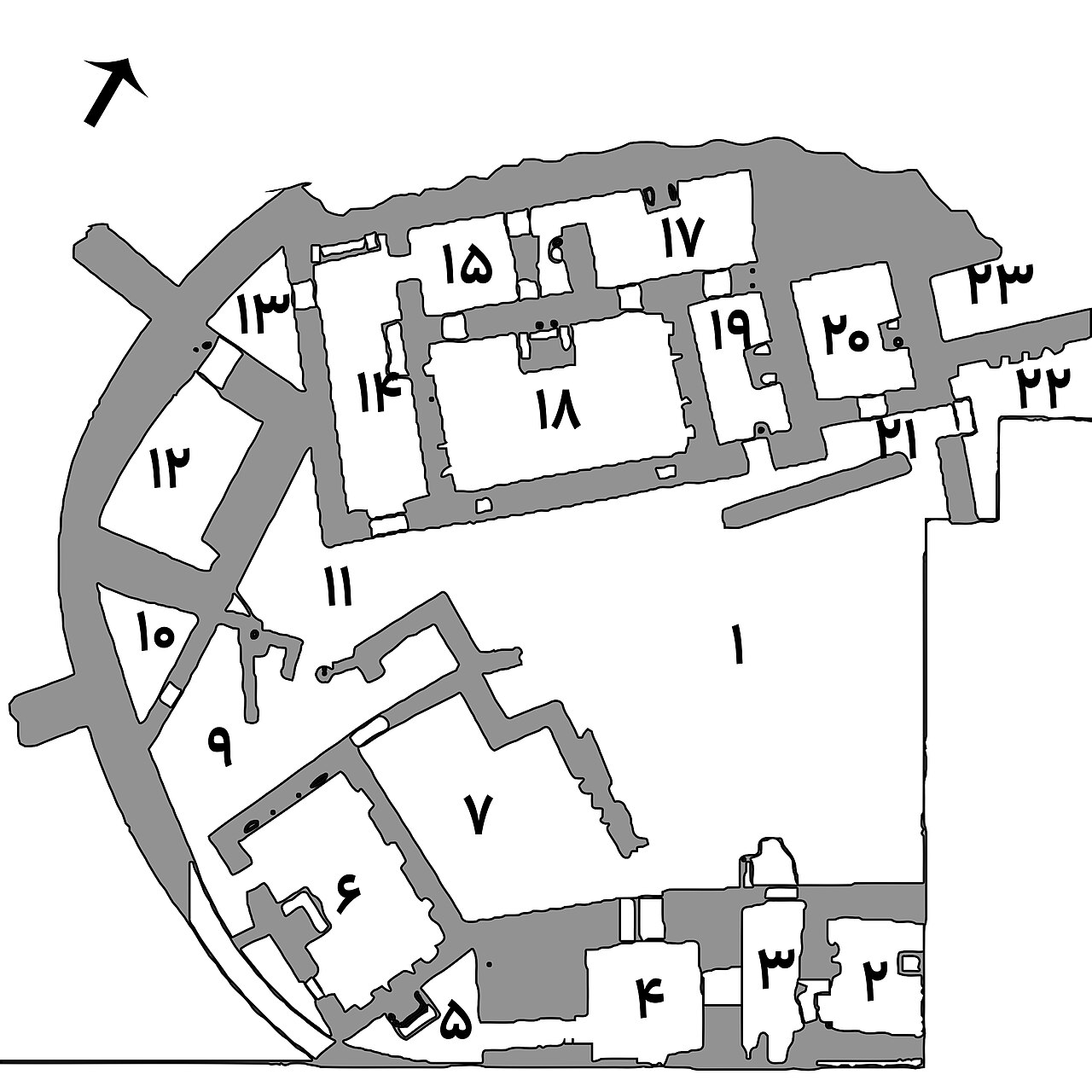
Archaeology fits this picture of local power. At Godin Tepe near Kangavar, Canadian excavators led by T. Cuyler Young uncovered a walled manor of the 8th and 7th centuries BCE with storerooms, towers and a columned hall. At Nush-i Jan near Malayer, a British team under David Stronach found a fort, a temple and another columned hall. These were the seats of chiefs, not palaces of a king of kings.
Daiukku and Deioces
One name in Sargon’s records has drawn much attention. In 715 BCE Sargon captured Daiukku, a provincial ruler in the borderlands of the Mannaean kingdom who had sided with Urartu, Assyria’s northern rival. Sargon deported him and his family to Hamath in Syria. Assyrian texts of the following years also mention a district called Bit-Daiukki, “the house of Daiukku”.
The name looks very close to Herodotus’s Deioces, and many historians think the Greek tradition preserved the memory of a real chief. But the match raises problems. Daiukku was a minor figure who was removed from Iran, not the founder of a dynasty, and the Assyrian sources place him on the Mannaean frontier rather than at Ecbatana. The most cautious view is that the name of a well-known local family was later attached to the founding story of the Median kingdom. The neighbouring peoples are described on the Mannaeans and Urartu.
Herodotus’s story of Deioces
Herodotus, writing in the 5th century BCE, gives the only connected account of how the Medes acquired a king (Histories 1.96–101). In his version the Medes lived in villages without a ruler, and lawlessness was everywhere. Deioces, son of Phraortes, was already respected in his own village for his fair judgements, and people from other villages began to bring their disputes to him.
Once everyone depended on him, Deioces announced that he would no longer judge, because it took all his time and left none for his own affairs. Robbery and violence returned. The Medes met in assembly and decided they needed a king, and Deioces’s friends made sure he was the one chosen.
He then asked for a palace and a bodyguard, and made the Medes build a single fortified city, Ecbatana, instead of living in scattered villages. He also created the rules of a court: nobody could come into the king’s presence; all business went through messengers; and it was forbidden to laugh or spit in front of him. Herodotus explains that Deioces wanted his former equals, who had grown up with him, to stop seeing him as an ordinary man. He ruled, Herodotus says, for 53 years.
Reading the story
The tale is well told, and it may contain old Median memories, but it is also a Greek reflection on how a free community hands its power to one man. Its main ideas, the judge who becomes king and the ruler hidden behind a wall of ceremony, belong to Greek political thought and to what Greeks saw of Persian court life in their own day. Herodotus’s whole Median chronology, and the debate over whether it can be trusted, is examined on Herodotus and the Medes: myth or history?
The six tribes
Herodotus says Deioces united six Median tribes: the Busae, Paretaceni, Struchates, Arizanti, Budii and Magi. The Arizanti have a name that seems to mean “of Aryan descent”, and the Magi became the hereditary priests of later Iran. No Assyrian text names these tribes, and it is unclear whether they were kin groups, regional units or social classes. The Magi and Median social structure are described on Median society, Magi and religion.
From chiefdoms to a kingdom
Most historians today see the Median state as the result of a long process rather than a single founding act. Constant Assyrian demands for horses and tribute, and the presence of Assyrian garrisons, gave the chiefs reasons to combine. In the 670s BCE Assyrian oracle questions show a Median leader called Kashtaritu forming a coalition against Assyria, the first sign of a wider Median alliance (see Phraortes and the Scythian interregnum). By 615 BCE the Medes could field an army strong enough to attack the Assyrian heartland.
The capital Herodotus attributes to Deioces, and what excavators have actually found there, is the subject of Ecbatana, capital of the Medes.
- c. 835 BCE Shalmaneser III of Assyria reaches the land of the Medes
- 737 BCE Tiglath-pileser III campaigns in Media
- c. 716 BCE Sargon II makes Harhar an Assyrian province
- 715 BCE Sargon deports Daiukku to Hamath
- c. 700 BCE Approximate date for Deioces’s kingship in Herodotus’s scheme
- c. 672 BCE Kashtaritu leads a Median coalition against Assyria
Persian words from this page
| ماد | Mâd | Media, land of the Medes |
| دیاکو | Diyâku | Deioces |
| هگمتانه | Hegmatâneh | Ecbatana |
| آشور | Âshur | Assyria |
| قبیله | ghabileh | tribe |
| اسب | asb | horse |
Sources and further reading
- Herodotus, Histories, Book 1, chapters 95–101.
- Encyclopaedia Iranica, “Media” (M. A. Dandamayev and I. N. Medvedskaya).
- Encyclopaedia Iranica, “Deioces“.
- I. M. Diakonoff, “Media”, in The Cambridge History of Iran, vol. 2 (1985).
- Amélie Kuhrt, The Ancient Near East c. 3000–330 BC (1995), vol. 2.
- G. B. Lanfranchi, M. Roaf and R. Rollinger (eds.), Continuity of Empire (?): Assyria, Media, Persia (2003).
Want to learn Persian? Get the free Starter Pack
Get the 14-page printable Starter Pack (all 32 letters, a 7-day reading plan, 100 core words and 20 survival phrases) and a short 5-email course. Free.
More in The Median Empire (c. 728–550 BCE)
- The Rise of the Medes and Deioces
- Ecbatana (Hamadan): Capital of the Medes
- Phraortes, the Scythian Interregnum and Median Expansion
- Scythians and Cimmerians in Iran
- Cyaxares the Great and the Fall of Nineveh
- The Battle of the Eclipse: Medes against Lydia
- Astyages, the Last Median King
- The Fall of Media and the Persian Revolt
- Median Society, Magi and Religion
- Herodotus and the Medes: Myth or History?