Spitamenes was a Sogdian nobleman who led the longest and most costly resistance Alexander the Great faced anywhere in the Persian Empire. From 329 to 328 BCE he and his allies tied down the Macedonian army in Bactria and Sogdiana, the north-eastern Iranian lands between the Hindu Kush and the Syr Darya, and wiped out a Macedonian column at the Polytimetus river. He was killed in the winter of 328 to 327, and his daughter Apama became the mother of the Seleucid kings.
| Date | Summer 329 to spring 327 BCE |
|---|---|
| Region | Bactria (northern Afghanistan) and Sogdiana (Uzbekistan and Tajikistan) |
| Leaders | Spitamenes, Dataphernes, Oxyartes, Sisimithres (Chorienes); Saka and Massagetae allies |
| Key event | Destruction of a Macedonian force at the Polytimetus (Zeravshan) river, 329 BCE |
| Outcome | Spitamenes killed; the region pacified by force and by marriage alliances |
Bactria and Sogdiana before Alexander
Bactria, around Bactra (later Balkh), and Sogdiana, around Maracanda (Samarkand), were among the richest provinces of the Achaemenid Empire. They were Iranian lands, with an aristocracy of horse-owning lords who lived in fortified manors and hilltop strongholds, and they bordered the steppe nomads, the Saka and Massagetae, with whom they traded, fought and intermarried. The satrap of Bactria was often a royal prince. In 330 BCE the satrap was Bessus, who killed Darius III and proclaimed himself king (see the death of Darius III and Bessus).
From allies of Bessus to leaders of the revolt
When Alexander crossed the Hindu Kush in spring 329, Bessus retreated over the Oxus (Amu Darya) into Sogdiana. His Sogdian supporters, Spitamenes and Dataphernes, decided he was a lost cause and offered to hand him over. Ptolemy, the future king of Egypt, rode ahead and took him. The Sogdians may have hoped that Alexander, having his king-killer, would leave their country alone, as distant Persian kings had largely done.
He did not. Alexander marched to Maracanda and on to the Jaxartes (Syr Darya), the old frontier of the empire, where he began to build a fortified city, Alexandria Eschate, “the furthest”, near modern Khujand. He also summoned the local lords to a meeting at Bactra, which they seem to have read as a trap. In late summer 329 the whole region rose. The garrisons in seven towns along the Jaxartes, including the city the Greeks called Cyropolis, founded by Cyrus the Great, were massacred.
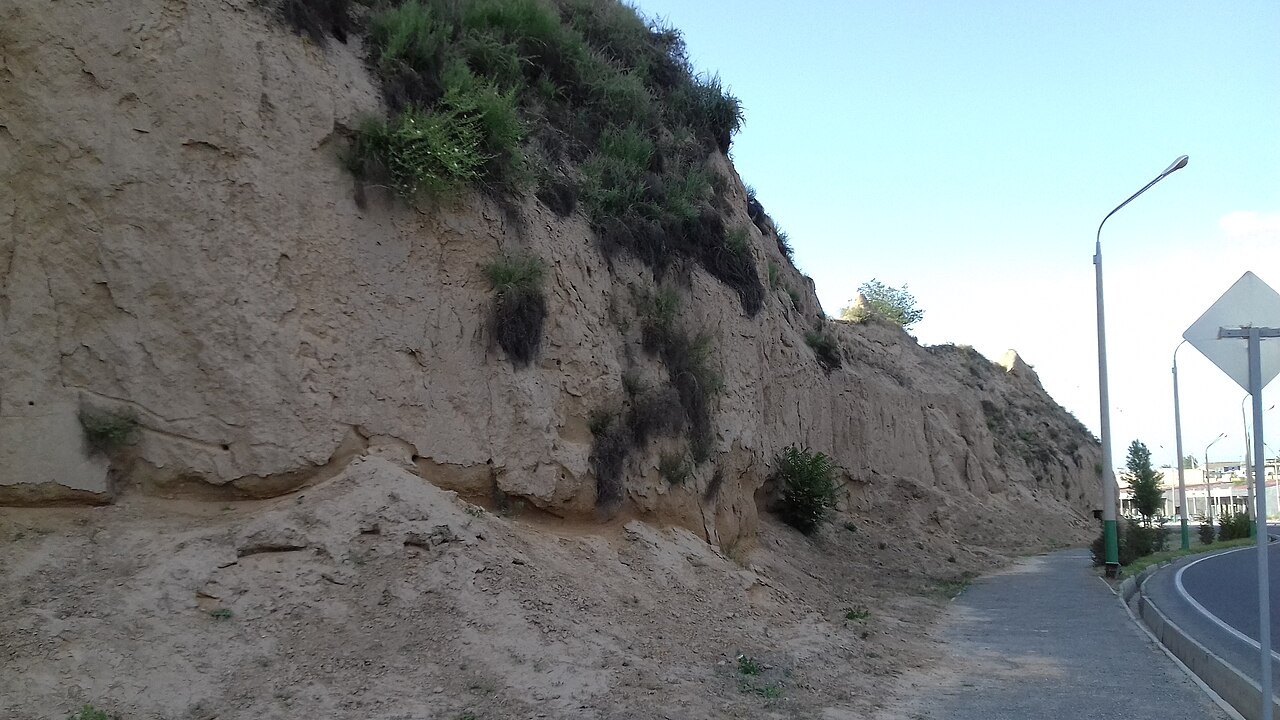

The towns on the Jaxartes and the Saka
Alexander’s answer was fast and brutal. According to Arrian, he took five of the seven towns in two days. At Cyropolis he was hit on the head and neck by a stone and for a time could barely see or speak. The men of the towns were killed and the women and children enslaved. Saka horsemen gathered on the far bank of the Jaxartes, and Alexander crossed the river under cover of catapults and drove them off, though he fell ill from bad water during the pursuit.
Disaster at the Polytimetus
Meanwhile Spitamenes laid siege to the Macedonian garrison in the citadel of Maracanda. Alexander sent a relief force which Arrian puts at 1,500 mercenary infantry and about 860 cavalry, commanded jointly by officers who disagreed with each other and by Pharnuches, an interpreter who knew the local languages. Spitamenes, reinforced by Scythian horsemen, drew them west along the Polytimetus river (the Zeravshan) toward the desert. His mounted archers circled the column, shooting without closing in. The Macedonians tried to retreat across the river to a wooded island and were cut down. Arrian says only about 40 horsemen and 300 foot soldiers escaped. It was the worst defeat of Alexander’s career, and Curtius claims he forbade survivors to speak of it.
Alexander marched to Maracanda with his fastest troops, covering, Arrian says, 1,500 stades (roughly 270 kilometres) in three days. Spitamenes had already gone back into the steppe. Alexander buried the dead and laid waste the Zeravshan valley, killing those who had taken refuge in its strongholds.
A war of raids, 328 BCE
The next year was a guerrilla war. Alexander split his army into five columns that swept through Sogdiana, taking forts and settling garrisons. Spitamenes struck elsewhere. With some 600 Massagetae horsemen he raided Bactria, surprised a fort near Zariaspa and carried off cattle, beating a small force sent after him before the general Craterus drove him back into the desert. The strain showed in the Macedonian camp: it was at Maracanda in the autumn of 328 that Alexander, drunk, killed his friend Cleitus with a spear after Cleitus mocked his Persian manners.
The death of Spitamenes
In the winter of 328 to 327 Spitamenes tried one more invasion with Sogdian, Bactrian and Massagetae horsemen, and was defeated by the general Coenus at a place the Greeks called Gabae. The defeat broke his alliance. Arrian says the Massagetae, hearing that Alexander was coming, cut off Spitamenes’ head and sent it to him to buy peace. Curtius tells a more dramatic tale in which his own wife killed him and brought the head to the Macedonian camp. Either way, the most dangerous Iranian leader of the war was dead.
The rocks, Roxana and the end of the revolt
Resistance went on in the mountain fortresses. In spring 327 Alexander took the Sogdian Rock, where the Bactrian lord Oxyartes had placed his family. When the defenders jeered that he would need soldiers with wings, he asked for volunteers to climb the cliffs at night with iron tent pegs and ropes; when about 300 appeared on the summit, the defenders surrendered. Among the captives was Oxyartes’ daughter Roxana, whom Alexander married (see Roxana and the mass weddings at Susa). The Rock of Chorienes, the stronghold of Sisimithres, surrendered soon after, partly through Oxyartes’ persuasion.
When Alexander left for India in 327, Arrian says he left 10,000 infantry and 3,500 cavalry to hold Bactria: a sign of how hard the region was to keep. Thousands of Greek settlers were placed there in new cities. Many of them hated it, and they revolted and tried to march home in 325 and again after Alexander’s death.
Why the revolt matters
The Greek sources, written from the Macedonian side, call Spitamenes a traitor and a rebel. Seen from Bactria and Sogdiana, he defended his country against an invader whom his own king, Bessus, had failed to stop. Modern historians such as Frank Holt have shown how long and costly this war was, more like a counter-insurgency than the famous pitched battles, and how it changed Alexander’s methods: more garrisons, more cities, and alliances through marriage with the local nobility.
One of those marriages had a lasting result. At Susa in 324 Alexander married Spitamenes’ daughter Apama to his officer Seleucus. Seleucus kept her when most others put away their Iranian wives, and their son became Antiochus I, so every later Seleucid king descended from the Sogdian rebel. The north-east remained a world apart: within a century Greek settlers there had founded the independent Greco-Bactrian kingdom.
Persian words from this page
| سغد | Soghd | Sogdiana |
| باختر | Bâkhtar | Bactria |
| بلخ | Balkh | Bactra, capital of Bactria |
| سمرقند | Samarqand | Samarkand (Maracanda) |
| جیحون | Jeyhun | Oxus, Amu Darya |
| سیحون | Seyhun | Jaxartes, Syr Darya |
Sources and further reading
- Arrian, Anabasis of Alexander, Book 3.28 to Book 4.22.
- Quintus Curtius Rufus, History of Alexander, Books 7 and 8.
- Frank L. Holt, Into the Land of Bones: Alexander the Great in Afghanistan (University of California Press, 2005).
- A. B. Bosworth, Conquest and Empire: The Reign of Alexander the Great (Cambridge University Press, 1988).
- Encyclopaedia Iranica, “Bactria” and “Sogdiana”.
Want to learn Persian? Get the free Starter Pack
Get the 14-page printable Starter Pack (all 32 letters, a 7-day reading plan, 100 core words and 20 survival phrases) and a short 5-email course. Free.
More in Alexander and the Seleucid Empire (330–141 BCE)
- Alexander the Great in Iran
- Spitamenes and the Revolt of Bactria and Sogdiana
- Roxana and the Mass Weddings at Susa
- Alexander’s Death and the Wars of the Successors in Iran
- The Battles of Paraitakene and Gabiene
- Seleucus I Nicator and the Seleucid Empire
- Iran under the Seleucids
- The Greco-Bactrian Kingdom
- Antiochus III’s Eastern Anabasis
- The Fratarakas: Local Rulers of Persis
- Greek Culture in Iran
- How the Seleucids Lost Iran