The “anabasis” (march up-country) of Antiochus III was a Seleucid campaign through Iran and Central Asia between about 210 and 205 BCE. Antiochus marched from Media through Parthia to Bactria and the borders of India, forcing the breakaway Parthian and Greco-Bactrian kings to accept him as overlord. It was the last time a Seleucid king ruled, even loosely, from Syria to the Hindu Kush, and it earned him the title “the Great”.
| King | Antiochus III, reigned 223 to 187 BCE |
|---|---|
| Campaign | c. 212 to 205 BCE (Armenia from 212; Iran and Central Asia 210 to 205) |
| Route | Ecbatana, Hecatompylos, Hyrcania, Arius river, Bactra, Hindu Kush, Arachosia, Carmania, Persian Gulf |
| Opponents | Arsaces II of Parthia, Euthydemus I of Bactria |
| Main source | Polybius, Books 10, 11 and 13 (fragmentary) |
A kingdom falling apart
Antiochus III became king in 223 BCE, aged about 20, after his elder brother was murdered. The Seleucid kingdom he inherited was shrinking. Bactria had a Greek king of its own, the Parni nomads had taken Parthia (see the Greco-Bactrian kingdom and the Parni and Arsaces I), and a cousin, Achaeus, was setting himself up as king in Asia Minor.
The first crisis was in Iran itself. In 222 Molon, governor of the upper satrapies with his base in Media, and his brother Alexander, satrap of Persis, rebelled. Molon called himself king and took Seleucia on the Tigris. Antiochus marched against him in 220, and when Molon’s left wing went over to the king, Molon killed himself. Antiochus then invaded Media Atropatene and forced its old ruler Artabazanes to accept Seleucid overlordship. Polybius describes these years in detail in Book 5.
The young king then turned west. He lost the Battle of Raphia against Ptolemy IV of Egypt in 217, then spent four years crushing Achaeus. Only after that, around 212, was he free to look east.
Armenia and Media: money for the march
The campaign began in Armenia, where Antiochus besieged the king Xerxes at Arsamosata and made him a vassal. He then came to Ecbatana (Hamadan), the old capital of Media. Polybius, who describes the city’s citadel and its palace with cedar and cypress beams once plated with silver and gold, says Antiochus stripped the gilded columns of the temple of the goddess Aine there, probably Anahita, and took coined silver worth nearly 4,000 talents. That paid for the expedition.
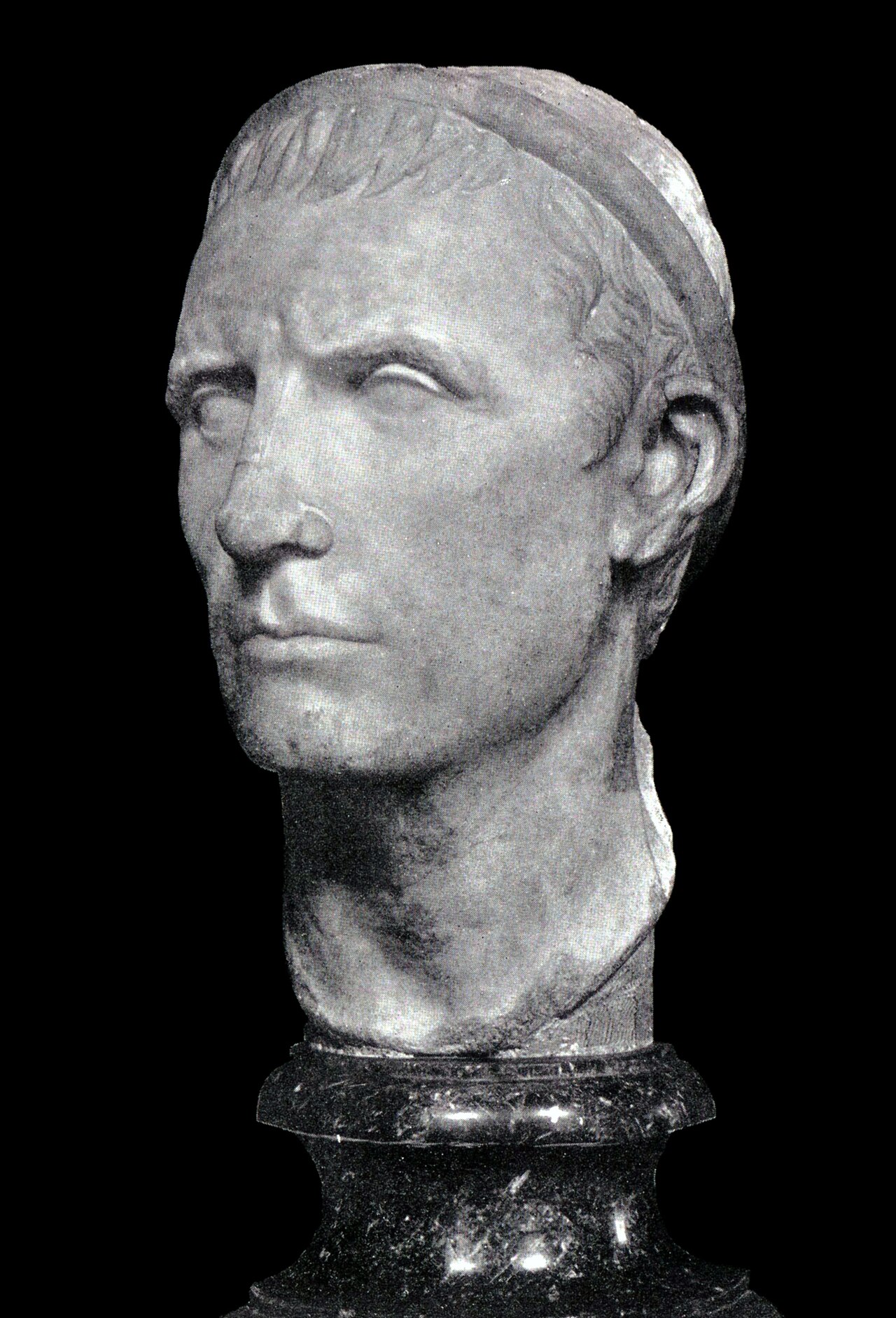

Parthia, 209 BCE
From Media, Antiochus marched east across the desert edge toward Parthia. The Parthian king, Arsaces II, had tried to block the march by filling in the wells and underground water channels along the route. Polybius’s account of this is one of the earliest descriptions of qanats, and he explains that they had been built under the Persians, who granted the land for five generations to anyone who brought water to it (see qanats).
Antiochus took the Parthian capital Hecatompylos without a fight. He then forced the passes of the Alborz mountains into Hyrcania, where Polybius describes light troops climbing the slopes to dislodge the defenders, and took the stronghold of Sirynx after a siege. Arsaces made peace and became an ally of the Seleucid king. He kept his throne, but as a vassal.
Bactria, 208 to 206 BCE
In 208 Antiochus moved against Euthydemus of Bactria. At the crossing of the Arius river he led a cavalry charge himself, had his horse killed under him and lost several teeth to a blow in the mouth, but drove off the Bactrian horsemen. Euthydemus withdrew to Bactra, and a siege of about two years followed.
It ended in a negotiated peace. Euthydemus argued that he had not rebelled against Antiochus but had overthrown the family of the true rebels, and that both Greek kings had an interest in keeping the steppe nomads out. Antiochus recognised him as king, accepted his elephants and promised a daughter in marriage to Euthydemus’s son Demetrius.
To India and home by sea
In 206 Antiochus crossed the Hindu Kush and renewed the old friendship of Seleucus I with the Mauryas, meeting an Indian king Polybius calls Sophagasenus, who gave him more elephants. His army now had about 150. He returned through Arachosia, Drangiana and Carmania, where he spent the winter, and in 205 he sailed down the Persian Gulf to Gerrha, a rich trading city on the Arabian shore. The Gerrhaeans asked to keep their freedom and paid with 500 talents of silver, 1,000 talents of frankincense and 200 talents of myrrh oil.
He came back to the west with the title basileus megas, “Great King”, the old title of the Achaemenid kings. The Greeks compared his march to Alexander’s.
What the anabasis achieved
Historians judge the campaign in two ways. On one view it was a great success: Antiochus reached every corner of the old empire, gathered huge sums and many elephants, and turned two independent kingdoms back into allies of the Seleucid house. On the other, he did not reconquer anything. Parthia and Bactria kept their own kings and armies, and their loyalty depended on the power of the Seleucids to come back. The arrangement was closer to the overlordship of a Persian Great King over vassal kings than to direct rule.
That power did not last. In the following years Antiochus won southern Syria from Egypt at Panium in 200, but then clashed with Rome. Defeated at Thermopylae in 191 and Magnesia in 190, he accepted the Peace of Apamea in 188: he gave up Asia Minor beyond the Taurus and agreed to pay a huge indemnity of 15,000 talents. Short of money, he went east again, and in 187 he was killed in Elymais, in the mountains north of Susa, while trying to seize the treasures of a temple of Bel. The need to pay Rome weakened his successors, and within fifty years the Parthians held most of Iran (see how the Seleucids lost Iran).
- 223 BCE Antiochus III becomes king
- 222 to 220 BCE Revolt and defeat of Molon in Media
- 212 BCE Campaign in Armenia
- 210 BCE Ecbatana; temple treasure seized
- 209 BCE Hecatompylos and Hyrcania; peace with Arsaces II
- 208 to 206 BCE Battle at the Arius; siege of Bactra; peace with Euthydemus
- 206 to 205 BCE India, Arachosia, Carmania, Gerrha
- 187 BCE Death in Elymais
Persian words from this page
| آناهیتا | Ânâhitâ | Anahita, goddess of waters |
| قنات | qanât | underground water channel |
| البرز | Alborz | the Alborz mountains |
| گرگان | Gorgân | Gorgan, the region of ancient Hyrcania |
| کرمان | Kermân | Kerman, ancient Carmania |
| خلیج فارس | Khalij-e Fârs | the Persian Gulf |
Sources and further reading
- Polybius, Histories 5.40 to 5.55 (Molon), 10.27 to 10.31 and 10.49 (Media, Parthia, Bactria), 11.34 (Bactria and India), 13.9 (Gerrha).
- John Ma, Antiochos III and the Cities of Western Asia Minor (Oxford University Press, 1999).
- Susan Sherwin-White and Amélie Kuhrt, From Samarkhand to Sardis (Duckworth, 1993).
- Hatto H. Schmitt, Untersuchungen zur Geschichte Antiochos’ des Grossen und seiner Zeit (Steiner, 1964).
- Cambridge History of Iran, vol. 3 (1) (1983), chapters on the Seleucid period and on Parthia.
Want to learn Persian? Get the free Starter Pack
Get the 14-page printable Starter Pack (all 32 letters, a 7-day reading plan, 100 core words and 20 survival phrases) and a short 5-email course. Free.
More in Alexander and the Seleucid Empire (330–141 BCE)
- Alexander the Great in Iran
- Spitamenes and the Revolt of Bactria and Sogdiana
- Roxana and the Mass Weddings at Susa
- Alexander’s Death and the Wars of the Successors in Iran
- The Battles of Paraitakene and Gabiene
- Seleucus I Nicator and the Seleucid Empire
- Iran under the Seleucids
- The Greco-Bactrian Kingdom
- Antiochus III’s Eastern Anabasis
- The Fratarakas: Local Rulers of Persis
- Greek Culture in Iran
- How the Seleucids Lost Iran