The Iranian peoples, speakers of the languages that became Avestan, Median, Old Persian and eventually modern Persian, spread onto the Iranian plateau during the second and early first millennia BCE. They were one branch of the Indo-Iranian family that had formed further north, in Central Asia and the steppes. By about 835 BCE Assyrian records name two of their peoples in the Zagros: the Medes and the Persians.
| When | Gradual movement, c. 1500–800 BCE (much debated) |
|---|---|
| From | Central Asia and the Eurasian steppes |
| Language family | Indo-European, Indo-Iranian branch |
| Earliest Iranian texts | Old Avestan Gathas (oral, date uncertain); Old Persian inscriptions from c. 520 BCE |
| First named in history | Parsua and the Medes (Amadai) in Assyrian annals, c. 835 BCE |
One family, two branches
The clearest evidence for where the Iranians came from is their language. Persian belongs to the Indo-European family, with English, Greek, Latin and Russian. Within that family it is closest to the languages of northern India, and the two groups together are called Indo-Iranian.
The oldest texts of the two branches, the Rigveda in Sanskrit and the Avesta in Avestan, are so close that whole lines can be converted from one to the other by regular sound rules. Iranian regularly changed an older s to h, so Sanskrit sapta, “seven”, corresponds to Avestan hapta and modern Persian haft. The same rule turned the river name Sindhu into the Persian Hindu, which is where the words Hindu and India ultimately come from. Both traditions share gods and rituals: Mitra and Mithra, the sacred plant drink soma and haoma, the idea of cosmic order called rta in Sanskrit and asha in Avestan.
Linguists conclude that a single Proto-Indo-Iranian people existed, probably in the late third or early second millennium BCE, and then split. Many archaeologists link them with the Sintashta and Andronovo cultures of the steppes east of the Urals, which had chariots and horse burials, and with contact with the oasis towns of the Bactria–Margiana Archaeological Complex in today’s Turkmenistan and Afghanistan.
The Indo-Aryans of Mitanni
The first datable traces of the family come not from Iran but from northern Syria. The kingdom of Mitanni, whose people mostly spoke Hurrian, had a ruling class with Indo-Aryan names. A treaty with the Hittites from the fourteenth century BCE calls on the gods Mitra, Varuna, Indra and the Nasatya twins, and a Hittite horse-training manual by a Mitannian named Kikkuli uses Indo-Aryan numbers. This shows that Indo-Iranian speakers had reached the Near East by the middle of the second millennium BCE, though these were the Indian, not the Iranian, branch.
Moving onto the plateau
How and when Iranian speakers entered Iran is much harder to pin down. Several routes have been proposed: from Central Asia through Khorasan, across the Caucasus, or along both. Most scholars imagine not a single invasion but a long process in which groups of herders moved in over centuries and mixed with the existing populations, some of whom, like the Elamites and Hurrians, kept their own languages for a long time.
Archaeologists have searched for a material sign of the newcomers. From about 1500–1450 BCE, northern and western Iran saw the spread of burnished grey pottery and new burial customs, with cemeteries placed apart from settlements, in what is called Iron Age I. The American archaeologist T. Cuyler Young suggested in the 1960s that this marked the arrival of Iranians. Others point out that pots do not speak a language, and that much of this culture grew out of local traditions. Sites of this period include Hasanlu, Marlik and the cemeteries of Sialk.
Ancient DNA has begun to add evidence. Studies published since 2016 show that people in Iron Age Iran carried some ancestry from the steppe, but much less than in parts of South Asia, and that most of their ancestry continued from earlier populations of the plateau going back to farmers like those of Ganj Dareh. That fits the picture of a language spreading through limited migration and mixing, not mass replacement.

Avestan and Old Persian
Two old Iranian languages survive in writing.
- Avestan is the language of the Zoroastrian scriptures. Its oldest layer, the Gathas attributed to Zoroaster, is linguistically very close to the Rigveda and may go back to the late second millennium BCE, though it was passed down orally for many centuries. Its place names point to eastern Iran and Central Asia. See Zoroaster and the Avesta.
- Old Persian, the language of Darius I and his successors, is known from royal inscriptions in a special cuneiform script from about 520 BCE onward. It is the direct ancestor of Middle Persian and modern Persian. See Old Persian language and cuneiform.
Median, the language of the Medes, has left no texts of its own, only words borrowed into Old Persian and names in Assyrian and Greek sources.
Medes and Persians in the Assyrian records
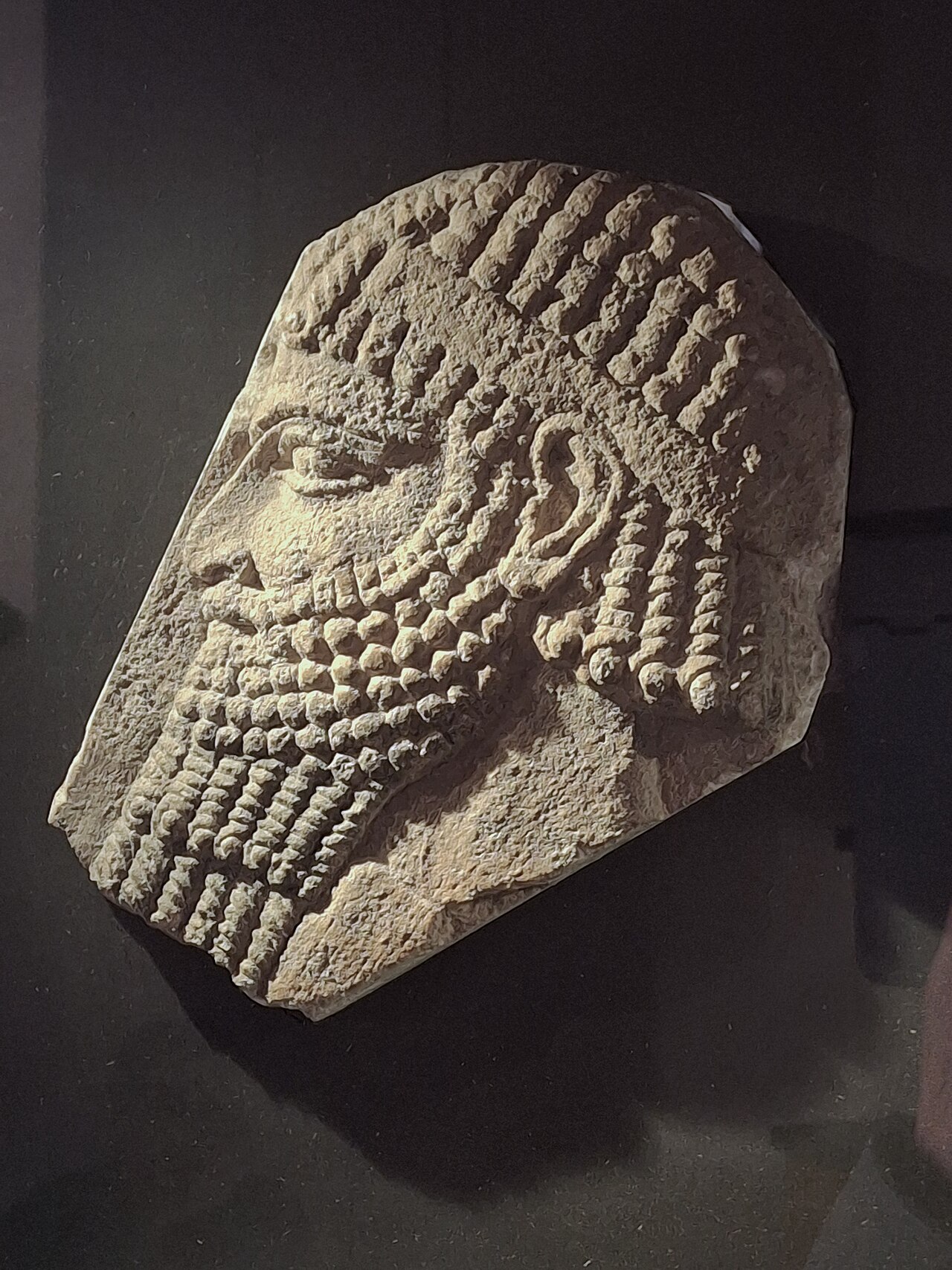
Iranian peoples step into written history through the annals of Assyria, whose kings campaigned every summer in the Zagros. In about 835 BCE, his 24th year, Shalmaneser III reports receiving tribute from “27 kings of the land of Parsua” and then going down into the land of the Amadai, the Medes. Parsua then lay in the central Zagros, west of today’s Hamadan.
Later kings give more detail. Tiglath-pileser III and Sargon II, in the late eighth century BCE, list dozens of Median “city lords”, each controlling a fortified settlement, and describe the Medes as “distant” and famous for their horses. Sargon deported a Median chief named Daiukku, whom some historians identify with Deioces, the founder of the Median kingdom in Herodotus. That story continues in the rise of the Medes.
By the seventh century BCE another land, Parsumash, appears further south-east near Elam, and the Persians were settling in the highland of Anshan, the old Elamite heartland now called Pars or Fars. Whether the Parsua of the Zagros and the Persians of Fars were the same people who moved, or simply shared a name, is still debated.
The name “Iran”
Iranian peoples called themselves by a word that appears as airiia in Avestan and ariya in Old Persian. Darius I describes himself as “a Persian, son of a Persian, an Aryan, of Aryan lineage”. Under the Sasanians the land was called Ērān, the land of the Aryans, from which modern Iran comes. In the nineteenth and twentieth centuries the word “Aryan” was misused in Europe for racist theories; in its original Iranian sense it was a name for a people and its language, not a racial category.
Persian words from this page
| ایران | Irân | Iran |
| هفت | haft | seven |
| ماد | Mâd | Media, the Medes |
| پارس | Pârs | Persis, Fars |
| فارسی | fârsi | Persian (language) |
| اوستا | Avestâ | Avesta |
| اسب | asb | horse |
Sources and further reading
- Mallory, J. P., In Search of the Indo-Europeans: Language, Archaeology and Myth, Thames and Hudson, 1989.
- Kuz’mina, E. E., The Origin of the Indo-Iranians, Brill, 2007.
- Young, T. C., “The Iranian Migration into the Zagros”, Iran 5 (1967).
- Kuhrt, A., The Persian Empire: A Corpus of Sources from the Achaemenid Period, Routledge, 2007 (Assyrian texts on the Medes and Persians; Darius’s inscriptions).
- Encyclopaedia Iranica, “Aryans” (iranicaonline.org).
- Narasimhan, V. M. et al., “The formation of human populations in South and Central Asia”, Science 365 (2019).
Want to learn Persian? Get the free Starter Pack
Get the 14-page printable Starter Pack (all 32 letters, a 7-day reading plan, 100 core words and 20 survival phrases) and a short 5-email course. Free.
More in Early Iran and Elam (c. 3200–700 BCE)
- Prehistoric Iran: The First Villages of the Iranian Plateau
- Proto-Elamite Civilization and the First Writing in Iran
- The Jiroft Culture and the Halil Rud Treasures
- Shahr-e Sukhteh: The Burnt City of Sistan
- Elam: Iran’s First Great Kingdom
- The Middle Elamite Kingdom and Untash-Napirisha
- The Neo-Elamite Period and the Assyrian Sack of Susa
- Susa: 6,000 Years of an Ancient City
- Chogha Zanbil Ziggurat
- Elamite Language and Writing
- The Arrival of the Iranian Peoples
- The Mannaeans, Urartu and North-West Iran
- Marlik and the Gilan Hill Cultures
- The Luristan Bronzes
- Zoroaster and the Avesta