The Parni were a nomadic people of the Dahae confederation who lived on the steppe east of the Caspian Sea. In the middle of the 3rd century BCE their leader Arsaces took the Seleucid province of Parthia, in what is now north-eastern Iran and southern Turkmenistan, and founded the Arsacid dynasty. His descendants ruled Iran for almost five centuries, until 224 CE.
| People | Parni (Aparni), one of the Dahae tribes |
|---|---|
| Homeland | Steppe between the Caspian, the Atrek valley and the Kopet Dag |
| Founder | Arsaces I, ruled c. 247 to c. 217 BCE (dates uncertain) |
| Takeover of Parthia | c. 238 BCE |
| Arsacid era begins | 247 BCE |
| Persian name of the dynasty | Ashkanian (اشکانیان) |
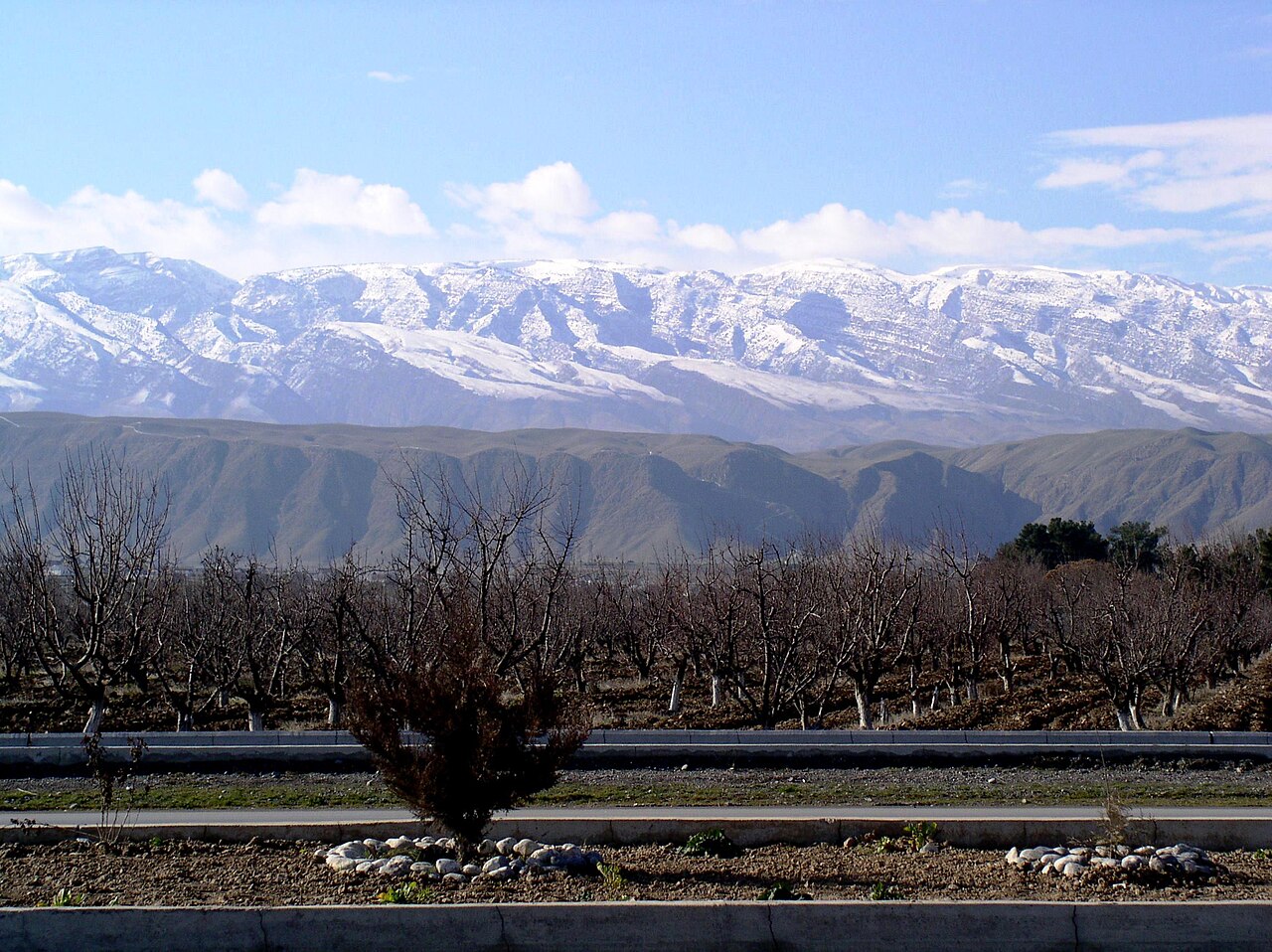

Nomads of the Dahae
Greek and Roman writers placed the Dahae in the lands between the south-eastern Caspian and the Oxus (Amu Darya): grassland, desert edge and river valleys that suited herders on horseback. The Parni, or Aparni, were one tribe of this group. They spoke an East Iranian language related to the speech of the Scythians and Saka further east.
The Achaemenids had known these peoples well. Xerxes’s daiva inscription names the Dahae among his subjects, and Dahae horsemen fought for Darius III at Gaugamela. They were valued as mounted archers, the skill that the Parthian army would later make famous (see Parthian cavalry and the Parthian shot).
South of their pastures lay Parthia, Old Persian Parthava, a settled province of farming oases along the northern foot of the mountains, roughly the region of modern Khorasan and the Ashgabat plain. Its people spoke a North-West Iranian language. When the Parni moved in, they took over that language, which is why the empire’s official tongue was Parthian and not the speech of the conquerors (see the Parthian language and its records).
Who was Arsaces?
No Parthian account of the founder survives. Everything comes from Greek and Latin authors writing much later, and they do not agree.
- Strabo (Geography 11.9) calls Arsaces a Scythian who led some of the Dahae, the Parni living along the Ochus river, into Parthia. He adds that others made him a Bactrian who fled from the growing power of Diodotus.
- Justin (Epitome 41.4), summarising the lost history of Pompeius Trogus, describes him as a man of uncertain origin but proven courage, used to living by raiding.
- Arrian, in his lost Parthica known through later summaries, tells of two brothers, Arsaces and Tiridates, who killed the Seleucid governor after he insulted Tiridates, and claimed descent from a certain Phriapites.
Later Arsacid tradition went further and claimed that the family descended from the Achaemenid king Artaxerxes II. Most historians read this as royal propaganda from the time when the Arsacids had become great kings and wanted a Persian pedigree.
The brother Tiridates is a puzzle. Some ancient writers make him Arsaces’s successor, but no coins can be given to him, and many modern scholars think he was invented or that the two names were confused. Today the usual reconstruction is that Arsaces ruled alone and was succeeded by his son, often called Arsaces II.
Taking Parthia
The events of the takeover, including the end of the governor Andragoras and the failure of Seleucus II to recover the province, are told from the Seleucid side on How the Seleucids Lost Iran. Seen from the Parni side, the story is one of a steppe people settling down. They first held the edge of the oasis belt, then the province of Parthia itself, and soon after Hyrcania, the green land south-east of the Caspian around modern Gorgan.
Arsaces did more than raid. Justin says he built a city called Dara on a mountain he calls Zapaortenon, a strong and pleasant place whose location is still argued over. Isidore of Charax, writing around the turn of the era, records a town called Asaak where Arsaces was first proclaimed king and where an eternal fire was kept burning. That detail suggests that the new kings tied their rule to an Iranian fire cult from the start, although the site of Asaak has not been found.
The family’s other early centre was Nisa, at the foot of the Kopet Dag near modern Ashgabat. Its royal fortress, later named after Mithridates, became the dynasty’s ceremonial home (see Nisa: the first Parthian capital).
The year 247 BCE
The Parthians counted years in an era of their own, and Babylonian records show that it began in the spring of 247 BCE. This is the date usually given for the founding of the Arsacid state. What exactly happened that year is not known. It may mark Arsaces becoming king of the Parni, or his proclamation at Asaak, some years before the conquest of Parthia around 238. The era was still used in documents centuries later, long after the founder’s name had become a royal title.
A name that became a title
Arsaces left a strong mark on the coinage. His silver drachms show a ruler wearing a soft felt cap with flaps over the ears, the headgear of the steppe, and on the reverse an archer seated holding a bow. The Greek legend reads simply ΑΡΣΑΚΟΥ, “of Arsaces”. Every later king kept the name. On their coins they are all “Arsaces”, with personal names such as Mithridates or Phraates almost never shown, which is why modern scholars rely on portraits, titles and dates to tell them apart (see Parthian coins and what they tell us).
The archer on the reverse stayed on Parthian drachms until the end of the dynasty. Some scholars see him as the founder himself, others as a deity or an image of royal power. Either way, it was a deliberate break from the Greek gods on Seleucid coins.
Arsaces in Persian memory
In Persian the founder is Ashk (اشک), and the dynasty is the Ashkanian. Later Iranian tradition, shaped by the Sasanians who overthrew the Arsacids, kept little of their history. In the Shahnameh Ferdowsi passes over the Ashkanian kings in a few lines, saying he has heard only their names. The founders who began this long rule on the steppe edge of Khorasan were remembered far less than the Achaemenids before them or the Sasanians after.
The Arsacid state remained small for its first eighty years, surviving the return of Seleucid power under Antiochus III as a junior ally. Its transformation into an empire came with Mithridates I.
- 247 BCE Start of the Arsacid era
- c. 238 BCE Arsaces and the Parni take Parthia
- c. 235 BCE Hyrcania comes under Arsacid rule (date approximate)
- c. 217 BCE Death of Arsaces I; his son succeeds (date debated)
- 209 BCE Antiochus III forces the Parthian king to accept alliance
Persian words from this page
| اشک | Ashk | Arsaces |
| اشکانیان | Ashkâniân | the Arsacid dynasty |
| پارت | Pârt | Parthia |
| تیرداد | Tirdâd | Tiridates |
| خراسان | Khorâsân | Khorasan |
| گرگان | Gorgân | Gorgan (Hyrcania) |
Sources and further reading
- Strabo, Geography, Book 11, chapter 9.
- Justin, Epitome of the Philippic History of Pompeius Trogus, Book 41.
- Isidore of Charax, Parthian Stations.
- Encyclopaedia Iranica, “Arsacids ii. The Arsacid dynasty” (K. Schippmann).
- A. D. H. Bivar, “The Political History of Iran under the Arsacids”, in The Cambridge History of Iran, vol. 3(1), 1983.
- Josef Wiesehöfer, Ancient Persia from 550 BC to 650 AD, 1996.
Want to learn Persian? Get the free Starter Pack
Get the 14-page printable Starter Pack (all 32 letters, a 7-day reading plan, 100 core words and 20 survival phrases) and a short 5-email course. Free.
More in The Parthian Empire (247 BCE–224 CE)
- The Parni and Arsaces I
- Nisa: The First Parthian Capital
- Mithridates I and the Making of an Empire
- Phraates II, Artabanus I and the Saka Invasions
- Mithridates II the Great
- The Parthians and the Silk Road
- Parthian Cavalry: Cataphracts and the Parthian Shot
- Surena and the Battle of Carrhae (53 BCE)
- Orodes II and Prince Pacorus
- Mark Antony’s Parthian War
- Phraates IV and the Peace with Augustus
- Queen Musa of Parthia
- Artabanus II of Parthia
- Gotarzes II and Vardanes: A Royal Rivalry
- Vologases I and the War over Armenia
- Trajan’s Invasion of Parthia
- Osroes I and the Parthian Civil Wars
- Roman Campaigns of the 2nd Century: Lucius Verus and Septimius Severus
- The Last Parthian Kings: Vologases V, Vologases VI and Artabanus IV
- The Fall of the Parthian Empire
- Ctesiphon: Capital of Two Empires
- The Great Houses of Parthia
- Religion and Culture in Parthian Iran
- Parthian Art and Architecture
- Parthian Coins and What They Tell Us
- Hatra: The City that Resisted Rome
- The Parthian Language and Its Records
- The Indo-Parthians and Kushans
- The Parthian Legacy