Karim Khan Zand (c. 1705 to 1779) was a tribal chief from the Zagros who ended the civil wars that followed Nader Shah’s death and ruled most of Iran from Shiraz between about 1751 and 1779. He never took the title of shah, calling himself vakil, “deputy”, and later “deputy of the people”, and he is remembered in Iran as the most humane ruler of the eighteenth century.
| Born | c. 1705, in the village of Pari near Malayer, western Iran |
|---|---|
| Tribe | Zand, a Lak-speaking tribe of the central Zagros |
| Title | Vakil al-dowleh (regent), then Vakil al-ra’aya, “deputy of the subjects” |
| Capital | Shiraz, permanently from July 1765 |
| Realm | All of Iran except Khorasan, which he left to Nader’s grandson Shahrokh |
| Died | 1 March 1779, in Shiraz, probably of tuberculosis |
A poor horseman in Nader’s army
The Zands were a small pastoral tribe living around Malayer and in the Zagros between Hamadan and Lorestan. In 1732 Nader campaigned against the tribes of the region, killed the Zand chief and several hundred of his kinsmen, and deported the rest to Abivard and Darreh Gaz in northern Khorasan. Karim, the eldest son of Inaq Khan Zand, grew up in exile there and served in Nader’s army as an ordinary cavalryman.
He liked to tell a story about those years. As a poor soldier he stole a gold-embossed saddle left at a saddler’s shop. When he heard that the saddler was to be executed for its loss, he crept back and returned it, and watched as the saddler’s wife fell on her knees and prayed that the unknown thief might live to own a hundred such saddles. Karim told the tale as proof that his conscience had been rewarded.
Winning the west, 1747 to 1765
After Nader’s murder in 1747 the Zands went home to the Zagros, where Karim became their leader. In 1750 he allied with the Bakhtiari chief Ali Mardan Khan and Isfahan’s governor to take the old capital, and they proclaimed a Safavid prince, a teenage prince of Safavid descent, as Shah Ismail III. Ali Mardan soon broke the alliance; Karim defeated him in 1751 and took over his title of vakil al-dowleh, regent for the puppet shah.
Three strong rivals remained: the Qajar chief Mohammad Hasan Khan of Astarabad, the Afghan general Azad Khan, who held Azerbaijan, and Fath Ali Khan Afshar of Urmia. For years the fortunes of war swung back and forth. Karim was driven from Isfahan more than once and had to retreat into the hills of Kuhgiluyeh. On 29 November 1754 he entered Shiraz for the first time. The Qajar chief besieged him there unsuccessfully in 1758 and was defeated and killed near Astarabad in February 1759. Karim spent two winters in Tehran, where he built a fortified residence that later grew into the Golestan Palace. In February 1763 he took Tabriz and Urmia. Azad Khan surrendered and lived out his life in honourable retirement in Shiraz.
Karim also took hostages to keep the defeated tribes quiet. One of them was the young Qajar prince Agha Mohammad, son of the man he had beaten, who lived at the Zand court for sixteen years. That relationship shaped the end of the Zand dynasty; see Lotf Ali Khan, the last Zand.
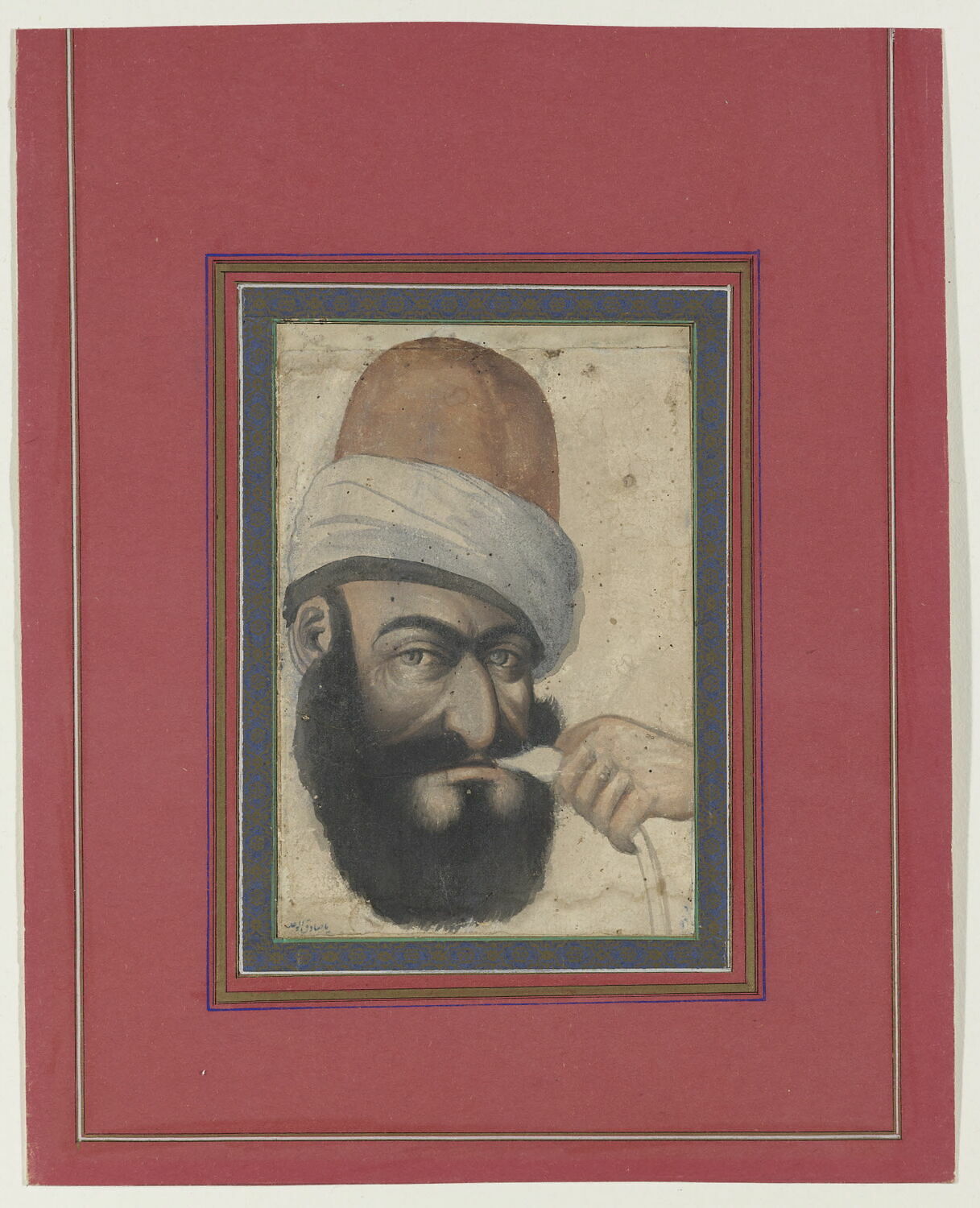

The vakil in Shiraz, 1765 to 1779
On 21 July 1765 Karim returned to Shiraz and stayed there until his death. He surprised Iranians and foreign observers alike by refusing to call himself shah. He reinterpreted his title vakil as vakil al-ra’aya, deputy of the subjects. The puppet Ismail III was kept in comfort in the fortress of Abadeh; when he died in 1773 no replacement was named.
His government was cheap and practical. He encouraged refugees, including Armenians and Jews who had fled to Baghdad, to come home, and in years of bad harvest he sold grain from state stores at a fixed low price; during the famine of 1775 he insisted on doing so even when the grain had to be brought from as far as Azerbaijan. In 1763 he allowed the British East India Company to open a trading station at Bushehr, on terms meant to stop the export of silver from Iran. He rebuilt Shiraz as his capital, a project described in Shiraz under Karim Khan.
There were wars too. Campaigns were needed to keep Kerman, Yazd, Lar and the Qajar north obedient, and in the Persian Gulf the Zands fought the pirate chief Mir Mohanna of Bandar Rig and the island of Kharg. In 1775 his brother Sadeq Khan was sent to besiege Basra in Ottoman Iraq; the city fell in 1776, as told in the Persian capture of Basra.
Death and succession
Karim Khan died on 1 March 1779, in his seventies, after an illness of six months, probably tuberculosis. He was buried in the Bagh-e Nazar garden next to his palace, while his relatives were already fighting over the succession. The Zand family never produced another ruler of his ability. In the ten years after his death a series of brothers, sons and nephews killed each other, and the Qajars grew stronger. Agha Mohammad Khan, who escaped from Shiraz when Karim died, later had his bones dug up and taken to Tehran; their final resting place is no longer known for certain.
- c. 1705 Born at Pari, near Malayer
- 1732 Zands deported to Khorasan by Nader
- 1750 Isfahan taken; Ismail III proclaimed
- 1751 Ali Mardan Khan defeated; Karim becomes regent
- 29 Nov 1754 First entry into Shiraz
- Feb 1759 Qajar rival Mohammad Hasan Khan killed
- 1763 Tabriz and Urmia taken; East India Company station at Bushehr
- 21 July 1765 Settles permanently in Shiraz
- 1775 to 1776 Siege and capture of Basra
- 1 Mar 1779 Death in Shiraz
Reputation
Karim Khan’s reputation rests partly on contrast. Before him came Nader’s wars and extortion; after him came civil war and the harsh Agha Mohammad Khan. Persian chroniclers and European visitors described him as just, accessible and modest, a ruler who enjoyed wine, music and storytelling and preferred to settle quarrels rather than punish. John R. Perry, his modern biographer, adds the limits: the Zand state was a tribal confederation centred on Fars, its revenues were modest, and it rested on Karim’s personal authority. The respect he earned is still visible in Shiraz, where the citadel he built, the Arg of Karim Khan, stands in the city centre.
Persian words from this page
| کریمخان زند | Karim Khân-e Zand | Karim Khan Zand |
| وکیل الرعایا | Vakil or-Ra’âyâ | deputy of the subjects |
| وکیل | vakil | deputy, agent (today also “lawyer”) |
| شیراز | Shirâz | Shiraz |
| ایل | il | tribe |
| زین | zin | saddle |
Sources and further reading
- John R. Perry, “Karim Khan Zand”, Encyclopaedia Iranica: iranicaonline.org/articles/karim-khan-zand.
- John R. Perry, Karim Khan Zand: A History of Iran, 1747-1779 (Chicago, 1979).
- John R. Perry, “Zand Dynasty”, Encyclopaedia Iranica: iranicaonline.org/articles/zand-dynasty.
- Mirza Mohammad Kalantar, Ruznama, the diary of the mayor of Shiraz under the Zands.
- John R. Perry, “The Zand Dynasty”, in The Cambridge History of Iran, vol. 7 (1991).
Want to learn Persian? Get the free Starter Pack
Get the 14-page printable Starter Pack (all 32 letters, a 7-day reading plan, 100 core words and 20 survival phrases) and a short 5-email course. Free.
More in The Afsharids and Zands (1736–1796)
- The Rise of Nader
- The Battle of Mihmandust (1729)
- Nader Shah Crowned at the Mughan Plain (1736)
- Nader Shah’s Wars with the Ottomans
- Battle of Karnal and the Sack of Delhi (1739)
- Nader Shah in Central Asia and Dagestan
- Nader Shah’s Navy and the Persian Gulf
- The Assassination of Nader Shah (1747)
- Nader Shah’s Religious Policy
- Shahrokh Afshar and Afsharid Khorasan
- Ahmad Shah Durrani and the Birth of Afghanistan
- Karim Khan Zand
- Shiraz under Karim Khan
- The Persian Capture of Basra (1775–1776)
- Lotf Ali Khan, the Last Zand