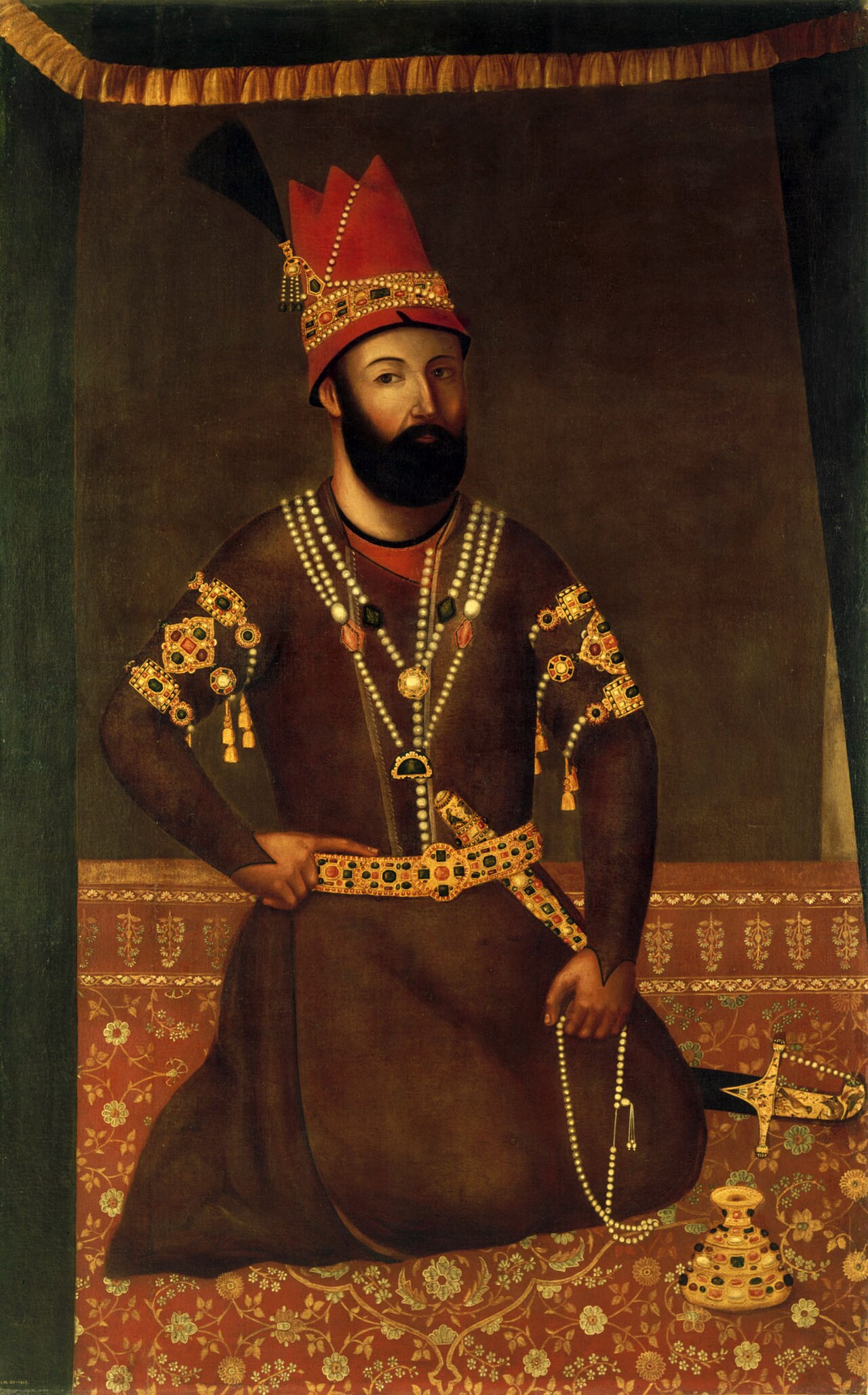
Nader Shah was murdered in his tent at Fathabad near Quchan, in northern Khorasan, on the night of 19 to 20 June 1747, by officers of his own guard who believed he was about to have them killed. His last years had been a reign of terror, with crushing taxes, mass executions and revolts across the country, and within weeks of his death the empire he had built began to break apart.
| Date | Night of 19 to 20 June 1747 |
|---|---|
| Place | Royal camp at Fathabad, near Quchan (Khabushan), Khorasan |
| Leading conspirators | Mohammad Qoli Khan Afshar, commander of the guard; Salah Khan, who struck the fatal blow; other Afshar and Qajar officers |
| Suspected backer | Nader’s nephew Ali Qoli Khan, who became Adel Shah |
| Main eyewitness source | Père Louis Bazin, Nader’s French Jesuit physician, relying on a woman of the harem |
A ruler at war with his subjects
After 1742 Nader’s character seemed to change. Contemporaries linked it to illness, and to the blinding of his son Reza Qoli Mirza, whom he had suspected of trying to kill him; Nader regretted the act and turned his anger on those around him. His wars in Dagestan and Iraq kept a huge army in the field, and it had to be paid. Tax collectors were sent back to provinces again and again, and officials who failed to deliver were beaten, blinded or killed.
The result was rebellion everywhere. In 1744 Mohammad Taqi Khan, governor of Fars, rose against him near Shiraz; when the revolt was crushed, Shiraz was sacked. Qajars rose in Astarabad, Afghans and Baluch in the south-east, and Sistan rebelled in 1746. Contemporary writers describe towers built of the skulls of executed rebels. In the spring of 1747 Nader’s nephew Ali Qoli Khan, sent to crush the rebels in Sistan, joined them instead.
The last march
In June 1747 Nader left Mashhad to deal with Kurdish rebels around Quchan, north-west of the city. His camp was pitched at Fathabad. By then, according to several accounts, he had come to distrust his Iranian officers altogether and to rely on the Afghan and Uzbek units of his army, especially the Abdali Afghan contingent commanded by the young Ahmad Khan. The story told by most sources is that he ordered the Afghans to arrest the guard commanders at dawn and kill them if they resisted. Whether or not that order was real, the officers believed it, and they decided to act first.
The night of 19 June
The conspiracy was led by Mohammad Qoli Khan Afshar, a relative of Nader and captain of the guard, together with Salah Khan and a group of Afshar and Qajar officers. The most detailed account comes from Père Louis Bazin, Nader’s physician, who based it on the testimony of Chuki, a woman of the royal harem. Bazin says that a group of about fifteen conspirators burst into the royal enclosure too early. Nader woke and shouted for his sword. The intruders lost their nerve and tried to flee, but the two ringleaders sent them back in.
In the struggle Nader killed two of the attackers before he was cut down. Bazin reports that he begged for his life and offered everything he had; Salah Khan then struck off his head. Other Persian accounts differ on the details and the names, but all agree that the killers were officers of his own guard.

The morning after
When the news spread at dawn, the camp dissolved into plunder. Ahmad Khan’s Afghans attacked the Persian troops, fought their way to the royal tent and then rode away towards Kandahar. Later tradition says they took the Koh-i-Noor with them; other accounts say the diamond reached Ahmad Khan only years later. Within a few months he had become king of the Afghans, as told in Ahmad Shah Durrani and the birth of Afghanistan.
Ali Qoli Khan, who had probably known of the plot, welcomed the assassins and took the throne in Mashhad in July 1747 as Adel Shah, “the just king”. His men seized Nader’s treasure fortress at Kalat and killed most of Nader’s sons and grandsons. Only the fourteen-year-old Shahrokh was spared, because his Safavid mother made him useful as a future figurehead; his story is told in Shahrokh Afshar and Afsharid Khorasan.
- 1742 Reza Qoli Mirza blinded
- 1744 Revolt of Taqi Khan in Fars; Shiraz sacked
- 1746 Revolts in Sistan and elsewhere
- Spring 1747 Ali Qoli Khan joins the rebels
- June 1747 Nader marches towards Quchan
- 19 to 20 June 1747 Nader killed at Fathabad
- July 1747 Ali Qoli proclaimed Adel Shah; massacre of Nader’s family at Kalat
Why it happened
Historians agree on the immediate cause: fear among his officers that they were about to die. They differ on how far back the deeper causes go. For Michael Axworthy, Nader’s personality changed after 1742 under the strain of illness and paranoia. Ernest Tucker emphasises the failure of Nader’s attempts to build a new basis of legitimacy without the Safavids, including his religious policy, described in Nader Shah’s religious policy. Economic historians stress the simplest factor: an army larger than the country could pay for, maintained by extortion.
The tomb in Mashhad
Nader was buried in Mashhad. In 1796 the Qajar ruler Agha Mohammad Khan had his remains dug up and taken to Tehran, an act of revenge for the Qajar chief killed in 1726. Today a modern stone mausoleum in Mashhad, completed in the late 1950s, honours him; it stands in a garden with a large equestrian statue and a small museum of weapons. More on the city is on the page on Mashhad.
Persian words from this page
| قوچان | Ghuchân | Quchan |
| فتحآباد | Fathâbâd | Fathabad |
| عادلشاه | Âdel Shâh | Adel Shah, “the just king” |
| آرامگاه | ârâmgâh | tomb, mausoleum |
| خیانت | khiânat | treason, betrayal |
| مالیات | mâliât | tax |
Sources and further reading
- Louis Bazin, letters on the last years of Nader Shah, printed in the Lettres édifiantes et curieuses of the Jesuit missions.
- Mohammad Kazem Marvi, Alamara-ye Naderi.
- Ernest Tucker, “Nāder Shah”, Encyclopaedia Iranica: iranicaonline.org/articles/nader-shah.
- Michael Axworthy, The Sword of Persia (London, 2006), final chapters.
- John R. Perry, “Afsharids”, Encyclopaedia Iranica: iranicaonline.org/articles/afsharids.
Want to learn Persian? Get the free Starter Pack
Get the 14-page printable Starter Pack (all 32 letters, a 7-day reading plan, 100 core words and 20 survival phrases) and a short 5-email course. Free.
More in The Afsharids and Zands (1736–1796)
- The Rise of Nader
- The Battle of Mihmandust (1729)
- Nader Shah Crowned at the Mughan Plain (1736)
- Nader Shah’s Wars with the Ottomans
- Battle of Karnal and the Sack of Delhi (1739)
- Nader Shah in Central Asia and Dagestan
- Nader Shah’s Navy and the Persian Gulf
- The Assassination of Nader Shah (1747)
- Nader Shah’s Religious Policy
- Shahrokh Afshar and Afsharid Khorasan
- Ahmad Shah Durrani and the Birth of Afghanistan
- Karim Khan Zand
- Shiraz under Karim Khan
- The Persian Capture of Basra (1775–1776)
- Lotf Ali Khan, the Last Zand