Shahrokh (1734 to 1796), a grandson of Nader Shah, reigned in Mashhad for almost half a century after 1748 as the last Afsharid ruler. Blinded by rivals in 1750, he governed only a shrinking corner of Khorasan, first under the shadow of feuding tribal chiefs and then under the protection of the Afghan king Ahmad Shah Durrani, until the Qajar Agha Mohammad Khan ended his rule in 1796.
| Born | March 1734, son of Reza Qoli Mirza and the Safavid princess Fatemeh Soltan Begom |
|---|---|
| Proclaimed shah | 1 October 1748, Mashhad |
| Blinded | Early 1750, during the brief reign of the usurper Soleyman II |
| Restored | 20 March 1750; again under Durrani protection, 1755 |
| Realm | Mashhad and western Khorasan |
| Died | 1796, at Damghan, after torture by Agha Mohammad Khan’s men |
A boy with two dynasties’ blood
Shahrokh’s birth in 1734 was a political event. His father was Nader’s eldest son; his mother was a sister of the Safavid Shah Tahmasp II. The child thus joined the new Afsharid house to the old Safavid one, and Nader made use of this, later appointing the boy nominal governor of Herat and striking coins in his name there.
When Nader was murdered in June 1747, as told in the assassination of Nader Shah, his nephew Adel Shah sent men to the fortress of Kalat, who killed sixteen of Nader’s sons and grandsons. Shahrokh, then fourteen, escaped with two of his uncles but was caught near Marv. The uncles were executed. Shahrokh was spared, probably because his Safavid blood might one day make him a useful figurehead, and was held prisoner at Kalat.
Shah of Khorasan, 1748 to 1750
Adel Shah’s reign lasted barely a year. His brother Ebrahim rebelled against him and defeated him in June 1748; Adel Shah was blinded and later killed. While these events were taking place, a group of Turkic, Kurdish and Arab tribal chiefs in Mashhad brought Shahrokh out of prison and proclaimed him shah on 1 October 1748. Ebrahim crowned himself at Tabriz in December, but his army fell apart in 1749 and he too was blinded and died.
Shahrokh won some popularity with generosity from Nader’s treasure, and unlike his grandfather he presented himself as a firm Twelver Shi’i on his coins and seals. Real power, however, lay with the tribal chiefs who had put him on the throne, and they quarrelled among themselves.
Blinded, deposed and restored
Excluded chiefs turned to Mir Sayyed Mohammad, the custodian of the Imam Reza shrine, whose mother was a Safavid princess. At the end of December 1749 they offered him the throne. In January 1750 Shahrokh was imprisoned and Mir Sayyed Mohammad was crowned as Soleyman II. Against the new shah’s wishes, his allies had Shahrokh blinded in his prison.
Soleyman’s reign lasted only weeks. Rival chiefs led by Yusuf Ali Khan Jalayer stormed the palace and blinded him in turn. When they found that Shahrokh had indeed been blinded, they restored him anyway, on 20 March 1750, and tried to keep his condition quiet.
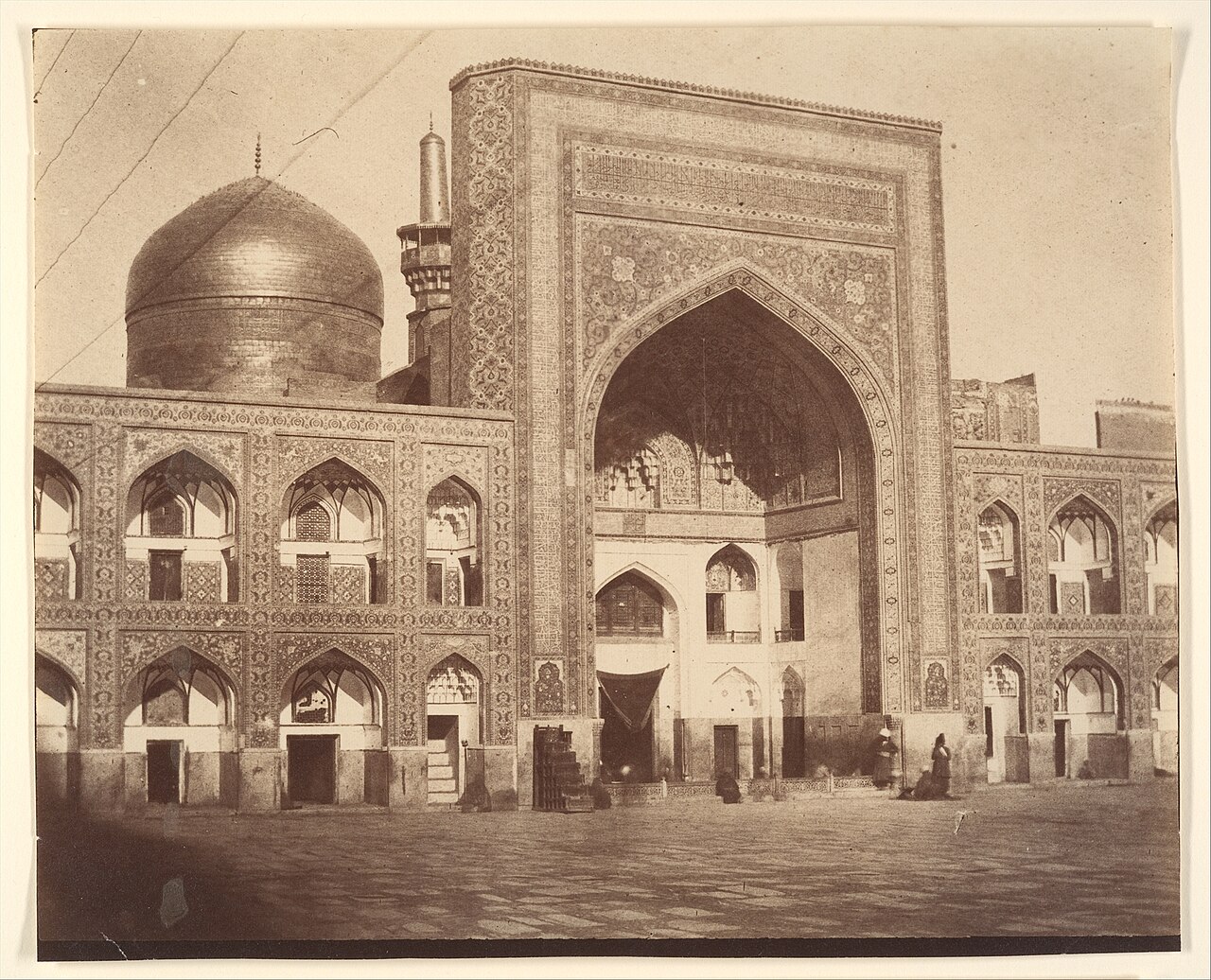

Under the protection of Ahmad Shah
Shahrokh’s weakness invited invasion from the east. Ahmad Shah Durrani, Nader’s former Afghan commander and now king in Kandahar, took Herat after a long siege in 1750, besieged Mashhad and Nishapur, and withdrew in the bitter winter of 1751. In Mashhad the chiefs went on fighting each other, taking the city in turn and blinding their opponents. In 1754 Ahmad Shah returned, besieged Mashhad for months, and received its surrender in December. On 9 May 1755 he restored Shahrokh as ruler.
From then on Khorasan was a buffer state. Shahrokh kept Mashhad and the shrine city’s revenues; Herat and the east belonged to the Durranis. Later tradition says that Shahrokh gave Ahmad Shah the Koh-i-Noor diamond in these years, though other accounts say Ahmad had taken it in 1747; see Ahmad Shah Durrani and the birth of Afghanistan. The arrangement suited both sides: Ahmad Shah gained a friendly frontier, and Shahrokh, cut off from the rest of Iran, gained a protector. Karim Khan Zand, ruling from Shiraz, left Khorasan alone and is said to have refused to make war on the grandson of his old master.
The last decades
After Ahmad Shah’s death in 1772, Shahrokh became a pawn of local chiefs and of his own sons. His authority hardly reached beyond Mashhad, while Kurdish and other chieftains held towns such as Quchan, Bojnurd and Torbat-e Heydariyeh. In 1796 Agha Mohammad Khan Qajar, newly crowned, marched into Khorasan. Shahrokh went out to meet him and was at first received with honour; Agha Mohammad entered Mashhad on foot as a pilgrim. He then demanded the rest of Nader’s jewels, had Shahrokh tortured until he revealed where they were hidden, and sent him away towards Mazandaran. Shahrokh died of his injuries at Damghan. The episode is told from the Qajar side on Agha Mohammad Khan Qajar.
- 1734 Shahrokh born
- 1747 Nader murdered; massacre of the family at Kalat
- 1 Oct 1748 Shahrokh proclaimed shah in Mashhad
- Jan 1750 Deposed by Soleyman II and blinded
- 20 Mar 1750 Restored
- 1750 to 1751 First Durrani invasion; Herat lost
- 1754 to 1755 Ahmad Shah takes Mashhad and restores Shahrokh as his protégé
- 1796 Agha Mohammad Khan takes Mashhad; Shahrokh dies at Damghan
How he is remembered
Shahrokh is usually remembered as a tragic figure: a blind king who lived through the destruction of his family and of his grandfather’s empire. His long reign is often explained by the fact that, blind and without an army, he threatened nobody. Khorasan under the late Afsharids was poor and divided, but the shrine of Imam Reza kept Mashhad important, and the city’s history in these years is part of the story told on Mashhad.
Persian words from this page
| شاهرخ | Shâhrokh | Shahrokh |
| نابینا | nâbinâ | blind |
| نوه | nave | grandson, grandchild |
| حرم امام رضا | haram-e Emâm Rezâ | the shrine of Imam Reza |
| هرات | Herât | Herat |
| گوهر | gohar | jewel |
Sources and further reading
- John R. Perry, “Afsharids”, Encyclopaedia Iranica: iranicaonline.org/articles/afsharids.
- Peter Avery, “Nadir Shah and the Afsharid Legacy”, in The Cambridge History of Iran, vol. 7 (1991).
- Mohammad Kazem Marvi, Alamara-ye Naderi, for the succession after 1747.
- Daniel Balland, “Dorrānī”, Encyclopaedia Iranica: iranicaonline.org/articles/dorrani.
- Michael Axworthy, The Sword of Persia (London, 2006), epilogue.
Want to learn Persian? Get the free Starter Pack
Get the 14-page printable Starter Pack (all 32 letters, a 7-day reading plan, 100 core words and 20 survival phrases) and a short 5-email course. Free.
More in The Afsharids and Zands (1736–1796)
- The Rise of Nader
- The Battle of Mihmandust (1729)
- Nader Shah Crowned at the Mughan Plain (1736)
- Nader Shah’s Wars with the Ottomans
- Battle of Karnal and the Sack of Delhi (1739)
- Nader Shah in Central Asia and Dagestan
- Nader Shah’s Navy and the Persian Gulf
- The Assassination of Nader Shah (1747)
- Nader Shah’s Religious Policy
- Shahrokh Afshar and Afsharid Khorasan
- Ahmad Shah Durrani and the Birth of Afghanistan
- Karim Khan Zand
- Shiraz under Karim Khan
- The Persian Capture of Basra (1775–1776)
- Lotf Ali Khan, the Last Zand