Nader Shah tried to reverse two centuries of Safavid religious policy. At his coronation in 1736 he made Iranians give up the ritual cursing of the first caliphs and proposed that Iranian Twelver Shi’ism be recognised as a fifth school of Sunni law, the “Ja’fari madhhab”. The Ottomans never accepted it, and the policy died with him in 1747, but it remains one of the most unusual experiments in Iran’s religious history.
| Announced | Mughan assembly, early 1736 |
|---|---|
| Core idea | Iranian Shi’ism as the Ja’fari school, named after the sixth Imam, Ja’far al-Sadeq, alongside the four Sunni schools |
| Demands on the Ottomans | Recognition of the Ja’fari school; a place for its imam at the Kaaba; an Iranian leader of the hajj caravan; exchange of ambassadors; release of prisoners |
| Najaf meeting | Late 1743, scholars sign a document accepting the Ja’fari school |
| Outcome | Rejected by the Ottoman religious authorities; left out of the Treaty of Kerden (1746) |
The Safavid inheritance
The Safavids had made Twelver Shi’ism the religion of the Iranian state after 1501, a story told in Twelver Shi’ism becomes Iran’s state religion. Part of that identity was hostility to Sunni Islam, expressed most sharply in the public cursing of Abu Bakr, Umar and Uthman, the first three caliphs, whom Shi’is regarded as usurpers of Ali’s right. To the Sunni Ottomans, Uzbeks and Mughals this was an insult and a reason for war.
Nader’s position was different from the Safavids’. He was from a Qizilbash tribe and probably raised as a Shi’i, but his army included large numbers of Sunni Afghans, Uzbeks, Kurds and Turkmen, as well as Christian Georgians and Armenians. He wanted peace with the Ottomans on his own terms and recognition as a legitimate Muslim ruler. And he had good reason to weaken the Shi’i clergy, whose loyalty was bound up with the Safavid house he had replaced.
The Mughan conditions
When the notables at the Mughan assembly agreed to make him shah in 1736, Nader set conditions, as told in Nader Shah crowned at the Mughan plain. Iranians were to stop cursing the first caliphs and to give up the bloody self-wounding practised in some places at the Ashura mourning for Imam Hosayn. They were to accept the legitimacy of Sunni practice, and Iran’s religion was to be redefined as the Ja’fari school.
The idea was that Shi’ism, stripped of its anti-Sunni rituals, could take its place as a fifth recognised school alongside the Hanafi, Maliki, Shafi’i and Hanbali schools of Sunni law. The name honoured Ja’far al-Sadeq, the sixth Shi’i Imam, a teacher respected by Sunni scholars as well.
Negotiating with Istanbul
According to the court historian Astarabadi, just before his coronation Nader set out five conditions for a lasting peace with the Ottomans: recognition of the Ja’fari school as orthodox; a pillar (rokn) for its imam at the Kaaba in Mecca like those of the Sunni schools; an Iranian amir al-hajj to lead pilgrims; permanent ambassadors; and the release of prisoners. The agreement reached in 1736 dealt only with the hajj caravan, ambassadors and prisoners, because the two sides could not agree on the Ja’fari question.
Control of a pilgrim caravan mattered for prestige and revenue, but Istanbul saw the religious demand as dangerous. Recognising the Ja’fari school would have given an Iranian ruler a say in the religious order of the Ottoman Sunni world. In 1743 the Ottoman chief mufti, the shaykh al-Islam, issued a fatwa declaring the Ja’fari school heretical. Nader went to war again, as told in Nader Shah’s wars with the Ottomans.

The Najaf meeting of 1743
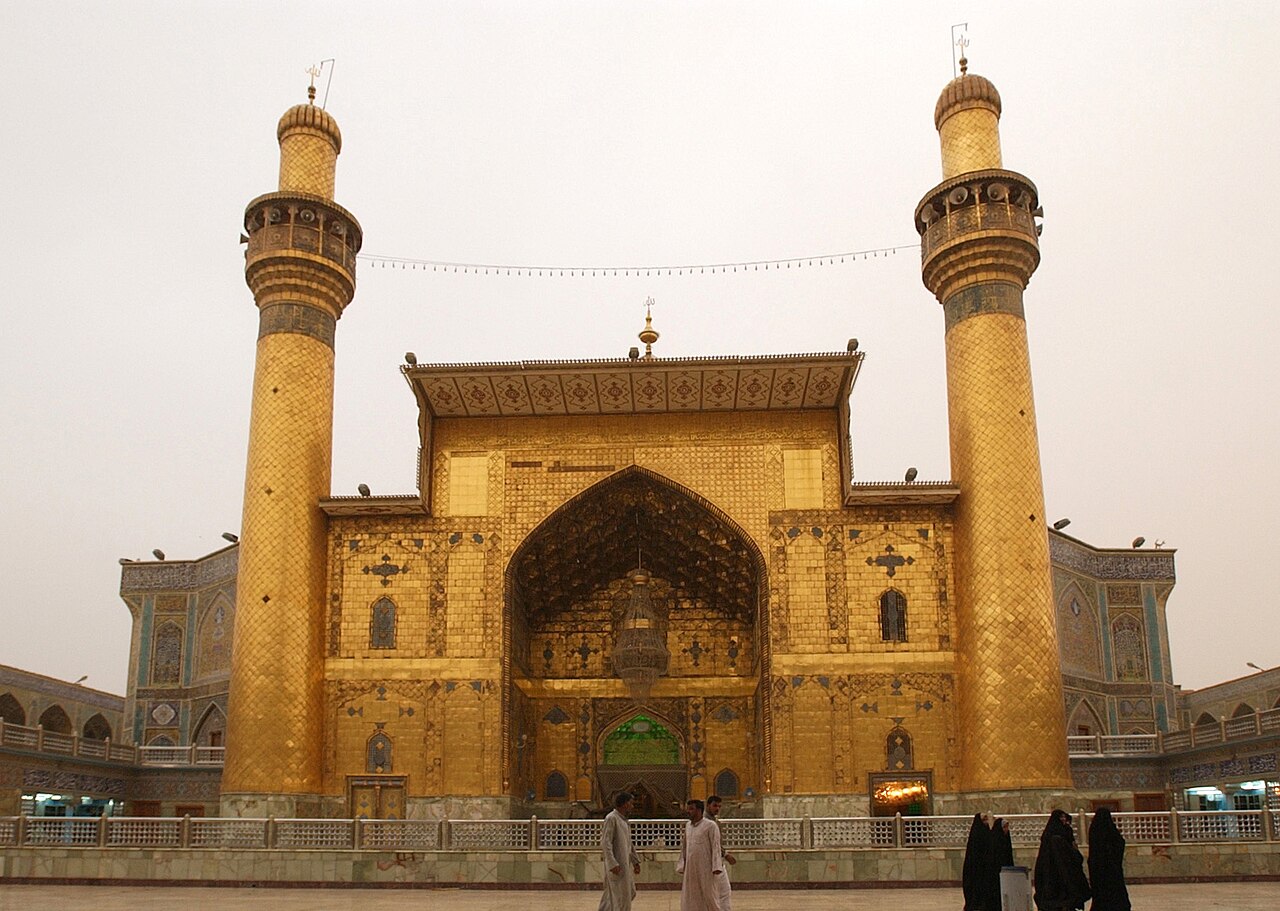
Late in 1743, after a truce with the governor of Baghdad, Nader called a meeting of religious scholars at the shrine of Imam Ali in Najaf. Shi’i scholars from Iran met Sunni scholars from Iraq, Afghanistan and Central Asia. A Baghdad Sunni scholar, Abdullah al-Suwaydi, sent by the Ottoman governor, wrote an account of the debates. After several days the participants signed a document recognising the Ja’fari school as a legitimate school of Islamic law and condemning the cursing of the caliphs. Nader is also credited with paying for the gilding of the shrine’s dome. The Ottoman sultan was not moved, and the peace of 1746 left the Ja’fari school out.
Clergy, endowments and translations
At home Nader cut the wealth and power of the Shi’i clergy. He took over many religious endowments (vaqf) and diverted their revenues to the army, and he reduced the senior religious posts that the Safavids had created. The mollabashi, the chief cleric, who had spoken for the Safavids at Mughan, was executed.
Nader also showed curiosity about other religions, though how deep it went is uncertain. In 1740 to 1741 he had Muslim scholars and Armenian and European priests translate the Quran and the Gospels into Persian; the translations were presented to him at Qazvin in June 1741, and he was reportedly unimpressed. His physician Père Bazin wrote that it was hard to know which religion he followed. His four-peaked hat, the kolah-e Naderi, was explained by some as standing for the four caliphs, by others for the four lands he ruled.
How historians read the policy
Older writers saw the Ja’fari plan as proof that Nader was a secret Sunni or simply irreligious. Ernest Tucker, in Nadir Shah’s Quest for Legitimacy, argues that it was above all political: an attempt to found a monarchy that did not depend on Safavid sacred kingship, drawing instead on Turco-Mongol traditions of rule and on recognition from the wider Sunni world. On that reading the religious programme and the military campaigns were parts of the same project.
It did not outlive him. His grandson Shahrokh presented himself as a champion of Twelver Shi’ism, and under the Zands and Qajars the Shi’i clergy recovered and grew stronger than before. The cursing of the caliphs never returned to its Safavid prominence, however, and the term “Ja’fari” for Shi’i law is still used today.
Persian words from this page
| مذهب جعفری | mazhab-e Ja’fari | the Ja’fari school |
| شیعه | shi’e | Shi’a, Shi’i |
| سنی | sonni | Sunni |
| وقف | vaghf | religious endowment |
| حج | hajj | the pilgrimage to Mecca |
| نجف | Najaf | Najaf |
| کلاه نادری | kolâh-e Nâderi | Nader’s four-peaked cap |
Sources and further reading
- Mirza Mohammad Mahdi Khan Astarabadi, Tarikh-e Jahangosha-ye Naderi, for the Mughan conditions and the five demands.
- Ernest Tucker, “Nāder Shah”, Encyclopaedia Iranica: iranicaonline.org/articles/nader-shah.
- Ernest Tucker, Nadir Shah’s Quest for Legitimacy in Post-Safavid Iran (Gainesville, 2006).
- Michael Axworthy, The Sword of Persia (London, 2006).
- Laurence Lockhart, Nadir Shah: A Critical Study Based Mainly upon Contemporary Sources (London, 1938).
Want to learn Persian? Get the free Starter Pack
Get the 14-page printable Starter Pack (all 32 letters, a 7-day reading plan, 100 core words and 20 survival phrases) and a short 5-email course. Free.
More in The Afsharids and Zands (1736–1796)
- The Rise of Nader
- The Battle of Mihmandust (1729)
- Nader Shah Crowned at the Mughan Plain (1736)
- Nader Shah’s Wars with the Ottomans
- Battle of Karnal and the Sack of Delhi (1739)
- Nader Shah in Central Asia and Dagestan
- Nader Shah’s Navy and the Persian Gulf
- The Assassination of Nader Shah (1747)
- Nader Shah’s Religious Policy
- Shahrokh Afshar and Afsharid Khorasan
- Ahmad Shah Durrani and the Birth of Afghanistan
- Karim Khan Zand
- Shiraz under Karim Khan
- The Persian Capture of Basra (1775–1776)
- Lotf Ali Khan, the Last Zand