Mashhad (مشهد) is Iran’s second-largest city and its holiest, built around the tomb of Imam Reza, the eighth imam of Twelver Shi’a Islam, who died here in 818. The name means “place of martyrdom”. With 3,001,184 people at the 2016 census and millions of pilgrims every year, it is the capital of Razavi Khorasan province and the main city of north-east Iran.
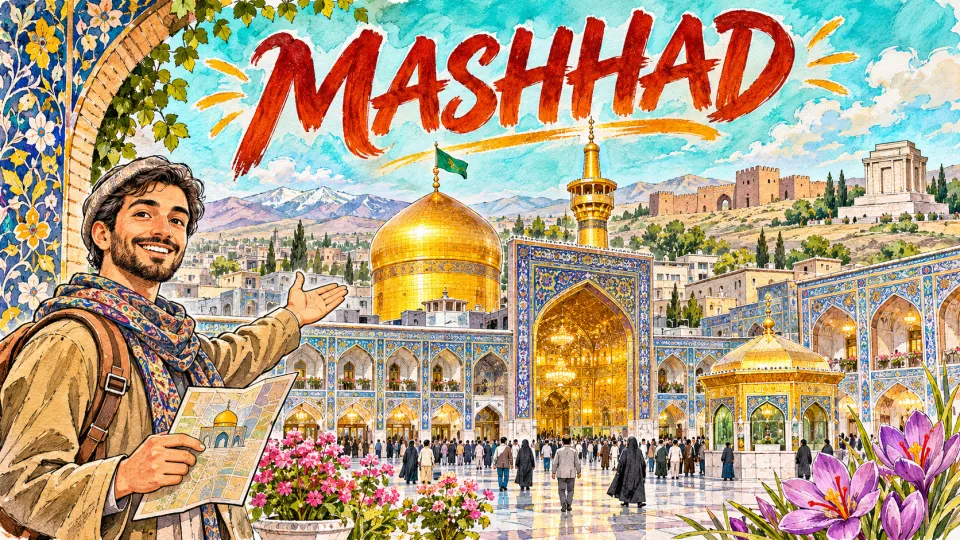
| Persian name | مشهد (Mashhad), formally مشهد مقدس (Mashhad-e Moqaddas, “holy Mashhad”) |
|---|---|
| Province | Razavi Khorasan (capital) |
| Population | 3,001,184 (city, 2016 census, Statistical Centre of Iran) |
| Known for | Shrine of Imam Reza; capital of Nader Shah; gateway to Tus |
| Distance from Tehran | About 900 km by road or rail |
| Nearby | Tus and the tomb of Ferdowsi (about 25 km), Neyshabur (about 120 km) |

A city that grew from a grave
In the early 9th century the site was a village called Sanabad, close to the much older city of Tus. The Abbasid caliph Harun al-Rashid died on campaign nearby in 809 and was buried at Sanabad. Nine years later, in 818, Ali ibn Musa al-Reza, whom the caliph al-Ma’mun had named as his heir, died suddenly in the same place and was buried beside Harun. Shi’a tradition holds that he was poisoned on al-Ma’mun’s orders; Sunni historians and some modern scholars are less certain. Either way, the tomb became a shrine, and the shrine became a town. The story of the imam himself is told on our history page Imam Reza and the origins of Mashhad.
By the late 10th century writers were calling the place al-Mashhad al-Razavi. Tus remained the bigger city for centuries. It was sacked by the Mongols in 1220 and finally ruined in 1389 during the Timurid conquest, and after that Mashhad took its place as the main city of the district.
Timurid queens, Safavid shahs and Nader Shah
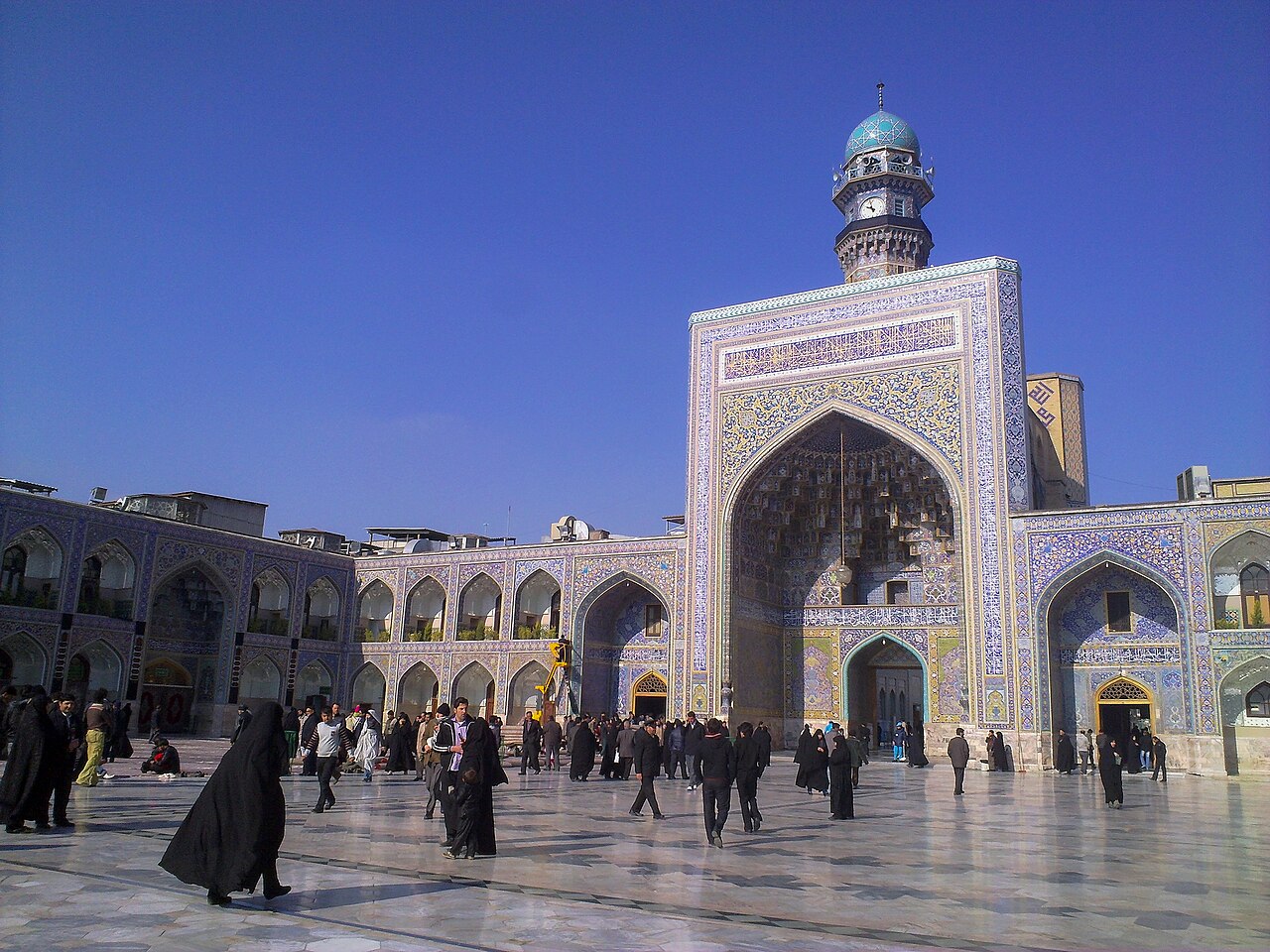
The shrine’s great building phases followed the dynasties. In 1418 Goharshad, wife of the Timurid ruler Shah Rukh, paid for the congregational mosque that still carries her name, with its blue-tiled courtyard and huge portal. You can read about her on our page about Goharshad Begum.
The Safavids, who made Twelver Shi’ism the state religion from 1501, invested heavily in Mashhad as a Shi’a pilgrimage centre inside their own borders, an alternative to the shrines in Ottoman Iraq. Shah Abbas I famously walked to Mashhad from Isfahan in 1601 as an act of devotion.
Mashhad’s political high point came under Nader Shah (reigned 1736–1747), who made it his capital. He was buried in the city after his assassination in 1747. His blind grandson Shahrokh ruled a shrunken Afsharid state from Mashhad until 1796. The present tomb of Nader Shah, a heavy stone building with a statue of the shah on horseback, dates from 1959.
Mashhad in the 20th century
Two events from this period still matter in local memory. In 1912 Russian troops, then occupying much of northern Iran, shelled the shrine to drive out political refugees who had taken sanctuary there. In July 1935 troops fired on a crowd gathered in the Goharshad Mosque in protest at Reza Shah’s policies, including new dress laws; estimates of the dead range from dozens to several hundred.
The city grew fast after the 1950s, with roads, a railway link to Tehran and later an airport. Since 1979 its growth has been driven by pilgrimage, by the very large endowment that runs the shrine (Astan-e Qods-e Razavi), and by migrants from eastern Iran and Afghanistan. Today it is a city of hotels, pilgrims’ lodgings and bazaars selling saffron, barberries, prayer stones and turquoise from the mines near Neyshabur.
The shrine and the city around it
The shrine complex sits at the centre of a ring road, with the streets of Mashhad radiating from it. The complex has grown into a small city of courtyards, prayer halls, a museum, a library and a seminary. Iranian officials regularly report more than 20 million visits a year; the exact figure is hard to measure, but at religious anniversaries and during the summer the crowds are enormous. The busiest night of the year is the anniversary of the imam’s death at the end of the month of Safar.
Non-Muslim visitors can usually see the courtyards with a guide from the shrine’s office for foreign visitors, but the tomb chamber is normally reserved for Muslims. Women are expected to wear a chador inside the complex. Rules change, so ask at the entrance. Our page on the Imam Reza Shrine covers the buildings in detail.
Away from the shrine, Mashhad has wide modern boulevards, the parks of Kuh-e Sangi and Mellat, and in summer many visitors head out to the cooler valleys of Torqabeh and Shandiz, described in our existing post on Mashhad’s tourist attractions.
Tus, Ferdowsi and the scholars of Khorasan
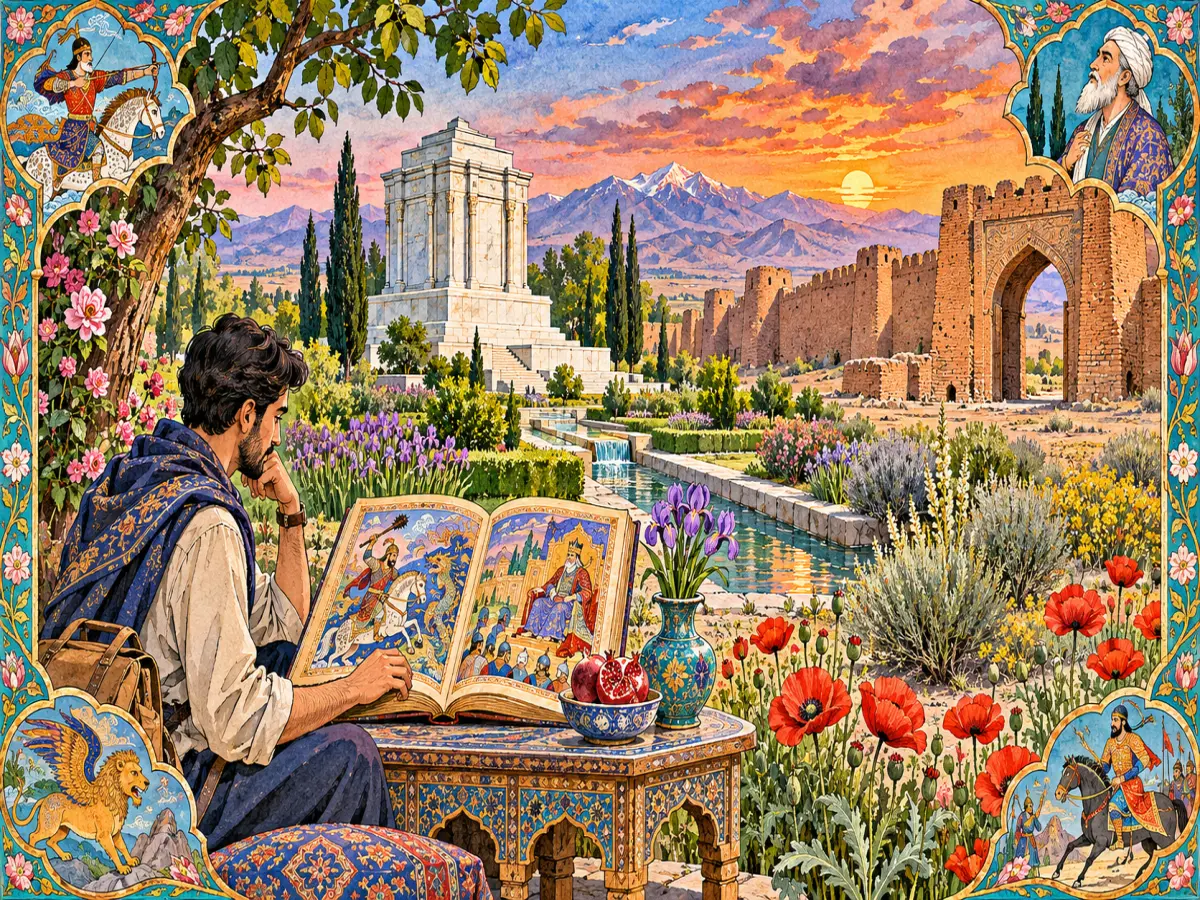
The ruins of Tus lie about 25 km north-west of central Mashhad. Tus produced an unusual number of famous names: the poet Ferdowsi (c. 940 to c. 1020), author of the Shahnameh; the Seljuk vizier Nizam al-Mulk; the theologian al-Ghazali; and the astronomer Nasir al-Din Tusi.
Ferdowsi’s tomb in Tus was rebuilt in 1934 for the thousandth anniversary of his birth, in a style that borrows from the tomb of Cyrus at Pasargadae. The garden around it also holds the grave of the modern poet Mehdi Akhavan-Sales. Nearby stands the Haruniyeh, a domed brick building of uncertain date and purpose. See our pages on the tomb of Ferdowsi and Ferdowsi and the Shahnameh, and a selection of lines in Ferdowsi quotes.
Further west, Neyshabur holds the tombs of Omar Khayyam and Attar and makes a good day trip.
Getting there and getting around
Mashhad’s international airport has frequent flights to Tehran and most other Iranian cities, as well as regional international routes. The railway from Tehran is one of the busiest in the country; overnight sleeper trains take roughly ten to twelve hours. By road the journey is about 900 km.
Inside the city, the metro’s first line opened in 2011 and links the airport area with the centre near the shrine; buses and ride-hailing apps cover the rest. Hotels near the shrine fill up quickly at religious holidays and during the Nowruz holiday in March, so check dates before booking. For entry rules and safety, check official sources and your own government’s travel advice.
Persian words from this page
| مشهد | Mashhad | place of martyrdom; the city |
| حرم | haram | shrine, sanctuary |
| زائر | zâ’er | pilgrim |
| زیارت | ziyârat | pilgrimage, visiting a shrine |
| طوس | Tus | Tus, the old city nearby |
| زعفران | za’farân | saffron |
| فیروزه | firuze | turquoise |
Sources and further reading
- Encyclopaedia Iranica, “Mashhad” (history and monuments) and “Emām Reżā”.
- Encyclopaedia Britannica, “Mashhad”.
- Encyclopaedia Iranica, “Āstān-e Qods-e Rażawī”, on the shrine and its endowment.
- Michael Axworthy, The Sword of Persia: Nader Shah, from Tribal Warrior to Conquering Tyrant (I.B. Tauris, 2006).
- Statistical Centre of Iran, National Population and Housing Census 2016 (1395).
Want to learn Persian? Get the free Starter Pack
Get the 14-page printable Starter Pack (all 32 letters, a 7-day reading plan, 100 core words and 20 survival phrases) and a short 5-email course. Free.
More in Cities of Iran
- Tehran: Iran’s Capital
- Mashhad
- Isfahan
- Shiraz
- Tabriz
- Yazd
- Kashan
- Kerman
- Hamadan
- Qom
- Ahvaz
- Rasht
- Kermanshah
- Urmia
- Ardabil
- Zanjan
- Qazvin
- Sanandaj
- Khorramabad
- Bandar Abbas
- Bushehr
- Zahedan
- Birjand
- Gorgan
- Sari
- Semnan
- Arak
- Ilam
- Yasuj
- Shahr-e Kord
- Bojnurd
- Karaj
- Abadan and Khorramshahr
- Kish Island
- Qeshm Island
- Hormuz Island
- Masuleh
- Abyaneh
- Kandovan
- Bam
- Neyshabur (Nishapur)
- Shush (Susa) Today