When Shah Ismail I took Tabriz in 1501, he declared Twelver Shi’ism the official religion of a country whose people were mostly Sunni. Over the next two centuries the Safavids, helped by Arab scholars from Jabal Amil in what is now Lebanon, built a Shi’a clerical establishment, and by about 1700 most Iranians were Shi’a. Iran has remained the main Shi’a country ever since.
| Declared | 1501, Tabriz, by Shah Ismail I |
|---|---|
| Branch | Twelver (Imami) Shi’ism, which recognises twelve Imams from Ali to the hidden Twelfth Imam |
| Key scholars | Ali al-Karaki (d. 1533/34), Sheikh Baha’i (1547–1621), Mohammad Baqer Majlesi (d. 1699) |
| Religious offices | Sadr (head of religious administration and endowments), sheikh al-eslam of major cities |
| Time it took | Roughly 150 to 200 years for Shi’ism to become the majority faith |
Iran before 1501: Sunni, with Shi’a islands
For most of the Islamic centuries, Iranian Muslims were Sunnis of the Shafi’i and Hanafi schools. Shi’ism was not foreign, though. Qom, Kashan, Rey and Sabzevar had long had Shi’a populations, the Ilkhan Oljeitu had converted to Shi’ism in about 1310, and the Sarbadars of Sabzevar had ruled a Shi’a state in the fourteenth century. Many Sunnis and Sufis also showed deep devotion to Ali and the family of the Prophet. This blurred, Ali-centred piety made the ground less hostile than a simple Sunni majority suggests.
The proclamation at Tabriz
Ismail’s order changed public religion at once. The call to prayer added the phrase declaring Ali the friend of God, the Friday sermon was read in the names of the twelve Imams, and the first three caliphs, Abu Bakr, Umar and Uthman, were publicly cursed. Bands of men called tabarra’iyan walked the streets reciting the curses, and listeners were expected to answer in agreement. Those who refused risked their lives. Many Sunni scholars were killed or fled to Ottoman, Uzbek or Mughal lands.
A story preserved in a later Safavid chronicle says that when the new rulers looked for a book of Shi’a law in Tabriz, they could find only one volume of a work by the medieval jurist Allama al-Hilli in a private library. Whether or not the detail is exact, it captures the problem: the state had declared a faith before it had the scholars and books to teach it.
Why Ismail did it
Historians give several reasons, and they are not exclusive. The Safavid movement was already Shi’a in its own way, so the declaration followed from Ismail’s identity as head of the order. A distinct faith also marked the new state off from its Sunni neighbours, the Ottomans to the west and the Uzbeks to the east, and gave subjects a reason for loyalty. The catch was that the beliefs of the Qizilbash warriors, who revered Ismail as almost divine, were far from the legal, text-based Twelver Shi’ism of the scholars. Making Iran Shi’a therefore meant importing a learned tradition and, over time, taming the movement that had brought the dynasty to power.

Scholars from Jabal Amil
The learned tradition came largely from Arab Shi’a centres: Jabal Amil in south Lebanon, Bahrain, and the shrine cities of Iraq. The most important early arrival was Nur al-Din Ali al-Karaki, known as al-Mohaqqeq al-Sani, “the Second Investigator”. Born around 1464 in Jabal Amil, he moved to Najaf in about 1504 and was honoured by Ismail. Under Shah Tahmasp he became the most powerful cleric in the empire. A royal decree of 1532 gave him the titles na’eb al-emam, “deputy of the Imam”, and “seal of the mojtaheds”, a claim of authority that angered both rival scholars and Persian landed families.
Karaki’s rulings show what building a Shi’a state involved in practice. He held that Friday congregational prayer, which some Shi’a jurists thought unlawful while the Twelfth Imam was hidden, could be performed. He accepted that clerics might hold land grants and taxes from the shah, and he even corrected the direction of prayer in mosques. Each position drew objections, including from the Bahraini scholar Ebrahim al-Qatifi, who thought a cleric should keep his distance from royal money.
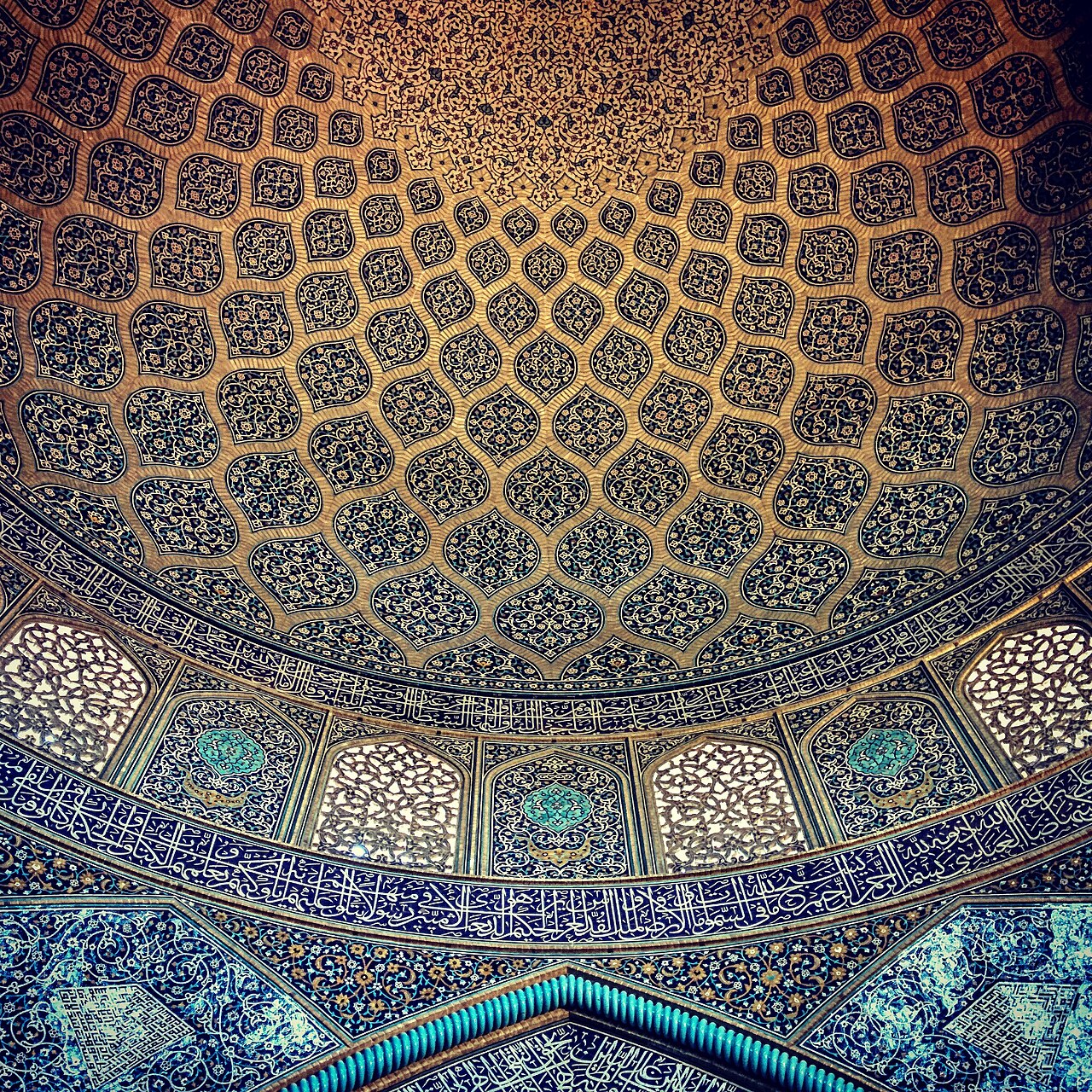
Other Amili scholars followed. Hosayn ibn Abd al-Samad served as sheikh al-eslam in Qazvin and Herat. His son Baha al-Din Ameli, known as Sheikh Baha’i, became sheikh al-eslam of Isfahan under Shah Abbas and was famous as a jurist, mathematician and poet. Abbas named one of the mosques on the new royal square after another Lebanese scholar, Sheikh Lotfollah Meysi; the building is described on the Sheikh Lotfollah Mosque page.
How many came: a historians’ debate
Albert Hourani (1986) and Rula Jurdi Abisaab (2004) described a significant migration of Amili scholars that shaped Safavid religion. Andrew Newman (1993) called the idea of a mass migration a “myth”, pointing out that many Amili scholars disapproved of serving the shahs and stayed away. Most historians now accept that the numbers were modest, but that the few who came held key posts and trained Iranian students who carried the work on.
How the faith spread among ordinary people
Conversion was slow and uneven. The state funded madrasas and religious endowments, appointed prayer leaders, and promoted pilgrimage to Shi’a shrines inside Iran: Shah Abbas walked from Isfahan to the shrine of Imam Reza in Mashhad in 1601. Mourning for Imam Hosayn during Moharram became a public ritual, with readings from Rowzat al-Shohada, a Persian account of the martyrs of Karbala written around 1502 by Hosayn Va’ez Kashefi. The custom of reciting it gave its name to rowzeh-khani, the mourning sermon still held in Iran.
By the late seventeenth century, scholars such as Mohammad Baqer Majlesi were writing Shi’a works in Persian for ordinary readers, a sign that the audience was now large. Sunni communities survived mainly at the edges of the empire, among Kurds, Baluch, Turkmen and on the Persian Gulf coast, which is broadly where Iran’s Sunni minorities live today. For the present-day picture, see Religion in Iran Today.
Clerics and kings
The Safavid shahs created the clerical class to serve the state, but it gradually gained a voice of its own. Under the last Safavids, Majlesi pressed the court to act against Sufis and Sunnis, and some scholars questioned whether any ruler could rule legitimately in the Imam’s absence. Historians such as Said Amir Arjomand trace the long-term independence of Iran’s Shi’a scholars partly to this period, though the decisive growth in their power came later, under the Qajars. Intellectual life also flourished in the circle of Mir Damad and Mulla Sadra.
Persian words from this page
| شیعه | shi’e | Shi’a |
| سنی | sonni | Sunni |
| امام | emâm | Imam |
| شیخالاسلام | sheykh-ol-eslâm | chief religious judge of a city |
| محرم | Moharram | month of mourning for Hosayn |
| روضهخوانی | rowze-khâni | mourning sermon |
| علما | olamâ | religious scholars |
Sources and further reading
- Rula Jurdi Abisaab, “Karaki”, Encyclopaedia Iranica: iranicaonline.org
- Rula Jurdi Abisaab, Converting Persia: Religion and Power in the Safavid Empire (I.B. Tauris, 2004)
- Albert Hourani, “From Jabal ‘Amil to Persia”, Bulletin of the School of Oriental and African Studies 49 (1986)
- Andrew J. Newman, “The Myth of the Clerical Migration to Safawid Iran”, Die Welt des Islams 33 (1993)
- Said Amir Arjomand, The Shadow of God and the Hidden Imam (University of Chicago Press, 1984)
Want to learn Persian? Get the free Starter Pack
Get the 14-page printable Starter Pack (all 32 letters, a 7-day reading plan, 100 core words and 20 survival phrases) and a short 5-email course. Free.
More in The Safavid Empire (1501–1736)
- Shah Ismail I
- The Qizilbash
- Twelver Shi’ism Becomes Iran’s State Religion
- The Battle of Marv and the Uzbeks
- The Battle of Chaldiran (1514)
- Shah Tahmasp I
- The Ottoman–Safavid War and the Peace of Amasya
- Humayun’s Exile in Persia
- Qazvin: The Second Safavid Capital
- Ismail II and Mohammad Khodabanda
- Shah Abbas the Great
- Shah Abbas’s Military Reforms and the Ghulams
- The Sherley Brothers in Persia
- Isfahan: “Half the World”
- The Building of Naqsh-e Jahan Square
- Shah Abbas Retakes the West: The Ottoman Wars of 1603–1618
- The Capture of Hormuz from the Portuguese (1622)
- New Julfa and the Armenian Merchants
- The Safavid Silk Trade and Europe
- Sheikh Baha’i
- Reza Abbasi
- Shah Safi and the Treaty of Zuhab
- Shah Abbas II
- The Fight for Kandahar
- Chehel Sotoun Palace and Its War Paintings
- Shah Suleiman
- European Travellers in Safavid Persia
- Shah Soltan Hoseyn
- Safavid Art: Carpets, Miniatures and Tiles
- Mulla Sadra and the School of Isfahan
- The Afghan Revolt and the Battle of Gulnabad
- The Siege and Fall of Isfahan (1722)
- Peter the Great’s Persian Campaign (1722–1723)
- Tahmasp II and Hotaki Rule (1722–1732)
- Women of the Safavid Court
- The Safavid Legacy