Zoroaster (Avestan Zarathushtra, Persian Zartosht) was an ancient Iranian priest and poet, the prophet of Zoroastrianism, whose own words are believed to survive in the seventeen hymns called the Gathas. He probably lived in eastern Iran or Central Asia, but his date is one of the great open questions of Iranian history: estimates range from about 1500 to 500 BCE. The religion founded on his teaching was the faith of the Achaemenid, Parthian and Sasanian empires and shaped Iranian culture long after the Islamic conquest.
| Persian name | زرتشت (Zartosht) |
|---|---|
| Avestan name | Zarathushtra, of the Spitama family |
| Date | Disputed: c. 1500–1000 BCE (many linguists) to 7th–6th century BCE (traditional) |
| Homeland | Probably eastern Iran or Central Asia |
| Scripture | The Avesta; his own hymns are the Gathas (Yasna 28–34, 43–51, 53) |
| God | Ahura Mazda, “the Wise Lord” |
What we know about Zoroaster
Almost everything we know comes from the Gathas, the oldest part of the Avesta. In them the poet speaks in the first person, calling himself Zarathushtra Spitama. He describes himself as a zaotar, a ritual priest, and he names his supporters: a ruler called Kavi Vishtaspa, who accepted his teaching, and the brothers Frashaoshtra and Jamaspa of the Hvogva family. He also complains of rejection and persecution by other priests and princes, and asks Ahura Mazda where he can flee.
The name Zarathushtra is usually explained as containing ushtra, “camel”, though the first part is uncertain. The Greek form Zoroastres, and the later Western spelling Zoroaster, come from a distorted version of it.
Later Zoroastrian texts, written down in Middle Persian over a thousand years after him, add a full biography: miracles at his birth, his father Pourushaspa and mother Dughdova, his revelation at the age of thirty on the bank of a river, the conversion of Vishtaspa, and his death at the age of 77 at the hands of an enemy. These stories are religious tradition, not history. In the Shahnameh, Ferdowsi includes the arrival of Zardosht at the court of King Goshtasp, in verses he took from the earlier poet Daqiqi.
When did he live?
There are three main approaches, and none has won.
- Tradition: Zoroastrian chronology, recorded in Middle Persian texts and by al-Biruni, places him “258 years before Alexander”. Taken literally, this gives a date in the seventh or sixth century BCE. Many historians think this figure was calculated later and is not reliable.
- Greek writers made him fantastically ancient. Xanthus of Lydia, as reported later, put him 6,000 years before Xerxes, and others 6,000 years before Plato’s death. These numbers reflect Zoroastrian ideas of world ages, not real dates.
- Language: the Old Avestan of the Gathas is extremely close to the Sanskrit of the Rigveda, and the society it describes has no cities, no writing and no mention of the Medes or Persians. For this reason scholars such as Mary Boyce dated him to around 1500–1200 BCE, and many others prefer a date roughly between 1200 and 1000 BCE.
A smaller group of scholars argues that we cannot recover a historical person at all, and that “Zarathushtra” in the Gathas may be a priestly figure as much as an individual author. Most still accept that a real poet stands behind the hymns.
As for where, the Gathas name no places. The geography of the later Avesta points clearly to eastern Iran and Central Asia: Sogdiana, Merv, Bactria, Herat and the Helmand river. A medieval tradition placed his birth in Azerbaijan, in the north-west, but this probably reflects the later importance of the great fire temple there.
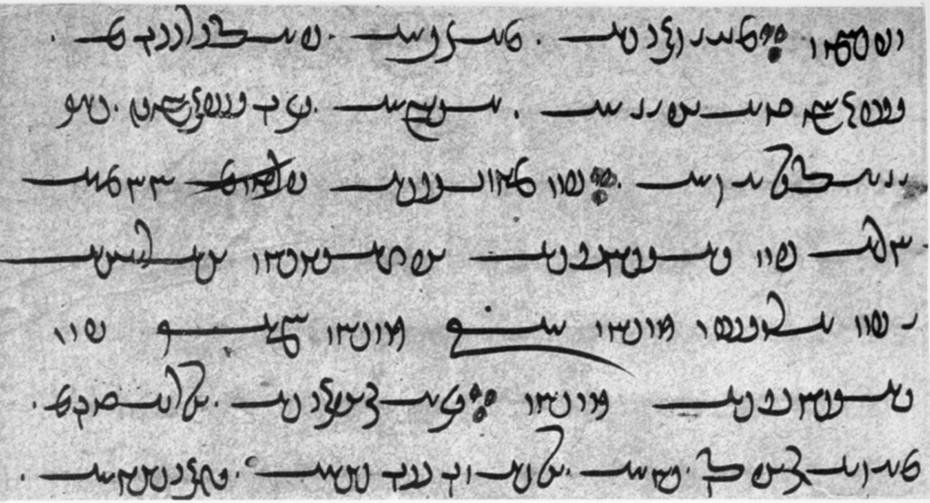

The Gathas
The Gathas are seventeen hymns, grouped by their verse metre into five sets, and placed in the middle of the Yasna, the main liturgy of Zoroastrian worship. They are short, dense and difficult. Their language is so archaic and their style so allusive that translations differ greatly, and every modern translator offers a different reading of key lines.
They are not stories or laws but prayers, questions and visions addressed to Ahura Mazda. A famous series in Yasna 44 asks: who fixed the course of the sun and stars, who holds up the earth and the sky, who made light and darkness?
Core teachings
One wise lord
Zoroaster gives the supreme place to Ahura Mazda, the “Wise Lord”, creator of the world and source of all good. Whether early Zoroastrianism was strictly monotheistic is debated, but Ahura Mazda stands far above all other beings.
Two spirits and a choice
In Yasna 30 Zoroaster describes two primal spirits: one beneficent (Spenta Mainyu), one destructive (later called Angra Mainyu, Ahriman in Persian). Each chose its side, and every person must choose too. This makes Zoroastrianism one of the first religions to place moral choice at its centre.
Truth against the lie
The world is a struggle between asha, truth and right order, and druj, the lie and disorder. The Achaemenid kings used the same words: Darius I’s inscriptions condemn “the Lie” as the source of rebellion.
Good thoughts, good words, good deeds
The triad humata, hukhta, hvarshta, “good thought, good word, good deed”, is the best-known formula of the faith. In modern Persian it is پندار نیک، گفتار نیک، کردار نیک (pendâr-e nik, goftâr-e nik, kerdâr-e nik).
Judgement and renewal
After death each soul faces judgement at the Bridge of the Separator, which the Gathas already mention. In the end evil will be defeated and the world made new. These ideas of individual judgement, heaven and hell, and a final renewal are among the most discussed features of Zoroastrianism, and many scholars think they influenced Judaism, Christianity and Islam, though the extent of that influence is debated.
How the Avesta was preserved
For many centuries the Avesta was passed down orally by priests who memorised it with great precision. It was written down only in the Sasanian period, probably in the fifth or sixth century CE, in a new alphabet invented to record its sounds exactly. Middle Persian sources say the Sasanian Avesta had 21 books, of which only about a quarter survives. The oldest manuscripts that exist today were copied in the late thirteenth and fourteenth centuries, in Iran and among the Parsis of India.
The surviving Avesta includes the Yasna (with the Gathas), the Yashts (hymns to divinities such as Mithra and Anahita), the Videvdad (purity laws) and prayers in daily use.
How Zoroastrianism shaped Iran
The religion of Ahura Mazda appears in the inscriptions of Darius I, became the organised state church of the Sasanians, and declined only slowly after the Arab conquest. Today small communities survive in Yazd, Kerman and Tehran, and in the Parsi community of India. Its influence runs through Iranian culture: in the festival of Nowruz, in the reverence for fire and light, and in the stories of the Shahnameh. Its later history is followed on the page Zoroastrianism through the ages, and the fire temple of Yazd is described at Yazd Fire Temple and Towers of Silence.
Persian words from this page
| زرتشت | Zartosht | Zoroaster |
| اوستا | Avestâ | the Avesta |
| گاتها | Gâthâ | the Gathas |
| اهورامزدا | Ahurâ Mazdâ | Ahura Mazda |
| اهریمن | Ahriman | the destructive spirit |
| آتشکده | âtashkade | fire temple |
| پندار نیک | pendâr-e nik | good thought |
Sources and further reading
- The Gathas: Yasna 28–34, 43–51, 53. Translations include H. Humbach, The Gāthās of Zarathushtra, Heidelberg, 1991.
- Boyce, M., Zoroastrians: Their Religious Beliefs and Practices, Routledge, 1979.
- Skjærvø, P. O., The Spirit of Zoroastrianism, Yale University Press, 2011.
- Stausberg, M. and Vevaina, Y. S.-D. (eds), The Wiley Blackwell Companion to Zoroastrianism, Wiley Blackwell, 2015.
- Encyclopaedia Iranica, “Zoroaster” and “Avesta” (iranicaonline.org).
Want to learn Persian? Get the free Starter Pack
Get the 14-page printable Starter Pack (all 32 letters, a 7-day reading plan, 100 core words and 20 survival phrases) and a short 5-email course. Free.
More in Early Iran and Elam (c. 3200–700 BCE)
- Prehistoric Iran: The First Villages of the Iranian Plateau
- Proto-Elamite Civilization and the First Writing in Iran
- The Jiroft Culture and the Halil Rud Treasures
- Shahr-e Sukhteh: The Burnt City of Sistan
- Elam: Iran’s First Great Kingdom
- The Middle Elamite Kingdom and Untash-Napirisha
- The Neo-Elamite Period and the Assyrian Sack of Susa
- Susa: 6,000 Years of an Ancient City
- Chogha Zanbil Ziggurat
- Elamite Language and Writing
- The Arrival of the Iranian Peoples
- The Mannaeans, Urartu and North-West Iran
- Marlik and the Gilan Hill Cultures
- The Luristan Bronzes
- Zoroaster and the Avesta