Amr ibn Layth was the brother and successor of Ya’qub the Coppersmith and ruled the Saffarid state from 879 to 900. Unlike Ya’qub he made peace with the caliph and governed a huge territory in the caliph’s name, but his attempt to add Transoxiana brought him into war with the Samanid Ismail ibn Ahmad, who defeated and captured him near Balkh in the spring of 900. That battle decided that the Samanids, not the Saffarids, would be the great power of the Iranian east.
| Ruled | 879–900 |
|---|---|
| Died | 902, in prison in Baghdad |
| Territory | Sistan, Khorasan, Kerman, Fars and lands to the east, at various times |
| Decisive battle | Near Balkh, 900: defeated and captured by Ismail Samani |
| Persian name | عمرو لیث (Amr-e Leys) |
From rebel’s brother to caliph’s governor
When Ya’qub died at Jundishapur in 879, the army chose Amr, who had been his close companion since their days in the militias of Sistan. Ya’qub’s rise and his war with Baghdad are told on the Saffarids and Ya’qub the Coppersmith. Amr changed course at once. He wrote to the caliph’s regent al-Muwaffaq, declared his obedience, and in return was named governor of Khorasan, Fars, Isfahan, Kerman and Sistan, together with the honorary post of police chief of Baghdad.
The arrangement was unstable. Khorasan was contested by other adventurers, first Ahmad al-Khujistani and then Rafi ibn Harthama, and Baghdad switched its support between them and Amr as it suited. In 885 the caliph withdrew Amr’s titles and sent an army against him in Fars; a few years later they were restored. Amr spent most of the 880s and 890s on campaign.

Height of power
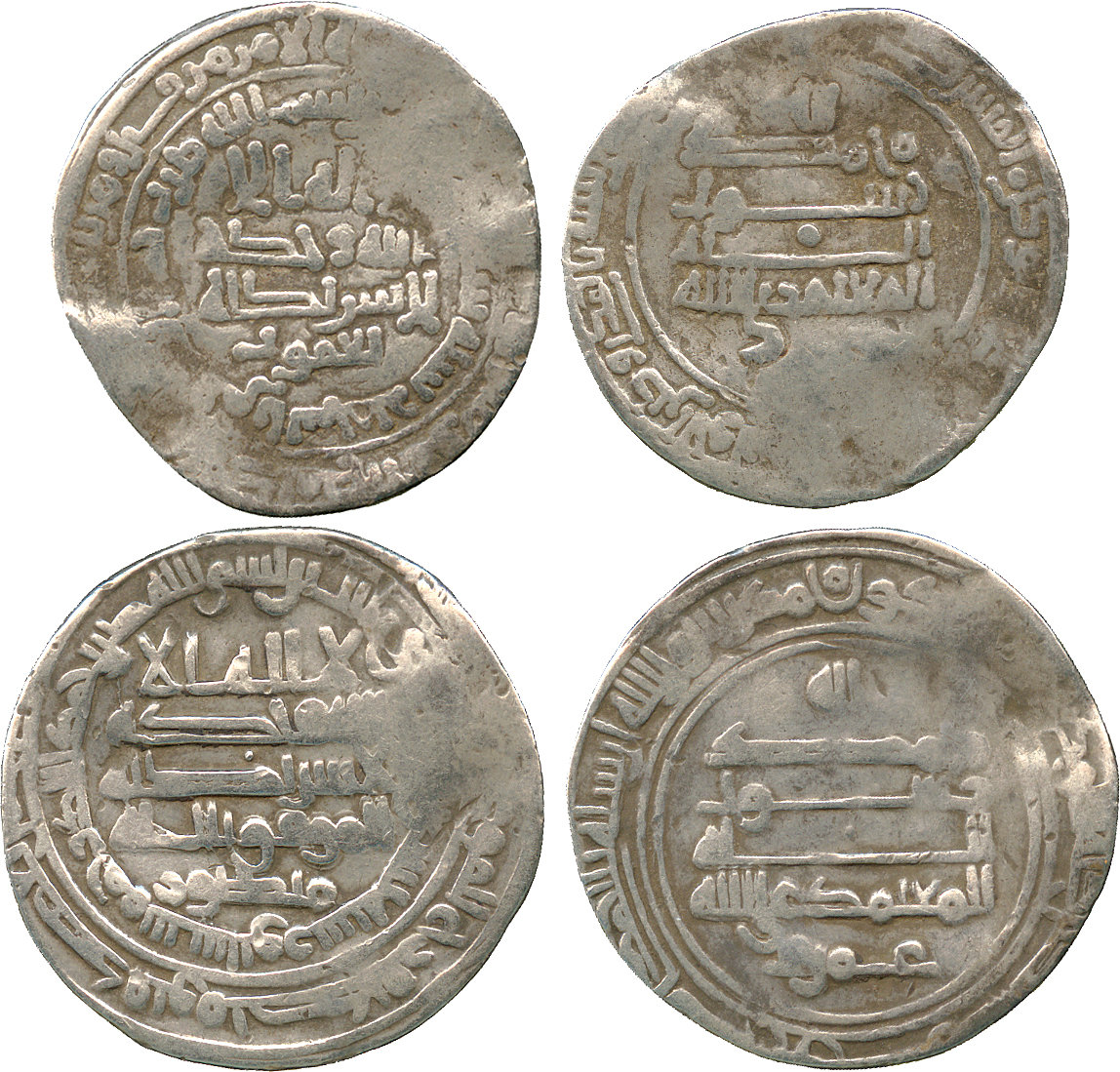
Under the caliph al-Mu’tadid (892–902) relations settled. Amr defeated Rafi ibn Harthama in 896 and sent his head to Baghdad, and he was again confirmed over Khorasan. His coins name the caliph, a sign that he now ruled inside the Abbasid order rather than against it.
Later writers were impressed by his administration, and especially by how he paid his army. A report repeated by Ibn Khallikan describes the regular pay parades: the army inspector called out the names in turn, and Amr himself stepped forward first to receive his pay as an ordinary soldier, so that no officer could claim privilege. The detail may be idealised, but it reflects a state that depended on keeping a large professional army content.
The road to Balkh
Across the Oxus, the Samanid family had governed Transoxiana for the Tahirids and then on their own account, and by the 890s Ismail ibn Ahmad held Bukhara and Samarqand. In 898 al-Mu’tadid granted Amr the governorship of Transoxiana as well, which was in effect an invitation to attack the Samanids. Many historians think the caliph wanted the two strongest eastern rulers to wear each other down.
Amr demanded that Ismail submit. Ismail refused, and the Samanid sources say he offered to remain governor of Transoxiana under Amr if Amr stayed south of the river; Amr rejected the offer. In 900 Ismail crossed the Oxus. The armies met near Balkh, and the Saffarid army, though larger by most accounts, broke. Amr was captured; one later version says his horse bolted into a thicket and he was taken without a fight.
Three hundred camels and a dog
A story in later Persian collections of anecdotes, such as Awfi’s Jawami al-hikayat, captures how his contemporaries saw the fall. On the morning of the battle, it was said, Amr’s kitchen needed three hundred camels to carry it; that evening, a prisoner, he watched a dog run off with the one pot that held his supper, and laughed. It is a moral tale about fortune, not a report, but it became the best-known thing about him.
Death in Baghdad and what followed
Ismail sent Amr to the caliph. He was paraded in Baghdad and kept in prison, and in 902, around the time of al-Mu’tadid’s death, he was killed in captivity. The caliph rewarded Ismail with the governorship of Khorasan, and the Samanids became masters of the whole north-east. That story continues on the Samanid Empire and on the page about the victor, Ismail Samani.
The Saffarid family did not disappear. Amr’s grandsons held Sistan and briefly Fars until about 911, and a later Saffarid line ruled Sistan for most of the tenth century. But after Balkh the Saffarids were a regional dynasty, not an empire.
- 879 Amr succeeds Ya’qub and submits to the caliph
- 885 Titles withdrawn; war with caliphal forces in Fars
- 896 Rafi ibn Harthama defeated
- 898 Amr granted Transoxiana by al-Mu’tadid
- 900 Defeat and capture near Balkh
- 902 Killed in prison in Baghdad
Why Balkh mattered
The battle settled more than a quarrel between two families. The Saffarids were soldiers from Sistan whose power rested on an army and on plunder; the Samanids were an old landed family with ties to the Tahirid administration and the merchant cities of Transoxiana. Ismail’s victory put the north-east in the hands of a dynasty that would spend the next century building courts, bureaucracies and a Persian literary culture in Bukhara. Historians such as C. E. Bosworth see the defeat of Amr as the point at which the Saffarid experiment in military empire ended and the Samanid age began.
Persian words from this page
| عمرو لیث | Amr-e Leys | Amr ibn Layth |
| بلخ | Balkh | Balkh |
| سامانیان | Sâmâniyân | the Samanids |
| شتر | shotor | camel |
| سگ | sag | dog |
Sources and further reading
- al-Tabari, The History of al-Tabari, vols. XXXVII–XXXVIII (SUNY translation).
- Narshakhi, The History of Bukhara, translated by R. N. Frye (1954).
- C. E. Bosworth, The History of the Saffarids of Sistan and the Maliks of Nimruz (1994).
- C. E. Bosworth, “The Tahirids and Saffarids”, in The Cambridge History of Iran, vol. 4 (1975).
- Encyclopaedia Iranica, “Amr b. Layt”.
Want to learn Persian? Get the free Starter Pack
Get the 14-page printable Starter Pack (all 32 letters, a 7-day reading plan, 100 core words and 20 survival phrases) and a short 5-email course. Free.
More in The Iranian Intermezzo (821–1055)
- The Tahirids of Khorasan
- The Saffarids and Ya’qub the Coppersmith
- Amr ibn Layth and the Saffarid–Samanid War
- The Zaydi Alavids of Tabaristan
- The Samanid Empire
- Ismail Samani
- The Samanid Persian Renaissance
- Rudaki, Father of Persian Poetry
- Bal’ami and Early Persian Prose
- The End of the Samanids
- The Ziyarids and Qabus ibn Voshmgir
- Gonbad-e Qabus Tower
- The Daylamites: Mountain Warriors of Gilan
- The Buyid Dynasty
- Adud al-Dawla
- Culture under the Buyids
- The Kakuyids of Isfahan
- Al-Khwarizmi and Persian Mathematics
- Muhammad ibn Zakariya al-Razi
- Ferdowsi and the Shahnameh
- Avicenna (Ibn Sina)
- Al-Biruni