Adud al-Dawla (936–983) was the greatest of the Buyid rulers. From his base in Shiraz he reunited the Buyid lands, took Iraq in 977–978 and ruled Baghdad as shahanshah, king of kings, over the Abbasid caliph. He is remembered as much for building as for conquest: the Band-e Amir dam in Fars, the Adudi hospital in Baghdad, and a court that drew poets, grammarians, astronomers and physicians.
| Name | Fana Khusraw, son of Rukn al-Dawla; title Adud al-Dawla, “Arm of the State” |
|---|---|
| Born | 936, Isfahan |
| Ruled | Fars from 949; Iraq from 977–978; died 983 |
| Capitals | Shiraz and Baghdad |
| Buried | Najaf, near the shrine of Ali |
| Persian name | عضدالدوله دیلمی (Azod od-Dowle-ye Deylami) |
Heir of Fars
Fana Khusraw was a son of Rukn al-Dawla, ruler of Rey and Isfahan, one of the three brothers who founded the dynasty described on the Buyid dynasty. His uncle Imad al-Dawla, ruler of Fars, had no sons and chose him as heir. In 949, aged about thirteen, he was installed in Shiraz, and when Imad al-Dawla died soon after, the richest Buyid province was his. His Persian name, Fana Khusraw, recalled the Sasanian kings called Khusraw.
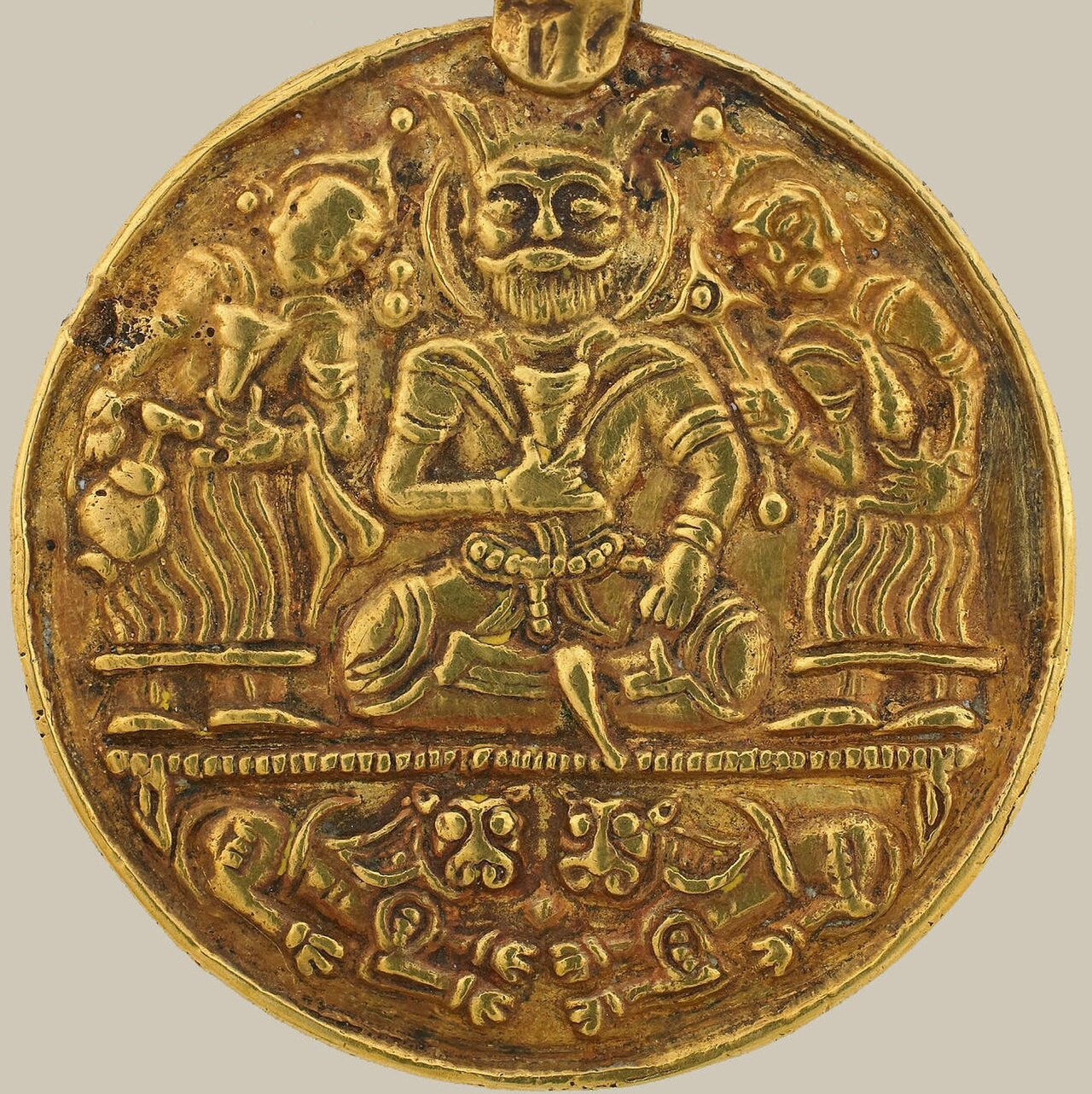

In 955, according to Arabic graffiti still visible on the palace of Darius at Persepolis, the young prince visited the ruins near his capital and had the old inscriptions read to him. Whatever he understood of them, the visit fits a ruler who wanted to be seen as heir to the kings of Fars.
From Shiraz to Baghdad
Through the 960s Adud built up his strength in the south. He took Kerman, campaigned in Baluchistan and brought Oman under Buyid control. In 974–975 he was called into Iraq to help his cousin Izz al-Dawla Bakhtiyar against a revolt of the Turkish troops in Baghdad, and he used the occasion to try to take Iraq for himself. His father, outraged at the betrayal of a family member, forced him to withdraw.
Rukn al-Dawla died in 976, after a family meeting in Isfahan had recognised Adud as the senior Buyid. In 977 Adud invaded Iraq again. In 978 he defeated Bakhtiyar at Qasr al-Jiss near Samarra; Bakhtiyar was captured and killed. Adud then took Mosul and the lands of the Hamdanid dynasty in northern Mesopotamia. In 980–981 he drove his brother Fakhr al-Dawla and the Ziyarid Qabus out of northern Iran (see the Ziyarids) and gave their lands to another brother, Mu’ayyad al-Dawla. For a few years, all the Buyid territories answered to one man.
King of kings over the caliph
In Baghdad, Adud set out his position more plainly than any of his predecessors. He took the old Persian title of shahanshah, which appears on his coins and medallions. The caliph al-Ta’i gave him the additional title Taj al-Milla, “Crown of the Religious Community”, and allowed his name to be mentioned after the caliph’s in the Friday sermon in Baghdad, a privilege no earlier ruler had received there. Adud married his daughter to the caliph, hoping that a grandson would one day unite caliphate and kingship. No such child was born.
Builder and administrator
The Band-e Amir
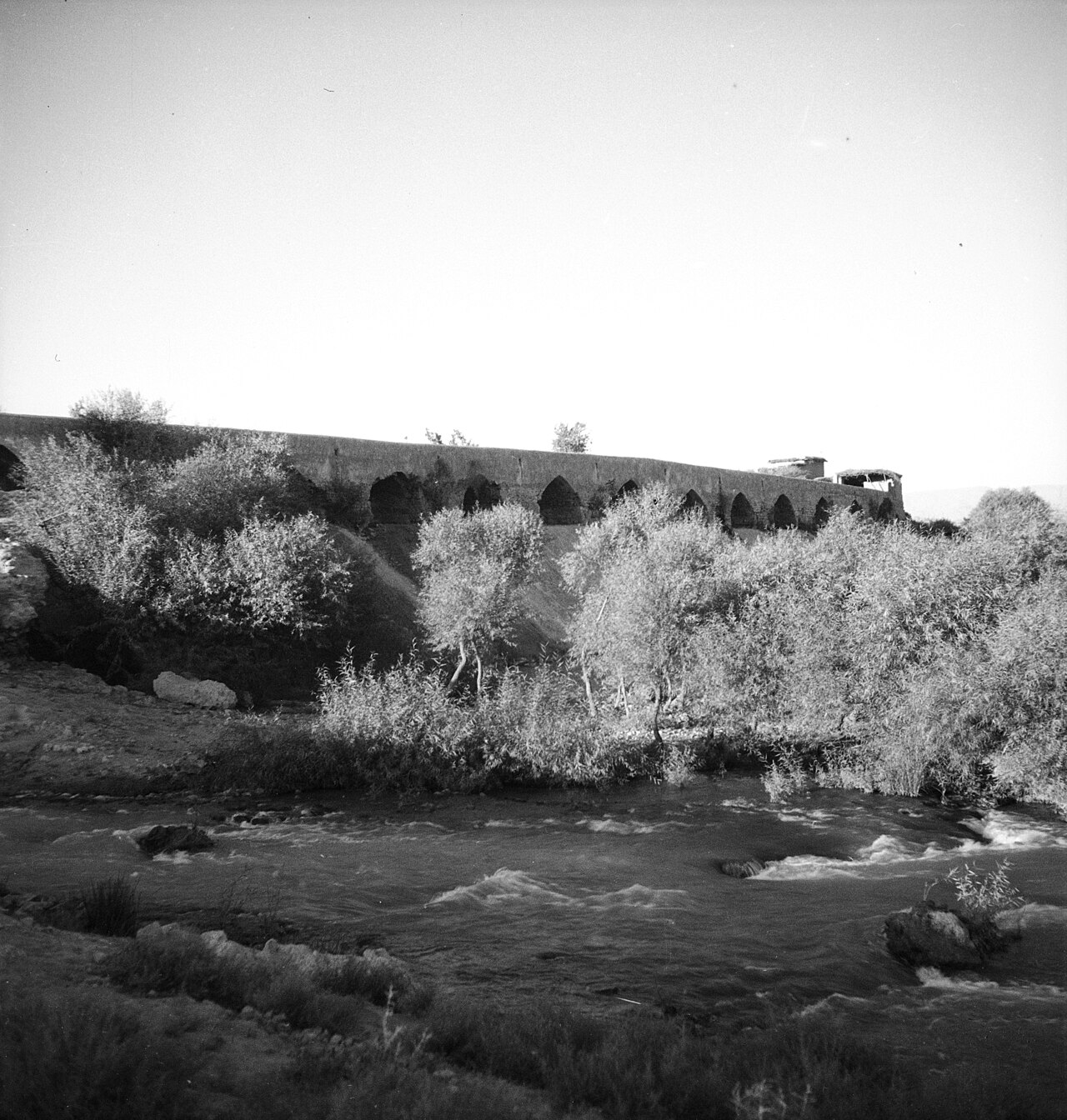
Adud’s most practical monument is the dam on the Kur river in the Marvdasht plain, north of Shiraz and close to Persepolis, known since his time as the Band-e Amir, “the Amir’s dam”. The geographer al-Muqaddasi described its masonry and the water-wheels and mills along it, and how it raised the water to irrigate a large area of farmland. Repaired many times, it remained in use for centuries and gave its name to the river below it, often called the Band-e Amir river.

Baghdad restored
Baghdad had suffered decades of civil war and neglect. Adud repaired canals, bridges and markets, cleaned out the waterways and rebuilt mosques. In 982 he opened a new hospital on the west bank of the Tigris, the Bimaristan al-Adudi, staffed with physicians, surgeons and oculists and supplied with medicines and an endowment. It remained the city’s leading hospital until the Mongol sack of 1258. He also restored the shrines of Ali at Najaf and of Husayn at Karbala.
Shiraz
In Fars he built a palace in Shiraz with a famous library, which al-Muqaddasi visited and described with its rows of book cases, each subject in its own section, with catalogues and staff. Outside the city he founded a garden town named after himself, Kard Fana Khusraw, where he settled craftsmen and held markets.
A court of learning
Many of the works dedicated to Adud are still known:
- The astronomer Abd al-Rahman al-Sufi, his teacher, wrote for him the Book of Fixed Stars (c. 964), with drawings of the constellations that were copied for centuries.
- The physician Ali ibn al-Abbas al-Majusi dedicated to him the Kamil al-sina’a, known in Latin as the “Royal Book”, one of the main medical textbooks before Avicenna.
- The grammarian Abu Ali al-Farisi wrote his Kitab al-Idah for him.
- The Arabic poet al-Mutanabbi visited Shiraz in 965 and praised him in some of his last odes, before being killed on the road home.
- His chancery secretary Abu Ishaq al-Sabi was ordered to write an official history of the dynasty, al-Taji.
The wider intellectual life of the period is described on culture under the Buyids.
Death and reputation
Adud al-Dawla died in Baghdad in March 983, aged forty-seven; the sources mention epilepsy. His death was kept secret for some time while his son Samsam al-Dawla took over, and the family soon fell into civil war. He was buried at Najaf.
Arabic historians such as Miskawayh, who served the Buyids, present him as a model ruler: hard-working, informed by a network of spies and postmasters, harsh with disorder and generous with scholars. They also record his severity, the heavy taxes that paid for his projects and the ruthlessness with which he treated his own family. In Shiraz he is still remembered as a builder; the city’s history is on Shiraz.
- 936 Born in Isfahan
- 949 Installed as ruler of Fars
- 955 Visit to Persepolis recorded in an inscription
- 974–975 First intervention in Iraq
- 978 Victory at Qasr al-Jiss; master of Iraq
- 980–981 Conquest of the north from Fakhr al-Dawla and Qabus
- 982 Adudi hospital opened in Baghdad
- 983 Dies in Baghdad
Persian words from this page
| عضدالدوله | Azod od-Dowle | Adud al-Dawla |
| بند امیر | Band-e Amir | “the Amir’s dam” |
| رود کر | Rud-e Kor | the Kur river |
| مرودشت | Marvdasht | Marvdasht plain |
| بیمارستان | bimârestân | hospital |
| کتابخانه | ketâbkhâne | library |
Sources and further reading
- Miskawayh, Tajarib al-umam, in H. F. Amedroz and D. S. Margoliouth, The Eclipse of the Abbasid Caliphate (1920–21).
- al-Muqaddasi, The Best Divisions for Knowledge of the Regions, translated by B. Collins (1994).
- H. Busse, “Iran under the Buyids”, in The Cambridge History of Iran, vol. 4 (1975).
- Encyclopaedia Iranica, “Azod-al-Dawla” (W. Madelung).
- J. L. Kraemer, Humanism in the Renaissance of Islam: The Cultural Revival during the Buyid Age (1986).
Want to learn Persian? Get the free Starter Pack
Get the 14-page printable Starter Pack (all 32 letters, a 7-day reading plan, 100 core words and 20 survival phrases) and a short 5-email course. Free.
More in The Iranian Intermezzo (821–1055)
- The Tahirids of Khorasan
- The Saffarids and Ya’qub the Coppersmith
- Amr ibn Layth and the Saffarid–Samanid War
- The Zaydi Alavids of Tabaristan
- The Samanid Empire
- Ismail Samani
- The Samanid Persian Renaissance
- Rudaki, Father of Persian Poetry
- Bal’ami and Early Persian Prose
- The End of the Samanids
- The Ziyarids and Qabus ibn Voshmgir
- Gonbad-e Qabus Tower
- The Daylamites: Mountain Warriors of Gilan
- The Buyid Dynasty
- Adud al-Dawla
- Culture under the Buyids
- The Kakuyids of Isfahan
- Al-Khwarizmi and Persian Mathematics
- Muhammad ibn Zakariya al-Razi
- Ferdowsi and the Shahnameh
- Avicenna (Ibn Sina)
- Al-Biruni