The Kakuyids were a Daylamite family, relatives of the Buyids, who ruled Isfahan and much of western Iran from about 1008 until the Seljuks took Isfahan in 1051. Their founder, Ala al-Dawla Muhammad, held his own between the Buyids, the Ghaznavids and the first Turkmen raiders, and is remembered above all as the patron of Avicenna, who spent his last thirteen years at his court.
| Dates | c. 1008–1051 as rulers of Isfahan; as Seljuk governors of Yazd and Abarquh until about 1141 |
|---|---|
| Origin | Daylamite, related to the Buyid queen Sayyida Shirin |
| Capital | Isfahan; a branch at Hamadan |
| Founder | Ala al-Dawla Muhammad ibn Dushmanziyar (r. c. 1008–1041) |
| Successors | Faramurz (Isfahan, then Yazd); Garshasp I (Hamadan) |
| Ended | Isfahan taken by Tughril Beg after a year-long siege, 1051 |
“Son of the uncle”
The family name comes from a nickname. The founder’s father, Rustam Dushmanziyar, was the maternal uncle of Sayyida Shirin, a princess of the Bavandid house of Tabaristan who married the Buyid ruler Fakhr al-Dawla. In the Daylamite dialect kaku meant uncle, so Rustam’s son Muhammad was called Ibn Kakuya or Pesar-e Kaku, “the son of the uncle”. The name stuck to his descendants.
After Fakhr al-Dawla died in 997, Sayyida Shirin governed the Buyid state of Rey on behalf of her young son Majd al-Dawla. She placed her cousin in charge of Isfahan, the great city of central Iran. He held it by 1008 at the latest; the Isfahan historian al-Mafarrukhi suggests he was already there by about 1003. The caliph later gave him the honorific Ala al-Dawla, “Exaltation of the State”. The family’s place among the Daylamite dynasties is described on the Daylamites.
A prince between empires
Ala al-Dawla began as a Buyid governor and became an independent ruler as the Buyid family weakened. He sometimes fought his kinsmen and sometimes rescued them. When the Buyid prince of Hamadan, Shams al-Dawla, faced a revolt, he turned to Ala al-Dawla for help; after Shams al-Dawla’s death, Ala al-Dawla took Hamadan for himself in 1023 or 1024.
The real danger came from the east. In 1029 Mahmud of Ghazni deposed Majd al-Dawla and took Rey. His son Mas’ud pushed on into western Iran, defeated Ala al-Dawla and occupied Isfahan; the Kakuyid fled to the Buyids in Khuzestan, and in the end accepted Ghaznavid overlordship and an annual tribute of 200,000 dinars. Ghazna was far away, though, and Ala al-Dawla kept coming back. He briefly retook Rey in 1030, was beaten again by Mas’ud in 1035, and returned to Rey in 1037–1038 as Ghaznavid power in the west collapsed.
In his last years a new threat appeared: bands of Oghuz Turkmen, forerunners of the Seljuks, raiding western Iran. In 1038–1039 they sacked Hamadan. Ala al-Dawla had already begun building massive walls around Isfahan, and they spared the city the same fate. He died in September 1041 while campaigning in the west.
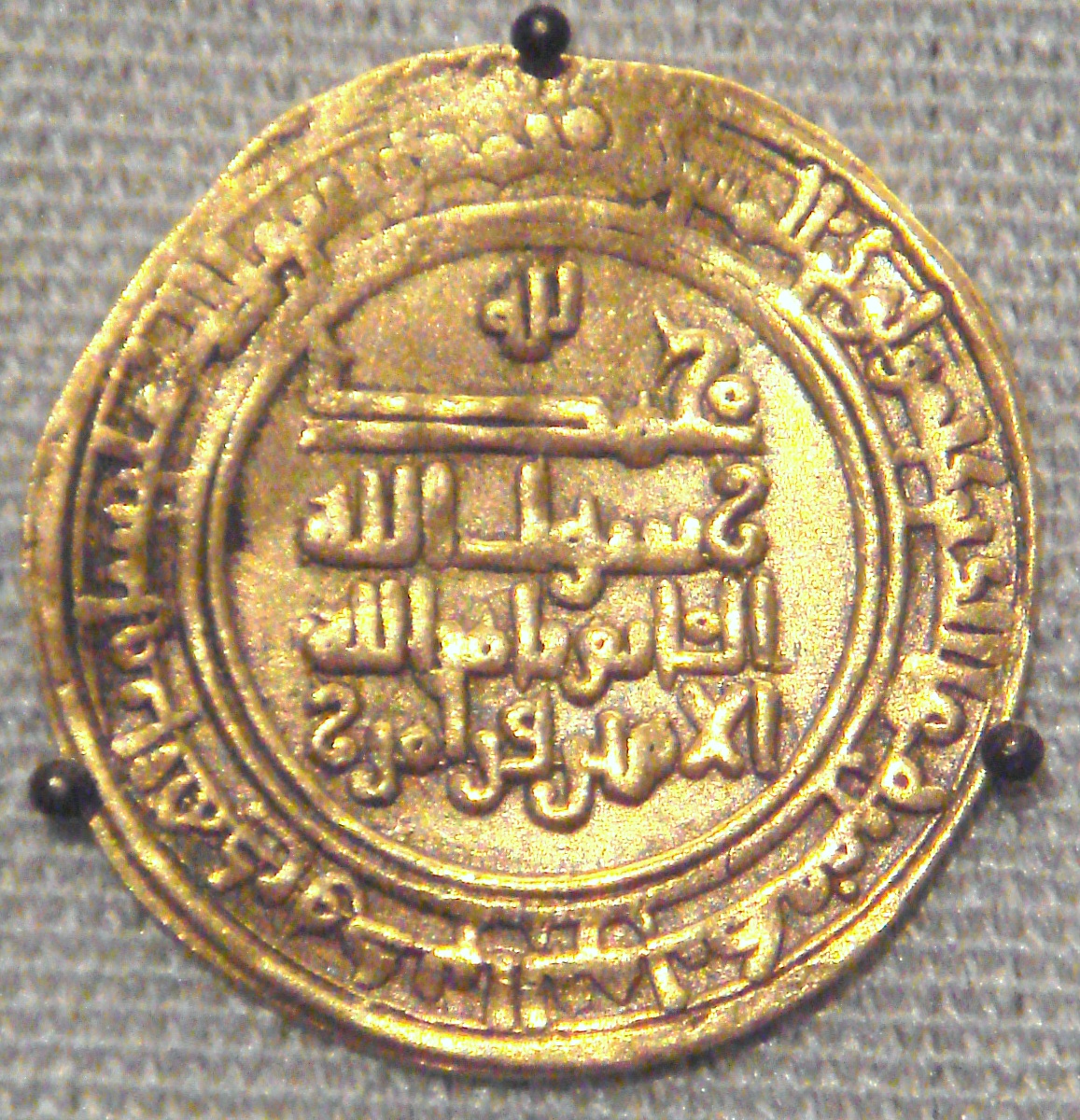

Avicenna at the Kakuyid court
Avicenna arrived in Isfahan around 1024, after years of service and imprisonment in Hamadan, and stayed with Ala al-Dawla until his death in 1037. These were his calmest and most productive years. According to his pupil and biographer al-Juzjani, the prince held learned gatherings on Friday nights where scholars of every subject debated in his presence, and he asked Avicenna to make new astronomical observations to correct the tables in use.
Avicenna wrote for him the Daneshnameh-ye Ala’i, “The Book of Knowledge for Ala al-Dawla”, the first comprehensive work of Aristotelian philosophy in Persian, covering logic, metaphysics and natural science. He also finished parts of his great Arabic encyclopedia, the Book of Healing, in this period. The Kakuyid court was not a safe haven from war, however: Avicenna went with the prince on campaign, and according to al-Juzjani some of his writings were lost when Ghaznavid troops plundered his baggage. In 1037 he fell ill with colic while accompanying the prince on campaign, and died at Hamadan. His life is told in full on Avicenna (Ibn Sina), and his grave on the Tomb of Avicenna.
Faramurz and the Seljuk siege
Ala al-Dawla’s lands were divided between his sons. Faramurz, the eldest, took Isfahan; Garshasp I ruled Hamadan and the western Jibal. Both faced the rising Seljuks, whose leader Tughril Beg was taking over Iran city by city. Faramurz tried to balance between submission and resistance, but in 1050 Tughril laid siege to Isfahan. After about a year the city surrendered in 1051, and Tughril made it one of his capitals. Its later glory as the Seljuk capital of Malik Shah began here; see Malik Shah I.
Governors of Yazd
The Kakuyids survived the loss of Isfahan. Tughril gave Faramurz Yazd and Abarquh as a fief, and his descendants governed them as loyal Seljuk vassals for about ninety years. Local histories of Yazd credit them with mosques, canals and fortifications. The Davazdah Imam tomb in Yazd, built by two brothers in the first half of the eleventh century, is one of the oldest dated buildings of the city and is often associated with this period. The last notable member of the family, Garshasp II, fell fighting for the Seljuk sultan Sanjar at the battle of Qatwan in 1141, and the line ended with him.
The Kakuyids were a minor dynasty, but they sit at an important junction. They were the last Daylamite house to rule a major Iranian city, and their fall to Tughril marks the moment when western Iran passed from the “Iranian intermezzo” into the Seljuk age. For Isfahan today, see Isfahan.
Persian words from this page
| کاکویه | Kâkuye | the Kakuyids’ family name |
| علاءالدوله | Alâ’-od-Dowle | Ala al-Dawla |
| اصفهان | Esfahân | Isfahan |
| همدان | Hamedân | Hamadan |
| یزد | Yazd | Yazd |
| ابرقو | Abarqu | Abarquh |
| دانشنامه علائی | Dâneshnâme-ye Alâ’i | Avicenna’s Book of Knowledge for Ala al-Dawla |
Sources and further reading
- Ibn al-Athir, al-Kamil fi’l-ta’rikh, years 398–443 AH.
- W. E. Gohlman (ed. and trans.), The Life of Ibn Sina: A Critical Edition and Annotated Translation (SUNY Press, 1974), the autobiography and al-Juzjani’s biography.
- Encyclopaedia Iranica, article “Kakuyids” (C. E. Bosworth).
- C. E. Bosworth, “Dailamīs in Central Iran: The Kākūyids of Jibāl and Yazd”, Iran 8 (1970).
- C. E. Bosworth, The New Islamic Dynasties (Edinburgh, 1996).
Want to learn Persian? Get the free Starter Pack
Get the 14-page printable Starter Pack (all 32 letters, a 7-day reading plan, 100 core words and 20 survival phrases) and a short 5-email course. Free.
More in The Iranian Intermezzo (821–1055)
- The Tahirids of Khorasan
- The Saffarids and Ya’qub the Coppersmith
- Amr ibn Layth and the Saffarid–Samanid War
- The Zaydi Alavids of Tabaristan
- The Samanid Empire
- Ismail Samani
- The Samanid Persian Renaissance
- Rudaki, Father of Persian Poetry
- Bal’ami and Early Persian Prose
- The End of the Samanids
- The Ziyarids and Qabus ibn Voshmgir
- Gonbad-e Qabus Tower
- The Daylamites: Mountain Warriors of Gilan
- The Buyid Dynasty
- Adud al-Dawla
- Culture under the Buyids
- The Kakuyids of Isfahan
- Al-Khwarizmi and Persian Mathematics
- Muhammad ibn Zakariya al-Razi
- Ferdowsi and the Shahnameh
- Avicenna (Ibn Sina)
- Al-Biruni