The Daylamites were the people of Daylam, the mountainous highlands of the Alborz above the Caspian plain of Gilan. For centuries they were known as tough foot soldiers who served the Sasanian kings and kept the Arab armies out of their valleys; after they accepted Islam around 900, Daylamite captains broke out of the mountains and, in the tenth century, founded dynasties that ruled much of Iran and Iraq, the Buyids above all.
| Homeland | Daylam: the highlands south-west of the Caspian, around the upper Sefidrud and its tributaries, in today’s Gilan and Qazvin provinces |
|---|---|
| Neighbours | The Gilites (Gil) of the coastal lowlands |
| Language | North-western Iranian dialects |
| Famous for | Infantry fighting with sword, shield and javelin |
| Conversion to Islam | Mainly late 9th and early 10th century, under Zaydi Shi’a missionaries |
| Dynasties | Justanids, Musafirids (Sallarids), Buyids, Kakuyids |
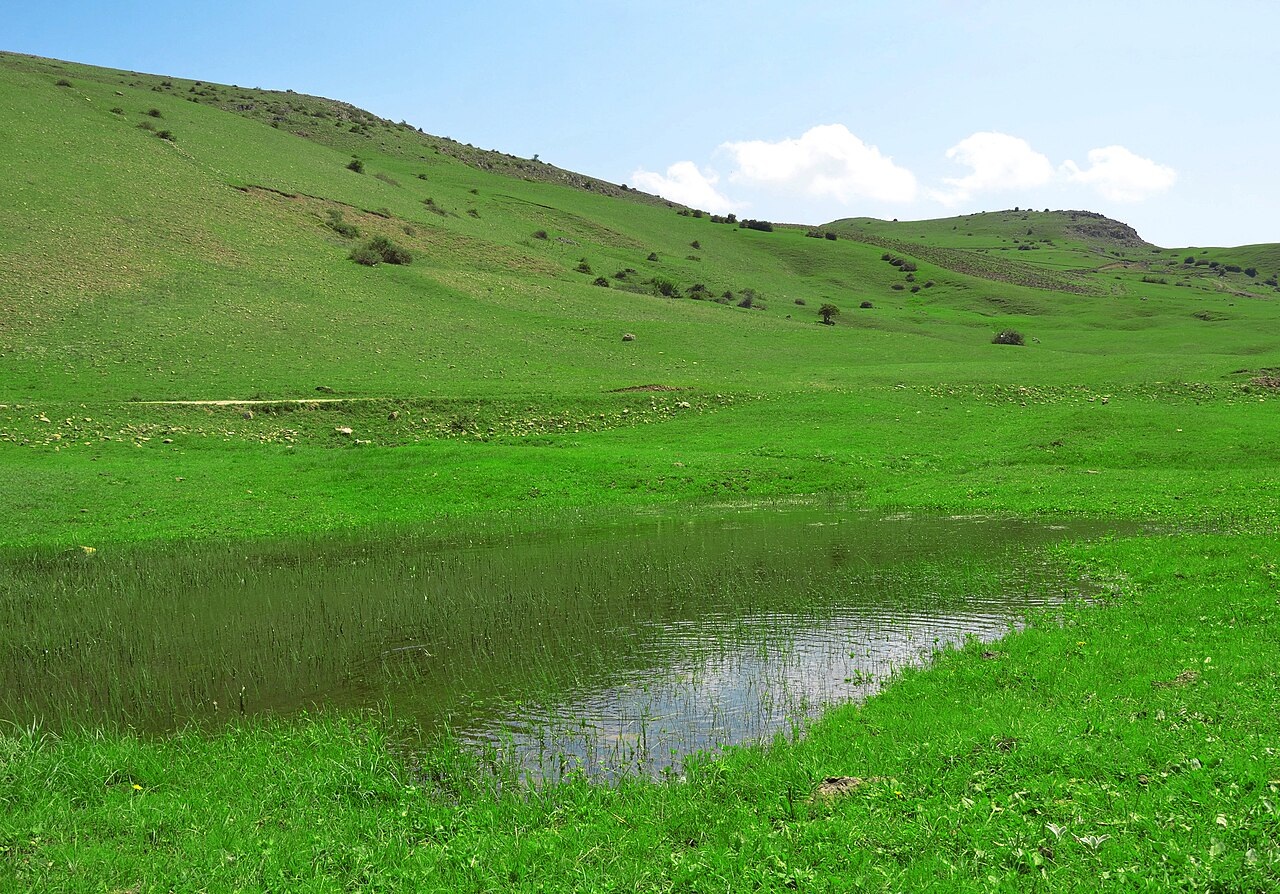

A land of steep valleys
Daylam was never a large place. It covered the wooded and rocky country where the Alborz drops toward the Caspian, around the valleys that feed the Sefidrud. Below it lay Gilan proper, a flat, wet, rice-growing plain whose people, the Gilites, were close neighbours and often allies of the Daylamites but counted as a separate people. Medieval geographers treated the two together as “Gil and Daylam”.
The country was hard to enter and easy to defend. Villages were scattered, land was poor, and the men went out to earn a living as soldiers. That pattern, a mountain people exporting fighters, explains most of Daylamite history.
Soldiers of the Sasanian kings
The Daylamites appear in Greek and Roman writing from the second century BCE onward. The Byzantine historians Procopius and Agathias describe them in the sixth century CE as warriors who fought on foot at close quarters, each with a sword, a shield and spears or javelins. They were not easily ruled, but they served in the Sasanian army as paid infantry, and their commanders could rise high. Around 570, in the reign of Khosrow I, a Daylamite general known by the title Wahriz led the Persian expedition that conquered Yemen; his troops settled there.
When the Arab armies attacked the Sasanian empire, Daylamites fought on the Persian side. Arabic historians report that after the defeat at al-Qadisiyyah a corps of Daylamite soldiers went over to the Arabs and settled at Kufa. Most of their kin at home, however, refused to submit.
Holding out against the caliphs
For more than two centuries Daylam stayed outside the caliphate. The Arabs built Qazvin up as a frontier garrison facing the mountains, as the Sasanians had done before them, and al-Tabari records that Muslims counted the Daylamites and the Turks as their most dangerous enemies. Abbasid expeditions occupied parts of the region from time to time but never held it. Inside Daylam a local royal house, the Justanids, ruled from the valley of Rudbar, near the later fortress of Alamut.
The mountains also became a refuge. Descendants of the Prophet’s family, fleeing the Abbasids, found protection in the Caspian highlands, and it was through them that the Daylamites finally became Muslims. In 864 the Zaydi Alid Hasan ibn Zayd set up a state in Tabaristan, and around 900–914 the scholar-ruler al-Hasan al-Utrush preached among the Gilites and Daylamites and converted many of them to Zaydi Shi’ism. That story is told on the Zaydi Alavids of Tabaristan.
The breakout of the tenth century
Conversion changed everything. As Muslims, Daylamite soldiers could now serve, and command, anywhere in the Islamic world, and the caliphate of the early tenth century was weak and divided. Daylamite and Gilite war-bands poured south. The first generation of leaders were adventurers: Asfar ibn Shiruya, who briefly held Rey and Qazvin; Makan ibn Kaki, a Daylamite who fought for the Alids and then for himself; and Mardavij ibn Ziyar, a Gilite who took most of western Iran in the 920s and 930s and founded the Ziyarid dynasty.
The most successful were three sons of a Daylamite named Buya, officers under Makan and Mardavij. Between 934 and 945 they took Fars, central Iran and Baghdad itself, and their family, the Buyids, ruled for a century; see the Buyid dynasty. Smaller Daylamite houses did the same on a lesser scale. The Musafirids, also called Sallarids, ruled Tarom and for a time Azerbaijan from the 940s. The Kakuyids, relatives of the Buyid queen Sayyida Shirin, made Isfahan their own in the early eleventh century; see the Kakuyids of Isfahan.
The orientalist Vladimir Minorsky called this period, between Arab and Turkish domination, the “Iranian intermezzo”, and he gave the Daylamites a central place in it. Many of these rulers took Persian royal titles, revived Sasanian ceremony and spoke openly of restoring the old kingdom of Iran.
Infantry in an age of cavalry
Daylamite strength was also its weakness. Their soldiers were infantry, excellent in sieges, in mountain fighting and in holding a line behind their large shields. But the wars of the tenth century were increasingly decided by mounted archers, and the best of those were Turks. Buyid rulers therefore hired Turkish cavalry alongside their own Daylamite foot.
The two groups never mixed well. They differed in language, in fighting style and often in religion, since many Turks were Sunni and the Daylamites were Shi’a. Quarrels over pay turned into street battles in Baghdad and other cities, and Buyid princes spent much of their energy balancing one corps against the other. When the Seljuk Turks arrived in the 1040s and 1050s, the Daylamite infantry could not stop them, and with the fall of the Buyids the Daylamite age of Iranian history came to an end.
After the Buyids
The Daylamites did not disappear. Their mountains remained a stronghold of Shi’a groups of several kinds: Zaydis survived in Gilan for centuries, and in 1090 the Ismaili leader Hasan-i Sabbah seized Alamut, in the heart of old Daylam, and made it the centre of the Nizari Ismaili state; see Hassan-i Sabbah and the fortress of Alamut. The name lives on in the district of Deylaman in Gilan and in the family name Deylami.
Persian words from this page
| دیلم | Deylam | Daylam, the highland region |
| دیلمیان | Deylamiyân | the Daylamites |
| گیلان | Gilân | Gilan |
| البرز | Alborz | the Alborz mountains |
| سپیدرود | Sepidrud | the Sefidrud river |
| آل بویه | Âl-e Buye | the Buyids |
| قزوین | Qazvin | Qazvin, the frontier town |
Sources and further reading
- Procopius, History of the Wars, and Agathias, Histories (sixth century), on Daylamite soldiers.
- Al-Tabari, History of Prophets and Kings (Ta’rikh al-rusul wa’l-muluk).
- Encyclopaedia Iranica, articles “Deylamites” and “Buyids”.
- V. Minorsky, La domination des Dailamites (Paris, 1932).
- The Cambridge History of Iran, vol. 4, The Period from the Arab Invasion to the Saljuqs (1975), chapters by W. Madelung and H. Busse.
- Hugh Kennedy, The Prophet and the Age of the Caliphates (2nd ed., 2004).
Want to learn Persian? Get the free Starter Pack
Get the 14-page printable Starter Pack (all 32 letters, a 7-day reading plan, 100 core words and 20 survival phrases) and a short 5-email course. Free.
More in The Iranian Intermezzo (821–1055)
- The Tahirids of Khorasan
- The Saffarids and Ya’qub the Coppersmith
- Amr ibn Layth and the Saffarid–Samanid War
- The Zaydi Alavids of Tabaristan
- The Samanid Empire
- Ismail Samani
- The Samanid Persian Renaissance
- Rudaki, Father of Persian Poetry
- Bal’ami and Early Persian Prose
- The End of the Samanids
- The Ziyarids and Qabus ibn Voshmgir
- Gonbad-e Qabus Tower
- The Daylamites: Mountain Warriors of Gilan
- The Buyid Dynasty
- Adud al-Dawla
- Culture under the Buyids
- The Kakuyids of Isfahan
- Al-Khwarizmi and Persian Mathematics
- Muhammad ibn Zakariya al-Razi
- Ferdowsi and the Shahnameh
- Avicenna (Ibn Sina)
- Al-Biruni