The Saffarids were a dynasty from Sistan, in today’s south-east Iran and south-west Afghanistan, founded by Ya’qub ibn Layth, a coppersmith (saffar) turned frontier fighter who seized power in about 861. Between 867 and 876 he conquered most of eastern and southern Iran without the caliph’s permission and marched on Baghdad. He was the first ruler of the Islamic period to build an Iranian state by force rather than by appointment, and his court is where Persian poetry first appears.
| Founder | Ya’qub ibn Layth al-Saffar (ruled c. 861–879) |
|---|---|
| Homeland | Sistan, capital Zarang |
| Greatest extent | c. 876: Sistan, Khorasan, Kerman, Fars, Khuzestan, Kabul region |
| Successor | His brother Amr ibn Layth (879–900) |
| Later line | Saffarid amirs of Sistan until 1003, then local maliks of Nimruz |
| Persian name | صفاریان (Saffâriyân) |
Sistan, Kharijites and the ayyars
Ninth-century Sistan was a frontier twice over. To the east lay the lands of the Zunbils and the Kabul Shahs, non-Muslim rulers in what is now Afghanistan. Inside the province, Kharijite bands, radical sectarians who rejected the Abbasid caliphs, had raided and taxed the countryside for generations, and the caliph’s governors could barely hold the capital, Zarang.
Into that gap stepped the ayyars: urban militias of young men, part volunteers for the faith, part gangs, bound by codes of loyalty. Ya’qub, born around 840 in the village of Qarnin, worked as a coppersmith before joining one of these bands. He rose through them as a commander and in about 861 became the leading man in Zarang. The local chronicle, the Tarikh-e Sistan, written about two centuries later, presents him as a champion of Sistan against both Kharijites and foreign unbelievers.
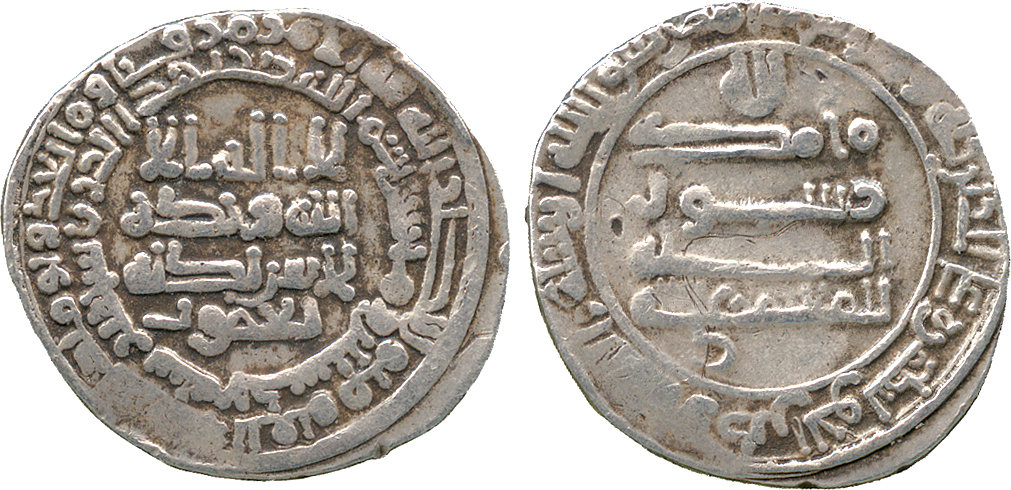

The conquests of Ya’qub
Ya’qub first secured Sistan, partly by fighting the Kharijites and partly by recruiting them into his army. He then struck east. His campaigns against the Zunbil and towards Kabul and Bamiyan brought in slaves, tribute and the silver of the Panjhir mines, which paid his troops; idols taken in these raids were sent to the caliph as proof of holy war.
From 867 he turned on the Muslim provinces. He took Herat, then Kerman, and in 869 entered Fars. In 873 he rode into Nishapur and captured the Tahirid governor, ending the family described on the Tahirids of Khorasan. The next year he pushed into Tabaristan against the Alid ruler Hasan ibn Zayd, but the wet Caspian forests and heavy rains cost him much of his army and he withdrew.
Baghdad and the battle of Dayr al-Aqul, 876
The caliph’s regent, al-Muwaffaq, alternated between recognising Ya’qub and denouncing him. In 876 Ya’qub marched on Iraq itself. At Dayr al-Aqul on the Tigris, not far from Baghdad, the caliphal army defeated him; the chronicles say the dikes were breached so that the ground flooded beneath his troops. Ya’qub retreated to Khuzestan and made his base at Jundishapur, where he died of illness in 879 without having reconciled with the caliph.
The man behind the legend
Medieval writers liked Ya’qub as a plain soldier. A well-known anecdote, told by Ibn Khallikan among others, has him receive a caliphal envoy while lying ill, with a sword, some bread and onions beside him: if he lived, the sword would decide between them; if he lost, he would go back to bread and onions. Whether he said it or not, it fits the picture of a ruler who owed nothing to birth. Some later Persian authors gave him a Sasanian pedigree, which looks like the invention of a dynasty wanting respectability.
His religious position is debated. Sunni writers such as Nizam al-Mulk, two centuries later, painted him as a heretic sympathetic to the Isma’ilis, but there is little contemporary evidence for that, and most historians read it as hostile propaganda against a man who had attacked the caliph.
Persian at the court
The Saffarid court in Zarang was an army camp more than a centre of letters, yet it produced the first Persian poetry with a firm date. The Tarikh-e Sistan tells how Ya’qub, unable to follow the Arabic praise poems recited to him, asked why poets used a language he did not understand, and how his secretary Muhammad ibn Wasif then praised him in Persian. That episode, and what it meant for the language, is told on the birth of New Persian.
After Ya’qub
Ya’qub’s brother Amr ibn Layth inherited the army and made peace with the caliph, governing a vast territory until his defeat by the Samanids at Balkh in 900. His story is on Amr ibn Layth and the Saffarid–Samanid War. After 900 the family survived in Sistan, sometimes under Samanid overlordship. Abu Ja’far Ahmad (923–963) and his son Khalaf ibn Ahmad (963–1003) ruled a prosperous Sistan with a court known for learning, until Mahmud of Ghazni removed Khalaf in 1003. Local maliks of Nimruz claiming Saffarid descent held Sistan for centuries afterwards.
- c. 861 Ya’qub becomes leader in Zarang
- 867 Herat taken
- 869 Invasion of Fars
- 873 Nishapur taken; end of Tahirid rule
- 874 Failed campaign in Tabaristan
- 876 Defeat at Dayr al-Aqul
- 879 Death of Ya’qub at Jundishapur
- 1003 Khalaf ibn Ahmad deposed by Mahmud of Ghazni
Ya’qub is remembered in modern Iran as a national figure; schools and streets bear the name Ya’qub-e Leys, and he is often presented as the man who first broke Arab rule. Historians are more cautious: he fought the caliph’s armies but used the caliph’s religious language, and his state did not outlast his brother as a great power.
Persian words from this page
| یعقوب لیث | Ya’qub-e Leys | Ya’qub ibn Layth |
| صفار | saffâr | coppersmith |
| عیار | ayyâr | member of a militia band |
| سیستان | Sistân | Sistan |
| زرنج | Zaranj | Zarang, the Saffarid capital |
| نیمروز | Nimruz | “midday”, old name for Sistan |
Sources and further reading
- Tarikh-e Sistan, translated by Milton Gold as The Tarikh-e Sistan (Rome, 1976).
- C. E. Bosworth, The History of the Saffarids of Sistan and the Maliks of Nimruz (247/861 to 949/1542-3) (1994).
- C. E. Bosworth, “The Tahirids and Saffarids”, in The Cambridge History of Iran, vol. 4 (1975).
- D. G. Tor, Violent Order: Religious Warfare, Chivalry, and the ʿAyyar Phenomenon in the Medieval Islamic World (2007).
- Encyclopaedia Iranica, “Saffarids”.
Want to learn Persian? Get the free Starter Pack
Get the 14-page printable Starter Pack (all 32 letters, a 7-day reading plan, 100 core words and 20 survival phrases) and a short 5-email course. Free.
More in The Iranian Intermezzo (821–1055)
- The Tahirids of Khorasan
- The Saffarids and Ya’qub the Coppersmith
- Amr ibn Layth and the Saffarid–Samanid War
- The Zaydi Alavids of Tabaristan
- The Samanid Empire
- Ismail Samani
- The Samanid Persian Renaissance
- Rudaki, Father of Persian Poetry
- Bal’ami and Early Persian Prose
- The End of the Samanids
- The Ziyarids and Qabus ibn Voshmgir
- Gonbad-e Qabus Tower
- The Daylamites: Mountain Warriors of Gilan
- The Buyid Dynasty
- Adud al-Dawla
- Culture under the Buyids
- The Kakuyids of Isfahan
- Al-Khwarizmi and Persian Mathematics
- Muhammad ibn Zakariya al-Razi
- Ferdowsi and the Shahnameh
- Avicenna (Ibn Sina)
- Al-Biruni