Hulagu (c. 1217–1265), a grandson of Genghis Khan, led the Mongol campaign of the 1250s that destroyed the Nizari Ismaili state, ended the Abbasid caliphate in Baghdad and carried Mongol armies into Syria. He then stayed in Iran and founded the Ilkhanate, the Mongol dynasty that ruled Iran, Iraq and the Caucasus until the 1330s. For the first time since the Sasanians, Iran and Iraq were governed as a single state with its centre in Iran.
| Born | c. 1217 |
|---|---|
| Died | February 1265, near Maragheh |
| Parents | Tolui, youngest son of Genghis Khan, and Sorghaghtani Beki |
| Brothers | Möngke and Kublai (Great Khans), Ariq Böke |
| Ruled | 1256–1265 in Iran |
| Capital | Maragheh, with a treasury on an island in Lake Urmia |
| Chief wife | Doquz Khatun, a Church of the East (Nestorian) Christian |
| Successor | His son Abaqa |
A prince of the house of Tolui
Hulagu grew up in the household of his mother Sorghaghtani Beki, a Kerait princess remembered by Persian, Christian and Chinese writers for her political skill. She raised four sons who all became powerful, and she secured the throne for the eldest, Möngke, in 1251. At the assembly (quriltai) that confirmed Möngke’s rule, two great expeditions were planned. Kublai was to complete the conquest of southern China; Hulagu was to bring the lands from the Amu Darya to Egypt firmly under Mongol control.
According to Rashid al-Din, Hulagu’s instructions were to reduce the Ismaili fortresses, demand the submission of the caliph and treat those who submitted well. Every Mongol prince contributed a share of his troops, and a corps of Chinese engineers came with the army to handle siege machines. Hulagu set out in 1253 and moved slowly, crossing the Amu Darya only at the start of 1256.

Three campaigns, 1256 to 1260
The first target was the network of Nizari Ismaili castles in the Alborz and in Quhistan. The Nizari imam Rukn al-Din Khurshah surrendered in November 1256, and Alamut opened its gates soon after (see the fall of Alamut). Hulagu then turned on Baghdad. The caliph al-Musta’sim refused to submit and failed to prepare for a siege; the city fell in February 1258, the caliph was put to death and the city was sacked (see the Mongol sack of Baghdad).
In 1259 Hulagu marched into northern Syria. Aleppo was stormed in January 1260, and Damascus surrendered without a fight. Then news arrived that Möngke had died in China in August 1259. A succession war between Kublai and Ariq Böke was beginning, and Hulagu withdrew most of his army towards Azerbaijan, leaving his general Kitbuqa in Syria with a reduced force. In September 1260 the Mamluks of Egypt defeated and killed Kitbuqa at Ain Jalut. Hulagu never managed to avenge the defeat.
Founding the Ilkhanate
Möngke had probably meant Hulagu’s command to be temporary. After 1260, with the empire divided, Hulagu stayed and made the conquered lands his own. He and his successors used the title il-khan, usually understood as “subordinate khan”, acknowledging the Great Khan in China, Kublai, as their overlord. Kublai in turn recognised Hulagu’s position.
This made enemies. Berke, khan of the Golden Horde in the steppes north of the Caucasus, claimed the pastures of Azerbaijan for the house of Jochi and was angered by the killing of Jochid princes in Hulagu’s army. Berke had also converted to Islam and is said to have condemned the execution of the caliph. Open war broke out in 1262. Hulagu’s army advanced north of the Caucasus but was routed on the Terek river in the winter of 1262–1263, many men drowning when the ice broke. The Caucasus became a permanent frontier, and the Golden Horde allied itself with the Mamluks.
Government and religion
Hulagu ruled from camp more than from cities. His court moved between summer pastures in the Azerbaijan highlands and winter quarters on the plains, but he built a palace and an observatory at Maragheh and kept his treasure in a fortress on Shahi island in Lake Urmia. For civil government he relied on Iranian officials: Shams al-Din Juvayni became chief minister (sahib-divan), and his brother Ata-Malik Juvayni, the historian, was made governor of Baghdad.
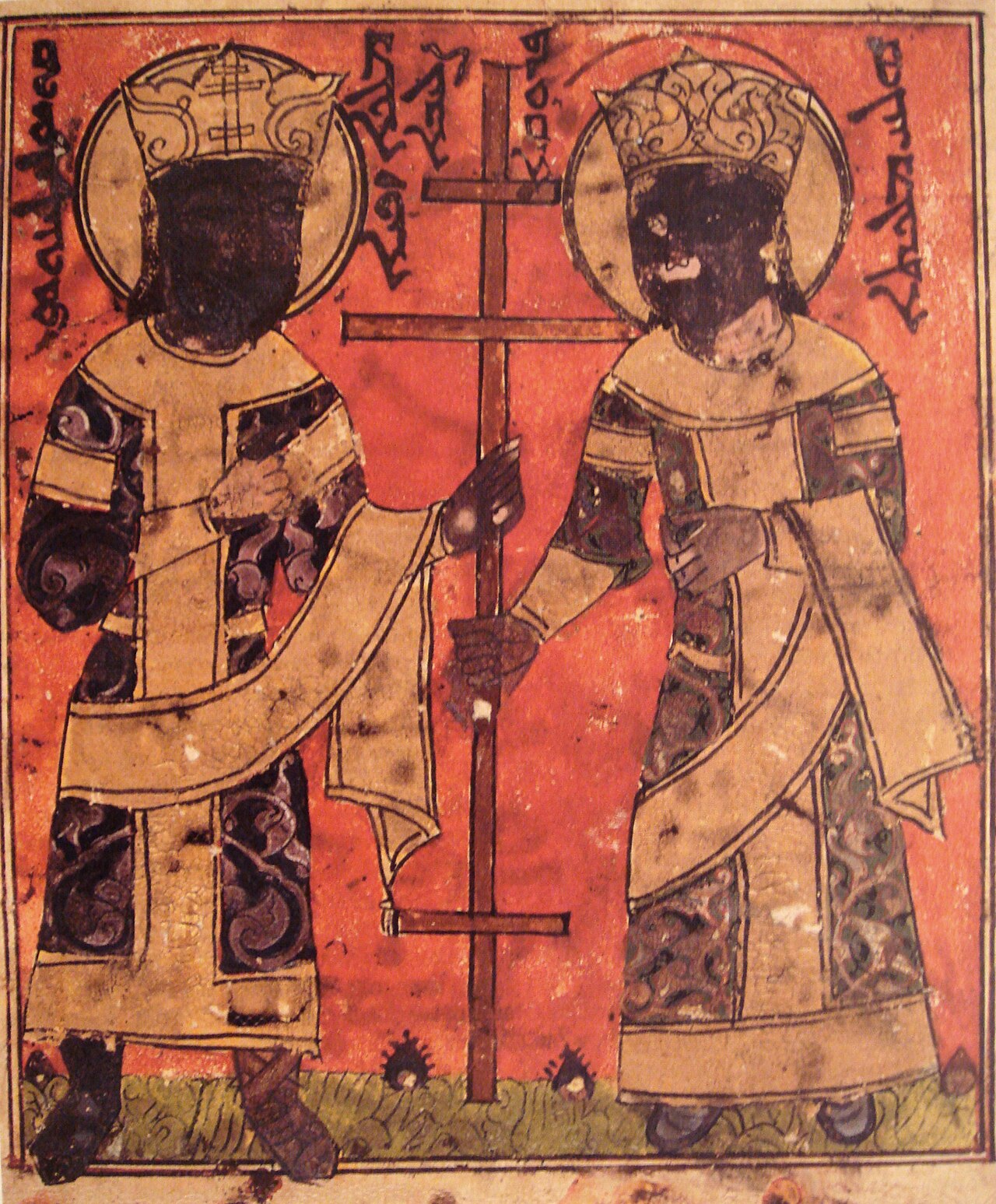
Hulagu seems to have followed the Mongol religion of Tengri and the shamans while showing interest in Buddhism, which became influential at his court. His chief wife Doquz Khatun was a Christian, and Christian writers such as the Armenian Kirakos and the Syriac Bar Hebraeus praised the couple and compared them to Constantine and Helena. Muslims suffered heavily in his wars, but he also employed Muslim scholars, above all the astronomer Nasir al-Din Tusi, for whom he founded the Maragheh observatory.
Hulagu died in February 1265, a few months after the death of Doquz Khatun. He was buried on Shahi island; later sources say young women were sacrificed at his burial, in the old Mongol manner. His son Abaqa succeeded him.
How Hulagu is remembered
In Arabic historical memory Hulagu is above all the destroyer of Baghdad, and his name is still used as a byword for a barbarian conqueror. Persian historians writing under his descendants, Juvayni and Rashid al-Din, presented him as a just king who restored order and patronised learning, and Shi’i writers noted that the shrine cities of Iraq were spared. Modern historians see both sides: a ruthless campaign of conquest, and a state that within a generation was governing Iran through Persian ministers and Persian culture.
Persian words from this page
| هلاکو خان | Halâku Khân | Hulagu Khan |
| ایلخانان | Ilkhânân | the Ilkhans |
| مراغه | Marâghe | Maragheh |
| دریاچه ارومیه | Daryâche-ye Orumiye | Lake Urmia |
| خلیفه | khalife | caliph |
| قوریلتای | quriltây | Mongol assembly of princes |
Sources and further reading
- Rashid al-Din, Jami al-Tawarikh, translated by W. M. Thackston as Rashiduddin Fazlullah’s Jami’u’t-tawarikh: Compendium of Chronicles (Harvard, 1998–1999).
- Ata-Malik Juvayni, The History of the World-Conqueror, translated by J. A. Boyle (1958).
- J. A. Boyle, “Dynastic and Political History of the Il-Khans”, in The Cambridge History of Iran, vol. 5 (1968).
- Reuven Amitai-Preiss, Mongols and Mamluks: The Mamluk-Ilkhanid War, 1260–1281 (Cambridge University Press, 1995).
- Encyclopaedia Iranica, “Hülegü Khan”.
Want to learn Persian? Get the free Starter Pack
Get the 14-page printable Starter Pack (all 32 letters, a 7-day reading plan, 100 core words and 20 survival phrases) and a short 5-email course. Free.
More in The Mongol Invasion and the Ilkhanate (1219–1357)
- Genghis Khan’s Invasion of Iran (1219–1221)
- The Destruction of Nishapur, Merv and Herat
- Iran under the Great Khans (1225–1256)
- Hulagu Khan, Founder of the Ilkhanate
- The Fall of Alamut (1256)
- The Mongol Sack of Baghdad (1258)
- The Battle of Ain Jalut and the Mamluk Wars
- Nasir al-Din Tusi and the Maragheh Observatory
- Abaqa and Arghun: The Ilkhanate, 1265–1291
- Ghazan Khan and the Conversion to Islam
- Öljaitü and the Dome of Soltaniyeh
- Abu Sa’id and the Collapse of the Ilkhanate
- Juvayni and the History of the World Conqueror
- Rashid al-Din and the Jami al-Tawarikh
- Rumi (Mowlana): A Life from Balkh to Konya
- Saadi of Shiraz
- Ilkhanid Art and the Great Mongol Shahnameh
- The Ilkhanate and Europe
- Tabriz under the Ilkhans
- The Black Death and Iran