Nasir al-Din Tusi (1201–1274) was the leading Iranian scholar of the 13th century: an astronomer, mathematician, philosopher and Shi’i theologian who wrote in both Arabic and Persian. After serving the Nizari Ismailis for some twenty years, he joined Hulagu Khan in 1256 and persuaded him to build the observatory at Maragheh, begun in 1259, which became the most important centre of astronomy of its age. The geometric device now called the Tusi couple, which he described in 1261, reappears three centuries later in the work of Copernicus.
| Full name | Abu Ja’far Muhammad ibn Muhammad ibn al-Hasan al-Tusi, known in Iran as Khwaja Nasir |
|---|---|
| Born | 1201, Tus, Khorasan |
| Died | 1274, Baghdad; buried at the Kazimayn shrine |
| Patrons | Nizari Ismaili governors of Quhistan and the imams at Alamut; Hulagu and Abaqa |
| Observatory | Maragheh, East Azerbaijan, founded 1259 |
| Key works | Akhlaq-i Nasiri (ethics, Persian); al-Tadhkira fi ‘ilm al-hay’a (astronomy); Zij-i Ilkhani (astronomical tables); Tajrid al-i’tiqad (theology) |
| Persian name | خواجه نصیرالدین طوسی |
From Tus to the Ismaili castles
Tusi was born into a Twelver Shi’i family in Tus, the town near modern Mashhad that was also the home of Ferdowsi, whose tomb stands there. He studied mathematics, philosophy and medicine in Khorasan, including at Nishapur, in the years just before the Mongol invasion. Some time in the 1220s or early 1230s he entered the service of the Nizari Ismaili governor of Quhistan, Nasir al-Din Abd al-Rahim, at a time when the Ismaili castles were among the few safe places for a scholar in eastern Iran. For him he wrote the Akhlaq-i Nasiri (Nasirean Ethics), a Persian treatise on personal ethics, family life and politics that was read and copied for centuries.
He later moved to the Ismaili centres in Rudbar, Alamut and Maymun-Diz, and wrote works on Ismaili doctrine. How willingly he served the Nizaris is debated. In some later prefaces he speaks of having been held against his will, while Ismaili scholars point to his Ismaili writings as sincere. Farhad Daftary and others think he may genuinely have adopted Ismaili beliefs for a time before returning to Twelver Shi’ism. When Hulagu forced the surrender of the Nizari imam in 1256 (see the fall of Alamut), Tusi passed into Mongol service.
With Hulagu
Tusi went with Hulagu to Baghdad in 1258 and wrote a short eyewitness account of its fall. Later Sunni writers blamed him, as a Shi’i, for encouraging the attack; modern historians treat this as polemic. His value to Hulagu was practical: Mongol rulers took astrology seriously, and Tusi offered better astronomical tables for casting horoscopes and fixing dates. He was also given control of the religious endowments (waqf) of the Ilkhanate, whose revenues paid for the observatory.
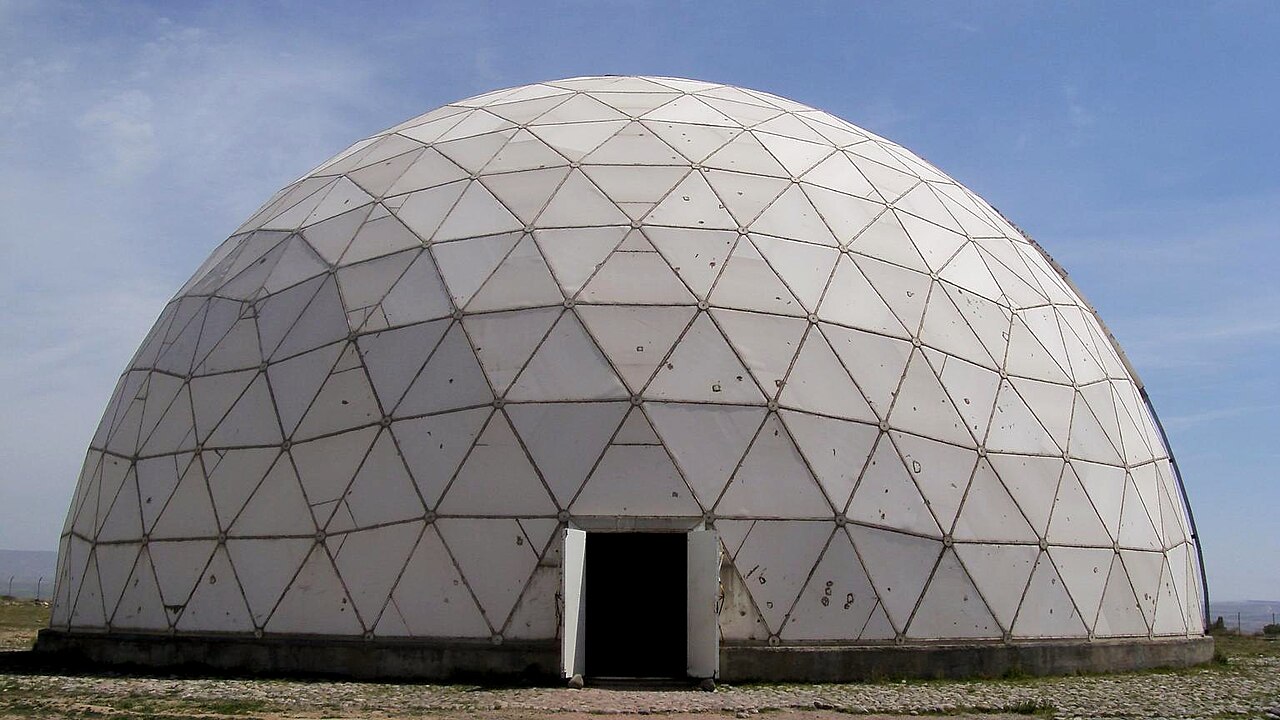

The Maragheh observatory
Work began in 1259 on a hill outside Maragheh, Hulagu’s first capital, south of Tabriz near the east shore of Lake Urmia. The complex had a main building with a great mural quadrant for measuring the positions of stars, other large instruments, workshops, living quarters and a library. A later writer claimed the library held 400,000 volumes, many of them taken from Baghdad, Syria and the Jazira; the figure is not reliable but shows its reputation. The instruments were designed by Mu’ayyad al-Din al-Urdi, who came from Damascus.
Maragheh was a research institute rather than a single man’s project. Its staff included Qutb al-Din Shirazi, Najm al-Din al-Katibi and others from across the Islamic world, and a Chinese astronomer is recorded among them, a sign of the Mongol empire’s reach. The observatory’s main product was the Zij-i Ilkhani, a set of astronomical tables in Persian completed around 1271–1272 under Hulagu’s son Abaqa, with tables for the calendars of the Muslims, Persians, Greeks and Chinese.
The observatory continued to work after Tusi’s death in 1274, under his sons, but declined in the early 14th century. Its ruins were excavated in the 1970s by a team from the University of Tehran, and the foundations of the main tower and outlying buildings can be seen on the hill today. Later observatories, including Ulugh Beg’s in Samarkand in the 15th century, followed the Maragheh model.
The Tusi couple
Tusi’s most famous contribution is a solution to a problem in Ptolemy’s astronomy. To fit the observed motions of the planets, Ptolemy had used a device called the equant, which made a planet move uniformly around a point that was not the centre of its circle. Philosophers objected that this broke the principle that heavenly motions should be uniform circular motions.
In his Tadhkira of 1261 Tusi showed that if a small circle rolls inside a larger circle with twice its radius, a point on the small circle moves back and forth along a straight line. Two uniform circular motions can thus produce a straight-line oscillation. Using this “couple”, astronomers could rebuild planetary models from uniform circular motions without the equant. Maragheh astronomers and later Ibn al-Shatir in Damascus developed such models further.
The same device appears, with a near-identical diagram, in Copernicus’s De revolutionibus (1543), and some of Copernicus’s planetary models closely match Ibn al-Shatir’s. Historians such as George Saliba and F. Jamil Ragep argue that Copernicus probably learned of these techniques through Byzantine or other channels; the route has not been traced, and some scholars allow for independent discovery.
Mathematics and theology
Tusi also produced revised editions of Euclid, Ptolemy’s Almagest and other Greek works that became standard texts, and a treatise on the complete quadrilateral that treated trigonometry as a subject in its own right rather than a tool of astronomy. His Tajrid al-i’tiqad became a foundational text of Twelver Shi’i theology, studied and commented on in the seminaries of Iran and Iraq to this day. When he died in Baghdad in 1274, he was buried near the shrine of the seventh and ninth imams at Kazimayn.
In Iran Khwaja Nasir is a national figure; a technical university in Tehran bears his name. The court culture he worked in is described on the pages on Hulagu Khan and Abaqa and Arghun, and the city that later replaced Maragheh as capital on the page on Tabriz under the Ilkhans.
Persian words from this page
| خواجه نصیر | Khâje Nasir | Nasir al-Din Tusi |
| رصدخانه | rasadkhâne | observatory |
| مراغه | Marâghe | Maragheh |
| طوس | Tus | Tus |
| زیج | zij | astronomical tables |
| اخلاق | akhlâq | ethics |
| ستارهشناسی | setâre-shenâsi | astronomy |
Sources and further reading
- F. J. Ragep, Nasir al-Din al-Tusi’s Memoir on Astronomy (al-Tadhkira fi ‘ilm al-hay’a), 2 vols. (Springer, 1993).
- Nasir al-Din Tusi, The Nasirean Ethics, translated by G. M. Wickens (Allen & Unwin, 1964).
- George Saliba, Islamic Science and the Making of the European Renaissance (MIT Press, 2007).
- Aydın Sayılı, The Observatory in Islam (Türk Tarih Kurumu, 1960).
- Farhad Daftary, The Isma’ilis: Their History and Doctrines (2nd edition, 2007).
- Encyclopaedia Iranica, “Ṭusi, Naṣir-al-Din”.
Want to learn Persian? Get the free Starter Pack
Get the 14-page printable Starter Pack (all 32 letters, a 7-day reading plan, 100 core words and 20 survival phrases) and a short 5-email course. Free.
More in The Mongol Invasion and the Ilkhanate (1219–1357)
- Genghis Khan’s Invasion of Iran (1219–1221)
- The Destruction of Nishapur, Merv and Herat
- Iran under the Great Khans (1225–1256)
- Hulagu Khan, Founder of the Ilkhanate
- The Fall of Alamut (1256)
- The Mongol Sack of Baghdad (1258)
- The Battle of Ain Jalut and the Mamluk Wars
- Nasir al-Din Tusi and the Maragheh Observatory
- Abaqa and Arghun: The Ilkhanate, 1265–1291
- Ghazan Khan and the Conversion to Islam
- Öljaitü and the Dome of Soltaniyeh
- Abu Sa’id and the Collapse of the Ilkhanate
- Juvayni and the History of the World Conqueror
- Rashid al-Din and the Jami al-Tawarikh
- Rumi (Mowlana): A Life from Balkh to Konya
- Saadi of Shiraz
- Ilkhanid Art and the Great Mongol Shahnameh
- The Ilkhanate and Europe
- Tabriz under the Ilkhans
- The Black Death and Iran