Iran, officially the Islamic Republic of Iran, is a country of roughly 86 to 92 million people in West Asia, between the Caspian Sea and the Persian Gulf. Its capital is Tehran, its official language is Persian (Farsi), and at about 1.65 million square kilometres it is one of the 20 largest countries in the world. This page gathers the basic facts in one place, each with its year and source, as they stood in November 2026.
| Official name | Islamic Republic of Iran (جمهوری اسلامی ایران, Jomhuri-ye Eslâmi-ye Irân) |
|---|---|
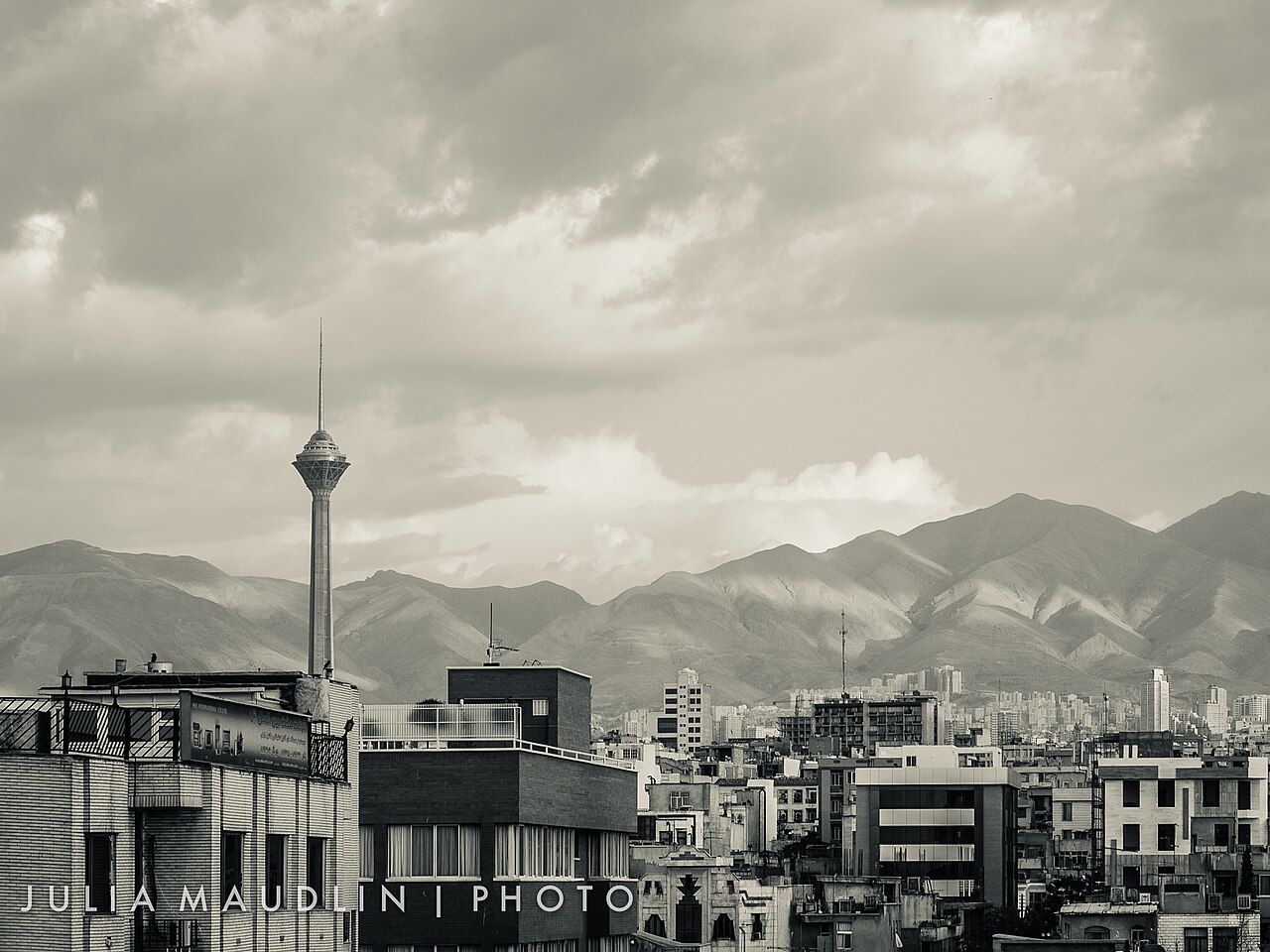
| Capital | Tehran; about 8.7 million people in the city at the 2016 census, about 13.3 million in Tehran province (2023 estimate) |
| Population | About 86.0 million (Statistical Centre of Iran, reported February 2025); 92.4 million for mid-2025 in UN World Population Prospects 2024. See the note below on why they differ. |
| Area | 1,648,195 km² (CIA World Factbook) |
| Provinces | 31 (استان, ostân) |
| Official language | Persian (Article 15 of the constitution) |
| Official religion | Twelver (Ja’fari) Shi’a Islam (Article 12 of the constitution) |
| Government | Islamic republic: an elected president and parliament under an unelected Supreme Leader |
| Supreme Leader | Mojtaba Khamenei, chosen by the Assembly of Experts in March 2026 |
| President | Masoud Pezeshkian, in office since July 2024 |
| Currency | Iranian rial (IRR); prices are usually spoken in tomans (1 toman = 10 rials) |
| Time zone | Iran Standard Time, UTC+3:30, all year (daylight saving time was abolished in 2022) |
| Calendar | Solar Hijri; the year starts at Nowruz, the March equinox. The year 1405 began in March 2026. |
| Highest point | Mount Damavand, about 5,610 m (published heights range from 5,609 to 5,671 m) |
| Calling code, internet | +98, .ir |

Two population figures, both official
Readers often find two quite different numbers for Iran’s population. The Statistical Centre of Iran, which ran the last full census in 2016 (79.9 million people), put the population at 85,961,000 in February 2025, as reported by the ISNA news agency. The United Nations Population Division, in World Population Prospects 2024, estimates 92.4 million for 1 July 2025 and about 93.2 million for mid-2026. The gap comes from different assumptions about birth rates and emigration since 2016. Iran’s own figures show births falling steeply in the 2020s, and the Statistical Centre has warned about an ageing population. Neither figure has been checked by a new census, so the honest answer is “between about 86 and 93 million”.
Where Iran sits on the map
Iran shares land borders with seven countries: Iraq and Turkey to the west, Armenia and Azerbaijan (including Azerbaijan’s Nakhchivan exclave) to the north-west, Turkmenistan to the north-east, and Afghanistan and Pakistan to the east. The longest of these borders is with Iraq. Across the Caspian Sea lie Russia and Kazakhstan, and across the Persian Gulf and the Gulf of Oman lie Kuwait, Saudi Arabia, Bahrain, Qatar, the United Arab Emirates and Oman. The Strait of Hormuz, between Iran and Oman, links the Persian Gulf to the open sea and normally carries about a fifth of the world’s traded oil.
Most of the country is a high plateau ringed by mountains, with two great salt deserts in the middle. The geography of Iran page explains the landscape, and the climate page explains why the Caspian coast is green and wet while Yazd gets almost no rain.
Flag, anthem and other symbols
The flag has three horizontal bands of green, white and red. In the centre is a red emblem, a stylised form of the word Allah that also suggests a tulip, the traditional symbol of martyrdom. Along the edges of the green and red bands, the phrase Allahu Akbar is repeated 22 times in a geometric Kufic script, a reference to 22 Bahman, the date in the Iranian calendar of the revolution’s victory in February 1979. This flag was adopted in 1980. The national anthem, used since 1990, is known simply as the Sorud-e Melli (national anthem). Older symbols, such as the lion-and-sun flag of the monarchy, are still used by many Iranians abroad. A separate page in this section covers national symbols in detail.
How the state is organised
Since the 1979 revolution Iran has been an Islamic republic. Voters elect the president, the 290-member parliament (Majlis), city councils and the Assembly of Experts, but candidates for most of these posts are first vetted by the Guardian Council. Above the elected bodies stands the Supreme Leader, who is commander-in-chief and appoints the heads of the judiciary, state broadcasting and the armed forces. The guide to how Iran is governed explains each institution.
The country is divided into 31 provinces, each run by a governor appointed by the interior ministry. The largest by population is Tehran province; the largest by area is Kerman. The full list is on the provinces of Iran page.
Iran in 2025 and 2026
The last two years have been among the most turbulent in the Islamic Republic’s history. In June 2025 Israel and Iran fought a 12-day war, and in September 2025 United Nations sanctions were reimposed over Iran’s nuclear programme. The rial fell to record lows in December 2025, and protests that began in Tehran’s bazaar spread across the country in January 2026; rights groups such as the US-based HRANA reported that thousands of protesters were killed. On 28 February 2026 the United States and Israel launched a war on Iran. Supreme Leader Ali Khamenei, in office since 1989, was killed in the first strikes, and the Assembly of Experts named his son Mojtaba Khamenei as successor in March 2026. A ceasefire agreed in April and a memorandum signed in June broke down in July, and as of early November 2026 shipping through the Strait of Hormuz was still heavily disrupted and talks between Tehran and Washington were continuing through mediators. Figures on this page for the economy and currency should be read with that in mind: they change month by month.
Everyday facts for visitors and learners
- Friday is the weekly day off. Many offices also close on Thursday, and parliament has debated since 2024 whether to make Saturday the second free day instead, so check current practice before planning around office hours.
- Iran drives on the right.
- Dates are written in the Solar Hijri calendar, with months named after Zoroastrian angels: Farvardin, Ordibehesht, Khordad and so on. See the Persian calendar explained.
- The biggest holiday is Nowruz, the Persian New Year, at the spring equinox.
- Prices are written in rials but spoken in tomans; the rial and toman guide explains how to cope.
For lighter reading, try our 50 interesting facts about Iran, then go deeper with the pages on the people of Iran and the languages spoken in Iran.
Persian words from this page
| ایران | Irân | Iran |
| تهران | Tehrân | Tehran |
| جمهوری اسلامی | jomhuri-ye eslâmi | Islamic republic |
| استان | ostân | province |
| رهبر | rahbar | leader (the usual word for the Supreme Leader) |
| تومان | tomân | toman (10 rials) |
| نوروز | Nowruz | Persian New Year |
Sources and further reading
- CIA, The World Factbook: Iran (area, borders, coastline).
- Statistical Centre of Iran, 2016 National Population and Housing Census; population estimate of February 2025 as reported by ISNA.
- United Nations, Department of Economic and Social Affairs, World Population Prospects 2024.
- Constitution of the Islamic Republic of Iran (1979, amended 1989), Articles 12, 15 and 18.
- Al Jazeera and Reuters reporting on the 2026 war and the succession, February to November 2026.
Want to learn Persian? Get the free Starter Pack
Get the 14-page printable Starter Pack (all 32 letters, a 7-day reading plan, 100 core words and 20 survival phrases) and a short 5-email course. Free.
More in Iran Facts and Overview
- Iran at a Glance: Key Facts and Figures
- Geography of Iran: Mountains, Deserts and Seas
- Climate of Iran and the Best Time to Visit
- The 31 Provinces of Iran
- The People of Iran: Ethnic Groups
- Languages Spoken in Iran
- Religion in Iran Today
- How Iran Is Governed
- The Economy of Iran
- Iranian Currency: Rial and Toman Explained
- Persian Food: Dishes Every Visitor Should Try
- Iranian Festivals and Public Holidays
- Iranian Culture and Etiquette
- Iranian Handicrafts
- UNESCO World Heritage Sites in Iran
- Iran Records and Superlatives
- National Symbols of Iran
- Sports in Iran
- Practical Tips for Travelling to Iran