Travel to Iran in late 2026 is exceptional: a US–Israeli war on Iran began on 28 February 2026, fighting and disruption continued into the autumn, and several governments advise their citizens against all travel there. Anyone thinking of going must follow their own government’s current travel advice. This page describes the general practicalities of a trip, such as money, transport, dress and communications, but it cannot tell you whether a journey is safe or whether you will be allowed in.

Read this first: travel in 2026
Conditions in Iran can change from one day to the next. In 2026 Iranian airspace has closed at short notice, flights and border crossings have been suspended, and internet and phone services have been cut or heavily restricted. As of mid-2026 the British government, for example, advised against all travel to Iran, warned that its ability to help British nationals there was extremely limited, and said British and British-Iranian dual nationals faced a very high risk of arrest and detention. The United States has long told its citizens not to travel to Iran, and several countries, including the US and Canada, have no embassy there.
- Check your own government’s travel advice for Iran before planning, and again just before leaving.
- Travel insurance may not be valid if you travel against official advice.
- Dual nationals should know that Iran does not recognise a second nationality and treats Iranian-born citizens as Iranians only.
- Nothing on this page is advice on whether to go.
Visas and entry
Iran’s visa rules have changed often in recent years, for different nationalities and in different directions, and they may change again at short notice. We do not give visa rules or prices here. Check the official information of Iran’s Ministry of Foreign Affairs and of the Iranian embassy or consulate in your country, and your own government’s advice on entry requirements, including any restrictions linked to previous travel or nationality.
Money: bring cash
Because of international sanctions, foreign-issued bank cards (Visa, Mastercard and others) do not work in Iran: not in shops, hotels or ATMs. Iran’s own card network, Shetab, works only with Iranian bank cards. In practice visitors have relied on cash, usually euros or US dollars, changed into rials after arrival. Some Iranian companies sell prepaid local cards for tourists that can be topped up with cash.
- Change money at licensed exchange offices (sarrâfi), not with people on the street.
- The rial’s value has fallen very sharply and can move quickly, so exchange rates and prices change often.
- Prices are usually spoken in tomans (1 toman = 10 rials) but often written in rials. Our page on the rial and the toman explains how to tell them apart.
Learning the Persian digits is one of the most useful things a visitor can do, since prices, bus numbers and house numbers are often written only in Persian numerals: ۰ ۱ ۲ ۳ ۴ ۵ ۶ ۷ ۸ ۹ (0 to 9).
Phones and internet
Visitors have usually bought a local SIM card from one of the main operators, such as Hamrah-e Avval (MCI) or Irancell, which requires a passport. Many foreign websites, apps and social networks are blocked in Iran, and international services such as some messaging, map and payment apps may not work. During unrest and war the authorities have shut down or throttled internet access across the country, sometimes for days. Do not count on being able to reach family, banks or your airline online.
Getting around
Between cities
- Domestic flights connect Tehran with most provincial capitals, but schedules have been badly disrupted in 2026, and sanctions have left many airlines with an ageing fleet.
- Long-distance buses are frequent and cheap. “VIP” coaches have fewer, wider seats and are widely used for overnight journeys.
- Trains, run by the state railway (RAJA), link Tehran with Mashhad, Isfahan, Yazd, Kerman, Tabriz and other cities, including on the historic Trans-Iranian Railway to the Caspian.
In cities
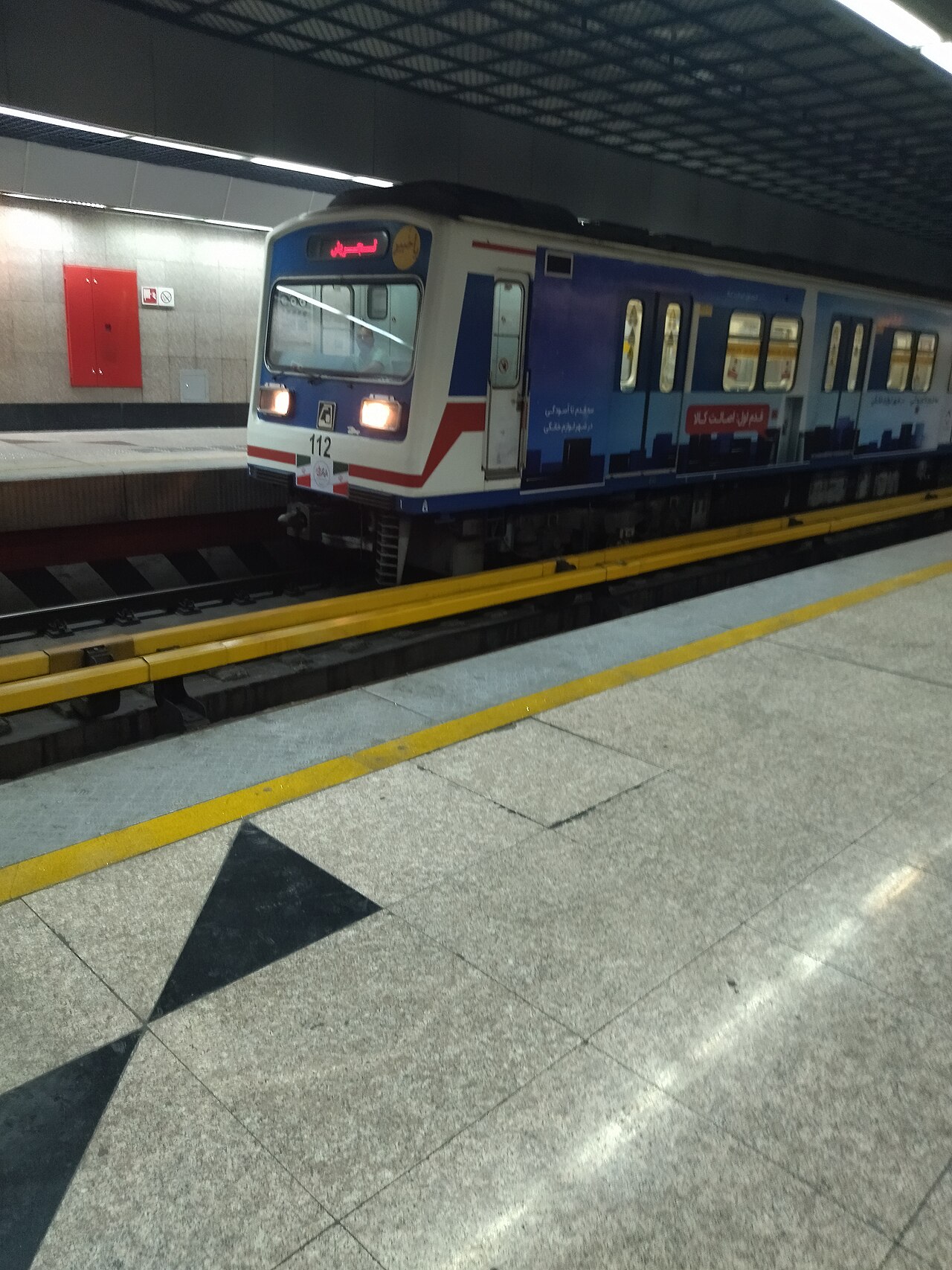
Tehran has a large metro system, and Mashhad, Isfahan, Shiraz, Tabriz and Karaj also have metro or light-rail lines. Trains have women-only carriages, though women may also use the mixed ones; on Tehran’s city buses men and women sit in separate sections. Taxis come in several forms: shared taxis (savâri) that run fixed routes, private taxis, and ride-hailing apps such as Snapp and Tapsi, which generally need an Iranian phone number. Traffic in large cities is heavy and drivers are assertive, so take care crossing roads.
Dress and behaviour
Iranian law requires women, including foreign visitors, to cover their hair in public and to wear loose clothing covering the arms and body. Enforcement has varied, and many Iranian women in big cities have stopped wearing a headscarf since 2022, but visitors remain subject to the law. Men usually wear long trousers. At major shrines women are asked to wear a chador. For greetings, visiting homes, taarof and other customs, see Iranian culture and etiquette.
Alcohol is illegal for Muslims and may not be brought into the country. Penalties for drug offences are severe and include the death penalty. Do not photograph military or government buildings, police or anything that could be seen as sensitive, and be careful about flying drones. Public displays of affection are avoided, and same-sex relations are illegal.
Time, calendar and seasons
Iran is on UTC+3:30 all year. Friday is the weekly day of rest. Dates are written in the Solar Hijri calendar, which begins at Nowruz in March. The two weeks of Nowruz are the busiest travel time of the year, when trains, buses and hotels fill up. During Ramadan restaurants are closed in daytime, and on the mourning days of Muharram music and festivities stop. See festivals and public holidays and climate and the best time to visit.
Language
English is spoken in hotels and by many young people in cities, but much less elsewhere. A few phrases of Persian help enormously and are always welcomed. Our post on travel words and phrases in Persian is a good place to start.
Persian words from this page
| گذرنامه | gozarnâmeh | passport |
| ویزا | vizâ | visa |
| صرافی | sarrâfi | exchange office |
| اسکناس | eskenâs | banknote |
| بلیت | belit | ticket |
| ایستگاه | istgâh | station, stop |
| فرودگاه | forudgâh | airport |
| سفارت | sefârat | embassy |
Sources and further reading
- UK Foreign, Commonwealth and Development Office, Iran travel advice (check the current version).
- US Department of State, Iran travel advisory (check the current version).
- Ministry of Foreign Affairs of the Islamic Republic of Iran, official visa information.
- Your own government’s travel advice service for Iran.
Want to learn Persian? Get the free Starter Pack
Get the 14-page printable Starter Pack (all 32 letters, a 7-day reading plan, 100 core words and 20 survival phrases) and a short 5-email course. Free.
More in Iran Facts and Overview
- Iran at a Glance: Key Facts and Figures
- Geography of Iran: Mountains, Deserts and Seas
- Climate of Iran and the Best Time to Visit
- The 31 Provinces of Iran
- The People of Iran: Ethnic Groups
- Languages Spoken in Iran
- Religion in Iran Today
- How Iran Is Governed
- The Economy of Iran
- Iranian Currency: Rial and Toman Explained
- Persian Food: Dishes Every Visitor Should Try
- Iranian Festivals and Public Holidays
- Iranian Culture and Etiquette
- Iranian Handicrafts
- UNESCO World Heritage Sites in Iran
- Iran Records and Superlatives
- National Symbols of Iran
- Sports in Iran
- Practical Tips for Travelling to Iran