Iran is a multi-ethnic country. Persians are the largest group, probably a little over half the population, followed by Azerbaijanis, Kurds, Lurs, Baluch, Arabs and Turkmen, alongside smaller communities such as Armenians and Assyrians. Iran’s census does not record ethnicity, so every percentage on this page is an estimate, and estimates differ depending on who makes them.
Why there are no official figures
Iranian censuses ask about language skills, literacy and religion, but not ethnic identity, and the government publishes no ethnic breakdown. The figures that circulate come from foreign governments, academic studies, surveys of language use and advocacy groups, and they rarely agree. Ethnicity in Iran is also blurred by centuries of mixing and migration: many Iranians have parents from different groups, speak Persian at work and another language at home, or think of themselves as both Azerbaijani and Iranian. In Persian, an important distinction is between irâni (Iranian, a citizen of Iran) and fârs (a Persian speaker by origin).
| Group | Commonly cited range | Main regions |
|---|---|---|
| Persians (including many speakers of local dialects) | about 50 to 61% | Central plateau, Fars, Khorasan, Isfahan, Kerman, Yazd, Tehran |
| Azerbaijanis | about 16 to 24% | East and West Azerbaijan, Ardabil, Zanjan, Tehran |
| Kurds | about 7 to 10% | Kurdistan, Kermanshah, West Azerbaijan, Ilam, North Khorasan |
| Lurs (including Bakhtiari) | about 6% | Lorestan, Chaharmahal and Bakhtiari, Kohgiluyeh, Khuzestan |
| Gilaks and Mazandaranis | about 5 to 7% together | Gilan, Mazandaran |
| Arabs | about 2 to 3% | Khuzestan, Persian Gulf coast |
| Baluch | about 2% | Sistan and Baluchestan |
| Turkmen and other Turkic groups (Qashqai, Afshar, Shahsavan) | about 2% | Golestan, Fars, scattered |
| Armenians, Assyrians, Georgians, Talysh and others | under 1% each | Tehran, Isfahan, Urmia, Fereydunshahr, Gilan |
The lower ends of these ranges for Persians and the upper ends for minorities come mostly from academic and minority sources; the CIA World Factbook’s long-standing estimate (Persian 61%, Azerbaijani 16%, Kurd 10%, Lur 6%, Baluch 2%, Arab 2%, Turkmen and Turkic tribes 2%) sits at the other end. Some Azerbaijani activist groups put their share at 30% or more. Gilaks and Mazandaranis are often counted as Persians, because their languages are closely related to Persian. Treat any single exact figure with caution.
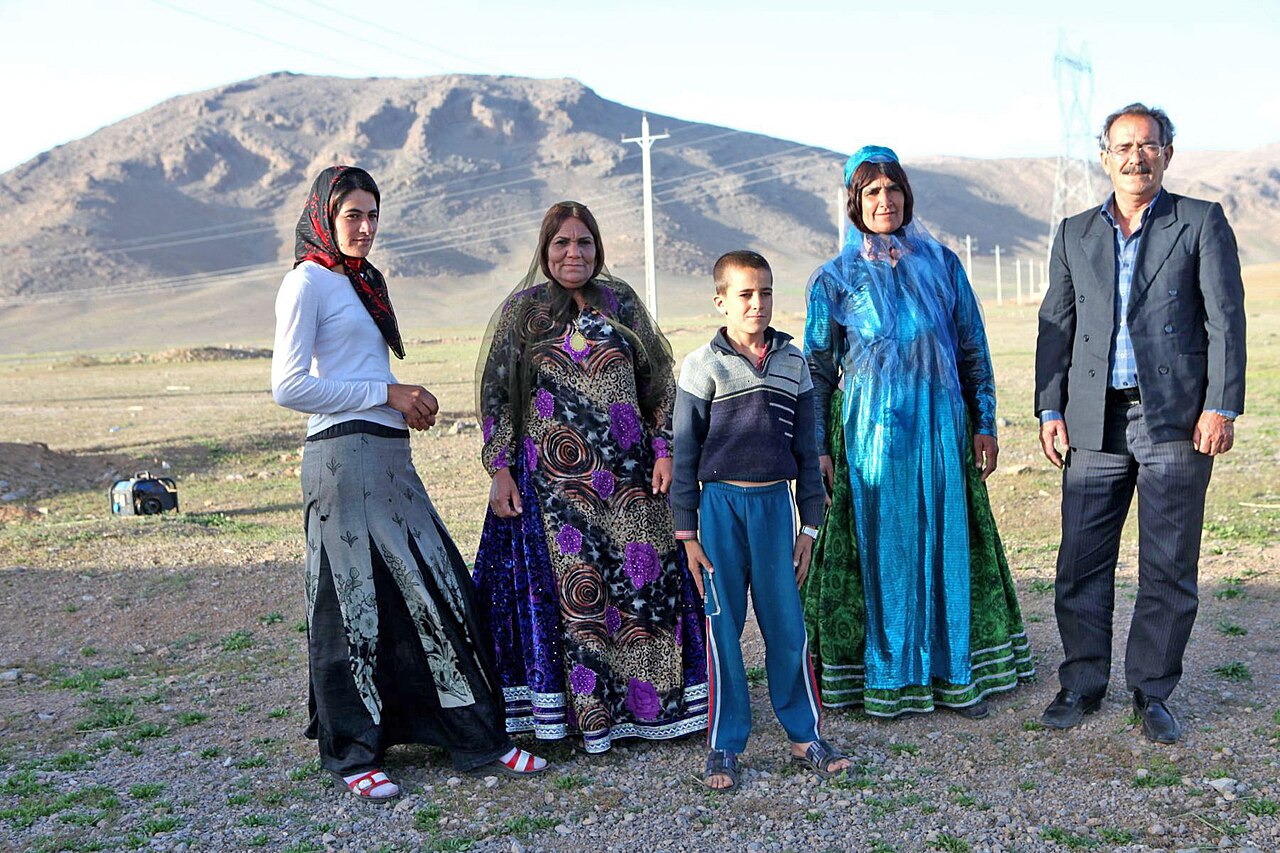

Persians
Persians, in the narrow sense of people whose family language is Persian, live across the central plateau and the east, and form the majority in Tehran, Isfahan, Shiraz, Mashhad, Kerman and Yazd. Regional accents differ strongly, and some areas, such as Yazd and parts of Khorasan and Fars, keep distinctive dialects.
Azerbaijanis
Iranian Azerbaijanis, often called Tork in everyday Persian, speak a Turkic language close to the Azerbaijani of the Republic of Azerbaijan. They are the largest minority and are deeply woven into national life: Tabriz was the crown prince’s seat under the Qajars and a centre of the Constitutional Revolution, Azerbaijanis are prominent in the bazaar, the clergy and the army, and Tehran has one of the largest Azerbaijani-speaking populations of any city. See Azerbaijanis in Iranian history and our page on Tabriz.
Kurds
Kurds live mainly along the western mountains bordering Iraq and Turkey. Most are Sunni Muslims, but many in Kermanshah and Ilam are Shi’a, and the Yarsan (Ahl-e Haqq) faith has followers among Kurds of the Kermanshah region. Kurdish areas have a long history of autonomy movements, from the short-lived Republic of Mahabad in 1946 to armed groups today, and human rights organisations such as Amnesty International and the Kurdistan Human Rights Network report a high share of political prisoners and executions involving Kurds. See the Kurds in Iranian history.
Lurs and Bakhtiari
The Lurs of the central and southern Zagros speak Luri, a language close to Persian. The Bakhtiari, often treated as a branch of the Lurs, are famous for their seasonal migrations across the high Zagros with their flocks. Both groups are largely Shi’a and played a large role in Iranian politics in the early 20th century.
Baluch, Arabs and Turkmen
The Baluch of the south-east are mostly Sunni and live on both sides of the borders with Pakistan and Afghanistan. Sistan and Baluchestan is one of Iran’s poorest provinces, and UN experts and groups such as Amnesty International have repeatedly raised concerns about the number of Baluch people executed. Iran’s Arabs live mainly in Khuzestan, around Ahvaz, Abadan and Khorramshahr, and along the Persian Gulf coast; most are Shi’a. The Turkmen of the Gorgan plain in Golestan, mostly Sunni, are known for their horses and carpets. Other Turkic-speaking peoples include the Qashqai confederation of Fars, traditionally nomadic, and the Shahsavan of the north-west.
Armenians, Assyrians and other small communities
Armenians have lived in Iran for centuries, especially in Tehran, in New Julfa in Isfahan, where Shah Abbas resettled them around 1605, and in the north-west. Assyrians live mainly around Urmia and in Tehran. Georgians settled in Fereydunshahr near Isfahan in the Safavid period, and the Talysh live along the Caspian near the border with Azerbaijan. Each community’s numbers have fallen since 1979 through emigration. More on our history pages about the Armenians of Iran and Christians of Iran.
Afghans and the diaspora
Iran has hosted millions of Afghans since the Soviet invasion of Afghanistan in 1979, and UNHCR counted it among the largest refugee-hosting countries in the world in 2024. In 2025 the Iranian authorities stepped up deportations, and UN agencies reported that well over a million Afghans returned or were forced back to Afghanistan from Iran that year. In the other direction, several million Iranians live abroad, with large communities in the United States, Canada, Germany, the United Kingdom, Turkey and the Persian Gulf states; see the Iranian diaspora.
The languages these groups speak are covered on the languages of Iran page, and where they live is easier to follow with the list of provinces.
Persian words from this page
| ایرانی | irâni | Iranian |
| فارس | fârs | Persian (by origin) |
| ترک | tork | Turk; in Iran usually an Azerbaijani |
| کرد | kord | Kurd |
| لر | lor | Lur |
| بلوچ | baluch | Baluch |
| عشایر | ashâyer | nomadic tribes |
Sources and further reading
- CIA, The World Factbook: Iran, People and Society.
- Minority Rights Group International, World Directory of Minorities and Indigenous Peoples: Iran.
- Brenda Shaffer, Borders and Brethren: Iran and the Challenge of Azerbaijani Identity (MIT Press, 2002).
- Encyclopaedia Iranica, articles on the Kurds, Lurs, Baluchistan, Bakhtiari and Qashqai (iranicaonline.org).
- UNHCR, Iran country operations data (2024) and UN reporting on Afghan returns (2025).
- Amnesty International, annual reports on Iran.
Want to learn Persian? Get the free Starter Pack
Get the 14-page printable Starter Pack (all 32 letters, a 7-day reading plan, 100 core words and 20 survival phrases) and a short 5-email course. Free.
More in Iran Facts and Overview
- Iran at a Glance: Key Facts and Figures
- Geography of Iran: Mountains, Deserts and Seas
- Climate of Iran and the Best Time to Visit
- The 31 Provinces of Iran
- The People of Iran: Ethnic Groups
- Languages Spoken in Iran
- Religion in Iran Today
- How Iran Is Governed
- The Economy of Iran
- Iranian Currency: Rial and Toman Explained
- Persian Food: Dishes Every Visitor Should Try
- Iranian Festivals and Public Holidays
- Iranian Culture and Etiquette
- Iranian Handicrafts
- UNESCO World Heritage Sites in Iran
- Iran Records and Superlatives
- National Symbols of Iran
- Sports in Iran
- Practical Tips for Travelling to Iran