Iran’s official religion is Twelver Shi’a Islam, and the great majority of Iranians are Shi’a Muslims by birth. The constitution also recognises Sunni Muslims’ schools of law and three minority religions, Zoroastrianism, Judaism and Christianity, while the Baha’i Faith, Iran’s largest non-Muslim religion, has no recognition. How religious Iranians actually are today is much debated: the census records 99 percent as Muslim, while independent surveys suggest a far more varied picture.
| Official religion | Islam, Twelver Ja’fari school (Article 12) |
|---|---|
| Recognised minorities | Zoroastrians, Jews, Christians (Article 13) |
| 2011 census | Muslim 99.38%; Christian 117,704; Zoroastrian 25,271; Jewish 8,756; other 49,101; not stated 265,899 |
| Sunni Muslims | Estimates from about 5 to 10% (CIA World Factbook) to higher figures given by Sunni leaders |
| Baha’is | About 300,000 (estimates of the US State Department and the Baha’i community) |
| Reserved seats in parliament | 5 of 290: Armenians 2, Assyrians and Chaldeans 1, Jews 1, Zoroastrians 1 |
Shi’a Islam and the state
Twelver Shi’ism, which recognises twelve Imams descended from the Prophet Muhammad through Ali and expects the return of the twelfth, has been Iran’s state religion since the Safavid shahs imposed it after 1501. Our history pages on how Shi’ism became the state religion and on Shi’a Islam in Iranian history tell that story.
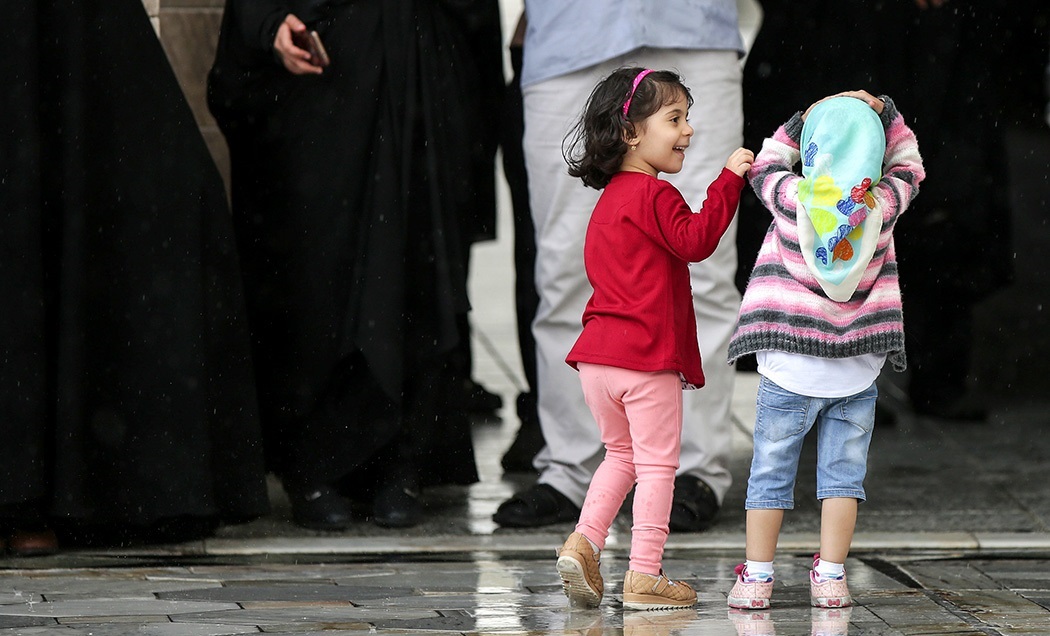
Since 1979 the link between religion and state has been formal. Under the doctrine of velâyat-e faqih (guardianship of the jurist), the head of state is a senior cleric, the Supreme Leader, and laws must conform to Islamic principles as judged by the Guardian Council. The page on how Iran is governed explains these institutions. The state funds mosques and seminaries, controls the appointment of Friday prayer leaders in the main cities, and enforces rules drawn from religious law, such as compulsory hijab for women in public since the early 1980s.
Outside the state, Shi’a religious life has its own structures. Believers traditionally follow a marja’-e taqlid (source of emulation), a senior scholar whose rulings they follow; some live in Qom or Mashhad, others in Najaf in Iraq. The seminaries (حوزه علمیه, howze-ye elmiye) of Qom train thousands of clerics, and the great shrines, Imam Reza in Mashhad and Fatima Masumeh in Qom, draw millions of pilgrims a year. The mourning month of Muharram, ending in Ashura, and the fasting month of Ramadan are the high points of the religious year.

Sunni Muslims
Most Kurds, Baluch and Turkmen, and many people on the Persian Gulf coast, are Sunni. Article 12 grants the four Sunni schools of law “full respect” and allows Sunni family law in regions where Sunnis are the majority. Sunni leaders, most prominently Molavi Abdolhamid Ismaeelzahi, Friday prayer leader of Zahedan, have long complained that Sunnis are kept out of senior government posts and that Tehran still has no officially recognised Sunni mosque. The government says Sunnis enjoy full rights and points to Sunni members of parliament and provincial officials.
The recognised minorities
Christians in Iran are mainly Armenians, with churches in Tehran, Isfahan’s New Julfa and the north-west, and Assyrians and Chaldeans around Urmia and Tehran. They run their own churches, schools and clubs and follow their own family law. Iranians who convert from Islam to Christianity are not recognised as Christians; Christian groups such as Article 18 and Open Doors report frequent arrests of members of house churches, and apostasy remains a crime under Islamic law as applied in Iran. See Christians of Iran.
Jews have lived in Iran for about 2,700 years. The community, which numbered roughly 80,000 before 1979, is now estimated at between about 9,000 (the 2011 census) and 20,000, mostly in Tehran, Shiraz and Isfahan, still the largest in the Middle East outside Israel. See the Jews of Iran.
Zoroastrians, followers of Iran’s ancient religion, number some 25,000 by census count, concentrated in Yazd, Kerman and Tehran, with fire temples such as the one in Yazd; see Yazd Fire Temple and the Towers of Silence and Zoroastrianism through the ages.
Baha’is and other unrecognised groups
The Baha’i Faith, founded in 19th-century Iran, is regarded by the Islamic Republic as a heretical sect rather than a religion. Baha’is cannot hold government posts and are in practice barred from public universities. The UN Special Rapporteur on Iran, Amnesty International and the Baha’i International Community have documented arrests, confiscation of property and the destruction of cemeteries; the Iranian government rejects the charge of persecution and accuses some Baha’is of spying for Israel, where the faith’s world centre is located. See the Baha’i Faith in Iran.
Other small communities include the Mandaeans of Khuzestan, followers of John the Baptist; the Yarsan (Ahl-e Haqq) among Kurds of Kermanshah; and Sufi orders such as the Nematollahi Gonabadi dervishes, whose members have clashed with security forces in Tehran.
How religious are Iranians?
Official statistics count almost everyone as Muslim because religion is recorded at birth and leaving Islam is not legally possible. Independent surveys suggest more diversity. An online survey of about 50,000 respondents in 2020 by GAMAAN, a research group based in the Netherlands, found that only 32 percent of respondents described themselves as Shi’a Muslims, with large shares saying they had no religion, were atheist or agnostic, or, interestingly, identified with Zoroastrianism, which some read as a statement of Iranian identity rather than of faith. Critics, including some Iranian sociologists, point out that online samples over-represent educated, urban Iranians. What is uncontested is that religious practice varies enormously, from devout families in Qom to secular households in north Tehran, and that the shrines and Muharram ceremonies remain among the largest public gatherings in the country.
Persian words from this page
| دین | din | religion |
| مذهب | mazhab | denomination, school of Islam |
| شیعه | shi’e | Shi’a |
| سنی | sonni | Sunni |
| روحانی | ruhâni | cleric |
| مسجد | masjed | mosque |
| کلیسا | kelisâ | church |
| آتشکده | âtashkade | fire temple |
Sources and further reading
- Constitution of the Islamic Republic of Iran (1979, amended 1989), Articles 12, 13 and 64.
- Statistical Centre of Iran, 2011 National Population and Housing Census, religion tables.
- US Department of State, International Religious Freedom Report: Iran.
- Ammar Maleki and Pooyan Tamimi Arab, Iranians’ Attitudes toward Religion: A 2020 Survey Report (GAMAAN, 2020).
- Encyclopaedia Iranica, articles on Shi’ism, Bahai Faith and Zoroastrians in Iran (iranicaonline.org).
- Reports of the UN Special Rapporteur on the situation of human rights in the Islamic Republic of Iran.
Want to learn Persian? Get the free Starter Pack
Get the 14-page printable Starter Pack (all 32 letters, a 7-day reading plan, 100 core words and 20 survival phrases) and a short 5-email course. Free.
More in Iran Facts and Overview
- Iran at a Glance: Key Facts and Figures
- Geography of Iran: Mountains, Deserts and Seas
- Climate of Iran and the Best Time to Visit
- The 31 Provinces of Iran
- The People of Iran: Ethnic Groups
- Languages Spoken in Iran
- Religion in Iran Today
- How Iran Is Governed
- The Economy of Iran
- Iranian Currency: Rial and Toman Explained
- Persian Food: Dishes Every Visitor Should Try
- Iranian Festivals and Public Holidays
- Iranian Culture and Etiquette
- Iranian Handicrafts
- UNESCO World Heritage Sites in Iran
- Iran Records and Superlatives
- National Symbols of Iran
- Sports in Iran
- Practical Tips for Travelling to Iran