In February 755 the Abbasid caliph al-Mansur had Abu Muslim, the general who had won the dynasty its throne, cut down in his tent near al-Mada’in. The killing set off a chain of revolts across Iran over the next quarter century, led by Sunbadh, Ishaq the Turk, Ustadh Sis and al-Muqanna, men who mixed loyalty to the murdered hero with older Iranian religious ideas.
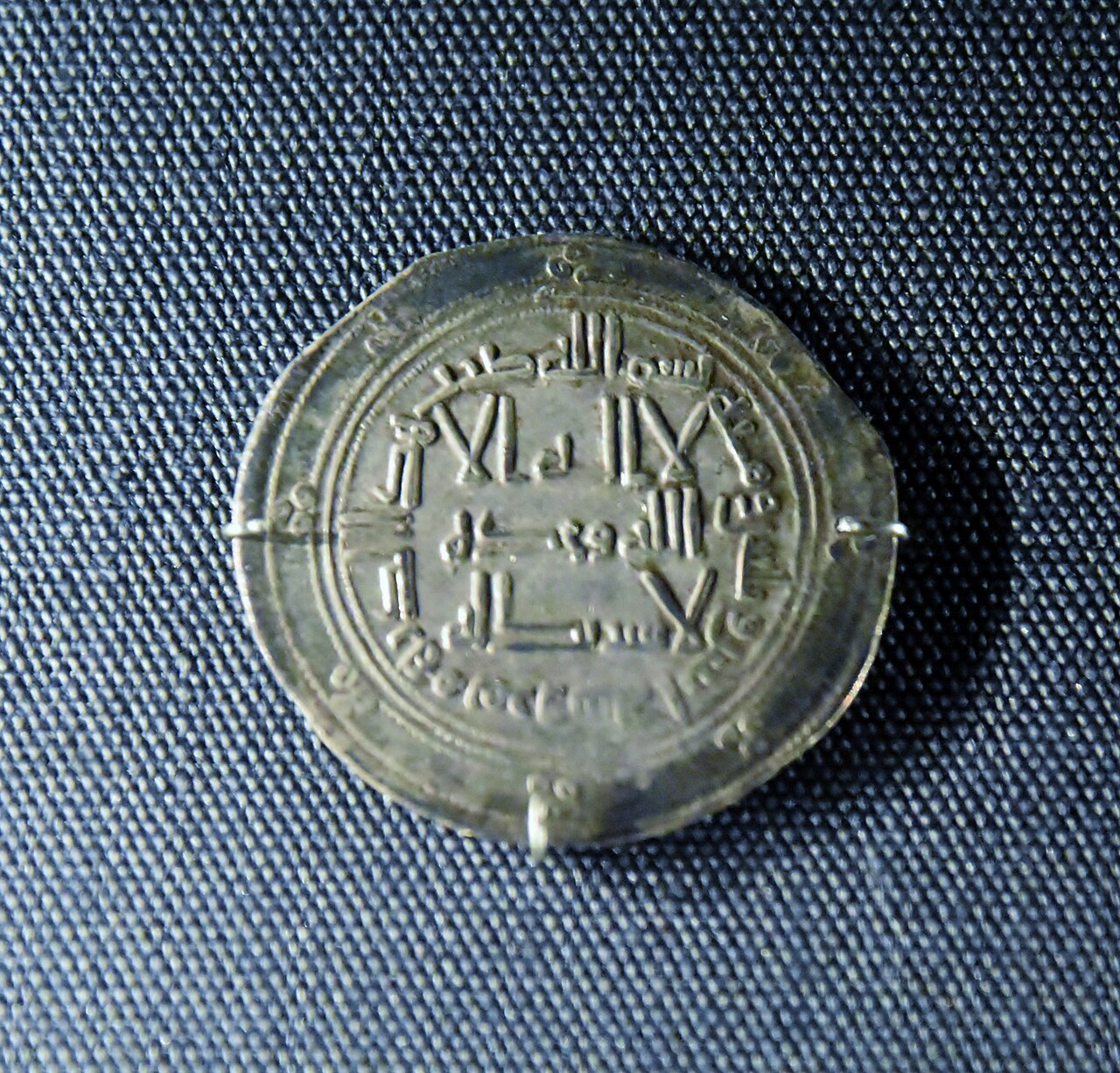

| Death of Abu Muslim | February 755 (Sha’ban 137 AH), at al-Rumiyya near al-Mada’in, Iraq |
|---|---|
| Ordered by | Caliph Abu Ja’far al-Mansur (r. 754–775) |
| Main revolts | Sunbadh (755), Ishaq al-Turk (c. 757), Ustadh Sis (c. 767–768), al-Muqanna (c. 775–780) |
| Regions | Khorasan, Rey, Transoxiana, Herat and Badghis |
| Outcome | All suppressed, but they fed a long tradition of Iranian sectarian movements |
A kingmaker who had grown too strong
The rise of Abu Muslim and the black banners is told on Abu Muslim and the Abbasid Revolution. By 754 he was governor of Khorasan, commander of the army that had made the Abbasids caliphs, and the object of a devotion among his soldiers that no member of the ruling family enjoyed. Coins were struck in his name. When the first caliph, al-Saffah, died in 754, Abu Muslim helped his brother Abu Ja’far, who took the title al-Mansur, defeat a rival claimant, his uncle Abd Allah ibn Ali.
That service made him more dangerous, not less. Al-Mansur now ruled a caliphate whose eastern half answered more readily to its general than to the caliph. He tried to move Abu Muslim from Khorasan to the governorship of Syria and Egypt, far from his base. Abu Muslim refused and set out for home.
The killing at al-Rumiyya
The chronicler al-Tabari, writing about 150 years later, preserves a detailed account. Al-Mansur sent envoys and letters, mixing promises with threats, and persuaded Abu Muslim to come to his camp at al-Rumiyya, near the old Sasanian capital. At the audience the caliph reproached him with a list of grievances. At a signal, guards hidden behind a curtain rushed in and killed him. Tabari’s version has the dramatic shape of a story retold many times, and some details may be literary, but the core is not in doubt: the founder of the Abbasid army was killed on the caliph’s orders in 755, aged perhaps in his mid-thirties.
Al-Mansur then bought off or dispersed Abu Muslim’s commanders. In Iraq that worked. In Khorasan and the lands beyond it, where Abu Muslim was a hero, it did not.
Sunbadh: the first revolt (755)
Within months a man named Sunbadh سنباد, from a village near Nishapur and said to have been a Zoroastrian follower of Abu Muslim, rose in revolt. He gathered a large following in Khorasan and the Jibal, took Qumis and Rey and seized the treasure Abu Muslim had left at Rey. According to the later sources, he told his followers that Abu Muslim had not died but had escaped as a white dove and was waiting with the Mahdi and Mazdak, the sixth-century reformer, to return.
The rising lasted only about seventy days. An Abbasid army under Jahwar ibn Marrar al-Ijli defeated Sunbadh between Hamadan and Rey, and he was killed while fleeing towards Tabaristan, the mountain kingdom described on Iranian resistance in Tabaristan. The speed of its spread showed how much anger the killing had stirred.
Ishaq the Turk and Ustadh Sis
In Transoxiana a preacher known as Ishaq al-Turk taught that Abu Muslim was a prophet sent by Zoroaster and that he lived on in the mountains near Rey. Little is known of his movement beyond a few reports, the fullest of them in the bibliographer Ibn al-Nadim.
A larger threat came around 767–768 from Ustadh Sis in the region of Herat, Badghis and Sistan. Arabic chroniclers give him an army of improbable size, sometimes 300,000 men, figures historians treat as signs of alarm rather than counts. He defeated several government forces before the general Khazim ibn Khuzayma crushed him. Some reports make his daughter Marajil the mother of the later caliph al-Ma’mun, though how reliable that is remains uncertain.
Al-Muqanna, the veiled prophet
The most famous of these figures was Hashim ibn Hakim, known as al-Muqanna المقنع, “the veiled one”. He came from the Merv region and had served in Abu Muslim’s administration. In the 770s he taught that the divine spirit had passed through the prophets to Ali, then to Abu Muslim, and now to him. He hid his face behind a veil, of green silk or of gold according to different accounts, which hostile sources said hid ugliness and his followers said hid a radiance no one could look at.
His followers, the “wearers of white” (سپیدجامگان, sepid-jâmegân), held much of the Soghdian country around Kish and Nakhshab. The History of Bukhara by Narshakhi tells that he made a “moon” rise each night from a well at Nakhshab, the ماه نخشب (Mâh-e Nakhshab) that later Persian poets turned into an image of false or borrowed light. After years of campaigning, Abbasid forces besieged him in his fortress of Sanam near Kish, and around 779–780 he died there. The sources say he took poison or threw himself into fire so that his body would never be found, which is exactly the kind of ending his believers needed for a hidden imam who would return.
- 747–750 Abu Muslim leads the Abbasid revolution from Khorasan
- 754 Al-Mansur becomes caliph; Abu Muslim defeats Abd Allah ibn Ali
- 755 Abu Muslim killed at al-Rumiyya; Sunbadh revolts near Nishapur
- c. 757 Ishaq al-Turk preaching in Transoxiana
- c. 767–768 Revolt of Ustadh Sis in Herat and Badghis
- c. 775–780 Al-Muqanna’s rising near Kish and Nakhshab
- 816 Babak’s Khorramdin revolt begins in Azerbaijan
What these revolts were
Medieval Muslim writers, notably Nizam al-Mulk in the eleventh century, lumped these movements together as heresy, often under the name Khurramiyya or Khorramdinan, and accused them of sharing wives and property in the manner they attributed to Mazdak. Those charges are polemical, and historians read them with care.
Modern scholarship has moved through two main views. Gholam Hossein Sadighi, in his 1938 study of Iranian religious movements of the second and third Islamic centuries, saw them largely as Iranian reactions against Arab rule and Islam. Patricia Crone, in The Nativist Prophets of Early Islamic Iran (2012), argued that they grew mainly from rural, local religious traditions in the villages and mountains, which converted to Islam on their own terms, blending the new faith with ideas such as reincarnation and divine incarnation in human leaders. In that view Abu Muslim became a sacred figure to them because he had been their own leader in the revolution, then had been betrayed.
The revolts failed, but the pattern endured. The longest and most dangerous of the successors was the rising of Babak in Azerbaijan from 816, told on Babak Khorramdin’s revolt. Meanwhile, at the caliph’s court, other Iranians took a different path to power, through service rather than revolt, as the story of the Barmakids shows.
Persian words from this page
| ابومسلم | Abu Moslem | Abu Muslim |
| سنباد | Sonbâd | Sunbadh |
| المقنع | al-Moqanna’ | the veiled one |
| سپیدجامگان | sepid-jâmegân | wearers of white |
| ماه نخشب | Mâh-e Nakhshab | the moon of Nakhshab |
| نیشابور | Neyshâbur | Nishapur |
| خراسان | Khorâsân | Khorasan |
Sources and further reading
- al-Tabari, The History of al-Tabari, vol. 28, Abbasid Authority Affirmed, translated by Jane Dammen McAuliffe (SUNY Press, 1995).
- Narshakhi, The History of Bukhara, translated by Richard N. Frye (1954).
- Patricia Crone, The Nativist Prophets of Early Islamic Iran: Rural Revolt and Local Zoroastrianism (Cambridge University Press, 2012).
- Gholam Hossein Sadighi, Les mouvements religieux iraniens au IIe et au IIIe siècle de l’hégire (Paris, 1938).
- “Abu Moslem Khorasani” and “Moqanna'”, Encyclopaedia Iranica.
- Hugh Kennedy, The Early Abbasid Caliphate: A Political History (1981).
Want to learn Persian? Get the free Starter Pack
Get the 14-page printable Starter Pack (all 32 letters, a 7-day reading plan, 100 core words and 20 survival phrases) and a short 5-email course. Free.
More in The Arab Conquest and Early Islamic Iran (633–820 CE)
- Salman the Persian
- Why the Sasanian Empire Fell
- The Battle of the Bridge (634)
- The Battle of al-Qadisiyyah
- Rostam Farrokhzad
- The Fall of Ctesiphon
- The Battle of Jalula
- The Battle of Nahavand: “Victory of Victories”
- The Conquest of Fars, Khorasan and the East
- Peroz III and the Sasanian Exiles in China
- Iranian Resistance: Tabaristan and the Dabuyids
- Zoroastrians after the Arab Conquest
- Iran under the Umayyads
- The Mawali and the Shu’ubiyya Movement
- Abu Muslim and the Abbasid Revolution
- The Death of Abu Muslim and the Iranian Revolts
- The Barmakids: Persian Viziers of Baghdad
- Al-Ma’mun in Merv and the Civil War
- Tahir ibn Husayn
- Imam Reza and the Origins of Mashhad
- Babak Khorramdin’s Revolt
- Persian Influence on the Abbasid Caliphate
- The Birth of New Persian