After the battle of Nahavand in 642, the Arab conquest of Iran became a series of regional campaigns rather than a war between two states. Over about fifteen years Arab armies from Basra and Kufa took Khuzestan, Fars, Kerman, Sistan and Khorasan, often by treaty and sometimes by storm, and in 651 the last Sasanian king, Yazdegerd III, was killed near Merv.
| Period | c. 640–654, with later revolts and reconquests |
|---|---|
| Main bases | Basra for Khuzestan, Fars, Kerman, Sistan and Khorasan; Kufa for the north and west |
| Key commanders | Abu Musa al-Ash’ari, Uthman ibn Abi al-As, Abd Allah ibn Amir, al-Ahnaf ibn Qays, al-Rabi’ ibn Ziyad |
| Fiercest resistance | Istakhr, the old Sasanian home city in Fars |
| End of the dynasty | Yazdegerd III killed near Merv, 651 |
Khuzestan: the lowland gateway
The first province beyond Iraq to fall was Khuzestan, the plain at the head of the Persian Gulf. Its governor, Hormozan, a Persian noble who had fought at al-Qadisiyyah, defended it for several years from the fortress city of Shushtar. After a long siege in about 642, Shushtar fell to an army under Abu Musa al-Ash’ari. Hormozan was sent to Medina, where he accepted Islam and is said to have advised the caliph Umar on Persian affairs. Susa, with the shrine believed to be the tomb of the prophet Daniel, also fell in these years.
Fars and the siege of Istakhr
Fars, the Persis of the Greeks, was the homeland of the Sasanian family and of its religious and royal traditions. The Arabs first tried to reach it by sea from Bahrain on the Arabian side of the Persian Gulf, without success. Then Uthman ibn Abi al-As, governor of Bahrain and Oman, established a base at Tawwaj on the coastal plain in about 640 and fought his way inland over several years. The marzban (military governor) of Fars, Shahrak, was killed in battle, and Bishapur and Kazerun surrendered.
Istakhr, near Persepolis, was a different matter. It had been the seat of the Sasanians’ ancestors, as told on the origins of the Sasanian family, and the place where Yazdegerd III had been crowned. The city made terms, then rose again. In 649 or 650 Abd Allah ibn Amir, the new governor of Basra under the caliph Uthman, retook it by force. The Arabic sources speak of tens of thousands killed, a figure that cannot be checked but shows that the chroniclers remembered this as one of the bloodiest episodes of the conquest. Istakhr never recovered its importance, and Shiraz, which grew in the early Islamic period from a military camp into the seat of government, later took its place as the capital of Fars.
Kerman and Sistan
From Fars, Arab columns moved east into Kerman and then into Sistan, the land of the Helmand delta on today’s border with Afghanistan. In Sistan the commander al-Rabi’ ibn Ziyad besieged Zaranj and accepted its surrender around 652. Arab rule in Sistan stayed fragile for generations. Further east, in Zabulistan and Kabul, local rulers known in Arabic as the Zunbils and the Kabul Shahs resisted for more than two centuries, and the region was only brought under Muslim rule in the 9th century.

Khorasan and the death of the king
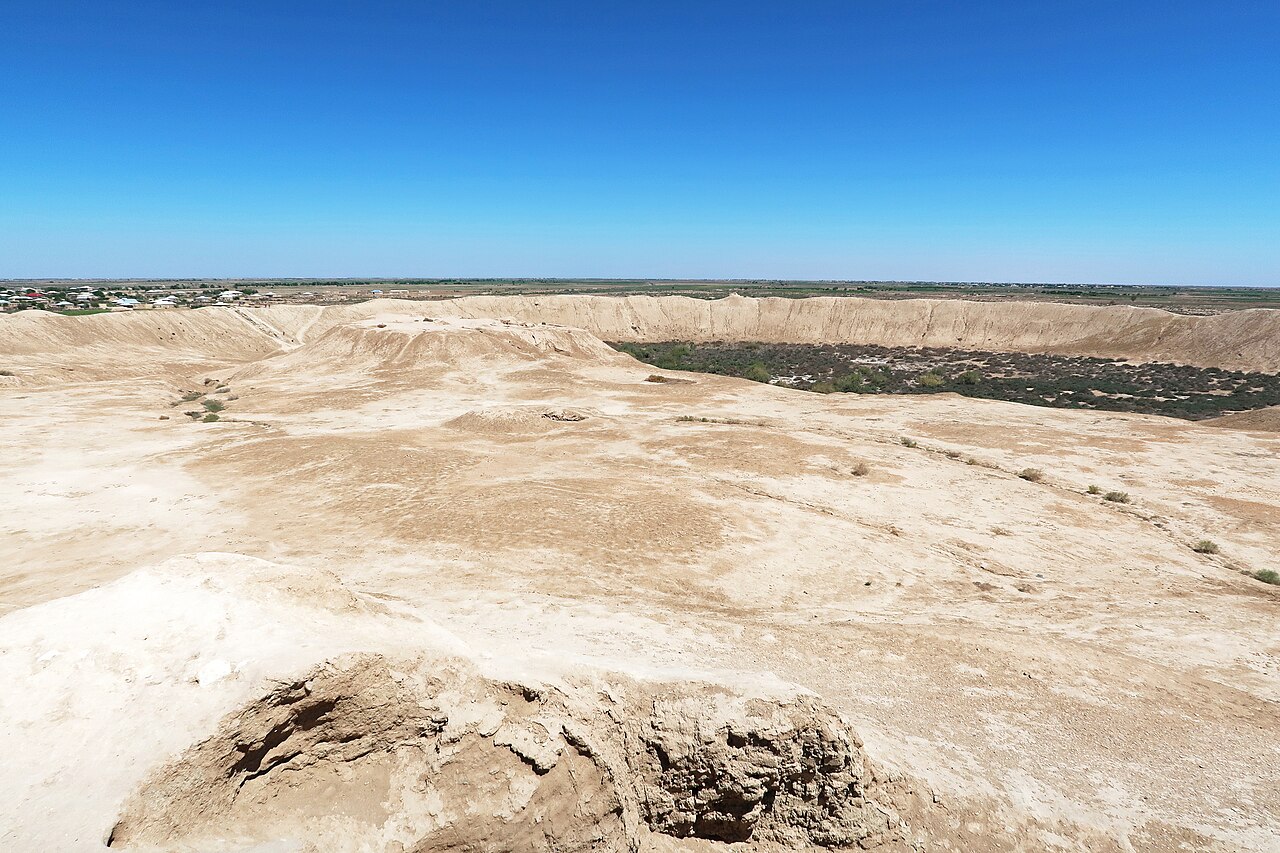
Yazdegerd had spent the years after Nahavand moving from Isfahan to Istakhr, then to Kerman, Sistan and finally Khorasan, looking for a province that would fight for him. Ibn Amir followed. In 651 his forces took Nishapur and Tus, and Merv, the great oasis city of the north-east, came to terms. Merv’s governor, Mahoy, had already turned against the king. Yazdegerd fled and was killed at a mill near the city. The details of his last days, and the different versions of his death, are told on Yazdegerd III, the last Sasanian king.
Yazdegerd’s death did not end resistance, but it ended the dynasty as a ruling power. His son Peroz sought help from the Tang emperor in China, as told on Peroz III and the Sasanian exiles in China. Al-Ahnaf ibn Qays pushed on to Merv al-Rud and Balkh, defeating a coalition of local princes, and a large rising in Khorasan in about 654 was put down by Abd Allah ibn Khazim.
How the conquest worked
Most towns and districts on the plateau were taken by treaty (sulh) rather than by storm. Al-Baladhuri records many of these agreements. Their pattern is similar: the local lord or city paid an agreed tribute each year, sometimes in silver and sometimes in goods, and in return kept his position and his people kept their religion and property. A city that broke its treaty could be retaken by force and lose its privileges, as Istakhr did.
This system meant that the Iranian landed gentry, the dehqans, carried on as tax collectors and local leaders under the new rulers. Arab soldiers lived mainly in garrisons, above all at Merv, rather than across the countryside. Conversion to Islam was not a condition of the treaties, and for a long time most of the population remained Zoroastrian, Christian or Jewish, as described on Zoroastrians after the Arab conquest.
An unfinished conquest
The first wave of conquest was not stable. During the Muslim civil war of 656–661, many Iranian districts stopped paying tribute and had to be reconquered by the Umayyads. The Caspian provinces never fell to this first wave at all; their story is on Tabaristan and the Dabuyids. Beyond the Oxus, the cities of Bukhara and Samarqand were taken only between 705 and 715 by the Umayyad general Qutayba ibn Muslim.
Arabic accounts written in Iraq present the eastern campaigns as a steady advance. Local histories written later in Persian, such as the Tarikh-e Sistan, preserve memories of the treaties and the resistance from the other side. Historians use both, aware that each was written long after the events and for its own audience.
Persian words from this page
| استخر | Estakhr | Istakhr |
| مرو | Marv | Merv |
| خراسان | Khorâsân | Khorasan, “land of the rising sun” |
| سیستان | Sistân | Sistan |
| شوشتر | Shushtar | Shushtar |
| مرزبان | marzbân | frontier governor |
| دهقان | dehqân | landed gentry; today “farmer” |
Sources and further reading
- al-Baladhuri, Futuh al-Buldan, translated as The Origins of the Islamic State, sections on Fars, Kerman, Sistan and Khorasan.
- al-Tabari, The History of al-Tabari, vols. 14 (The Conquest of Iran) and 15 (The Crisis of the Early Caliphate), SUNY Press.
- Tarikh-e Sistan, anonymous Persian history of Sistan, translated by Milton Gold (1976).
- Hugh Kennedy, The Great Arab Conquests (2007).
- R. N. Frye (ed.), The Cambridge History of Iran, vol. 4, From the Arab Invasion to the Saljuqs (1975).
Want to learn Persian? Get the free Starter Pack
Get the 14-page printable Starter Pack (all 32 letters, a 7-day reading plan, 100 core words and 20 survival phrases) and a short 5-email course. Free.
More in The Arab Conquest and Early Islamic Iran (633–820 CE)
- Salman the Persian
- Why the Sasanian Empire Fell
- The Battle of the Bridge (634)
- The Battle of al-Qadisiyyah
- Rostam Farrokhzad
- The Fall of Ctesiphon
- The Battle of Jalula
- The Battle of Nahavand: “Victory of Victories”
- The Conquest of Fars, Khorasan and the East
- Peroz III and the Sasanian Exiles in China
- Iranian Resistance: Tabaristan and the Dabuyids
- Zoroastrians after the Arab Conquest
- Iran under the Umayyads
- The Mawali and the Shu’ubiyya Movement
- Abu Muslim and the Abbasid Revolution
- The Death of Abu Muslim and the Iranian Revolts
- The Barmakids: Persian Viziers of Baghdad
- Al-Ma’mun in Merv and the Civil War
- Tahir ibn Husayn
- Imam Reza and the Origins of Mashhad
- Babak Khorramdin’s Revolt
- Persian Influence on the Abbasid Caliphate
- The Birth of New Persian