Hassan-i Sabbah (1050s–1124) was the Ismaili missionary who seized the mountain castle of Alamut in the Alborz, north of Qazvin, in 1090 and made it the centre of an independent Nizari Ismaili state that lasted until the Mongols took it in 1256. From Alamut he led a revolt against the Seljuk sultans through a chain of fortresses across Iran, and he ruled his community for 34 years without, it is said, ever leaving the castle.
| Born | 1050s, Qom; raised in Rey |
|---|---|
| Died | 12 June 1124, Alamut |
| Title among his followers | Sayyidna, “our master” |
| Seized Alamut | 1090 (AH 483) |
| Main region | Rudbar, the valley of the Alamut river in today’s Qazvin province |
| Successor | Kiya Buzurg-Ummid (ruled 1124–1138) |
A convert from Rey
Most of what we know about Hasan’s early life comes from a memoir known as the Sargozasht-i Sayyidna, “The Story of Our Master”. The original was lost when the Mongols destroyed the library of Alamut, but the Persian historians Juvayni and Rashid al-Din read it and summarised it, each with his own hostile or neutral slant.
According to this account Hasan was born in Qom in the 1050s into a family of Twelver Shi’as and grew up in Rey, near modern Tehran. Rey was then a centre of the Ismaili mission, the da’wa, which taught that the rightful imam was the Fatimid caliph in Cairo. In long arguments with Ismaili teachers, and after a serious illness, the teenage Hasan converted. The chief missionary in western Iran, Abd al-Malik ibn Attash, made him a deputy and advised him to go to Cairo.
He left Rey in 1076 and reached Egypt in 1078, staying about three years. He returned to Iran in 1081 and spent the next decade travelling as a missionary through Isfahan, Kerman, Khuzistan and the Caspian provinces. He came to see the mountainous province of Daylam, south of the Caspian, as the best base for a movement that had to survive against a far stronger state. The vizier Nizam al-Mulk, who saw the Ismailis as the empire’s most dangerous enemy, ordered his arrest, and Hasan worked in hiding.

Taking the castle of Alamut
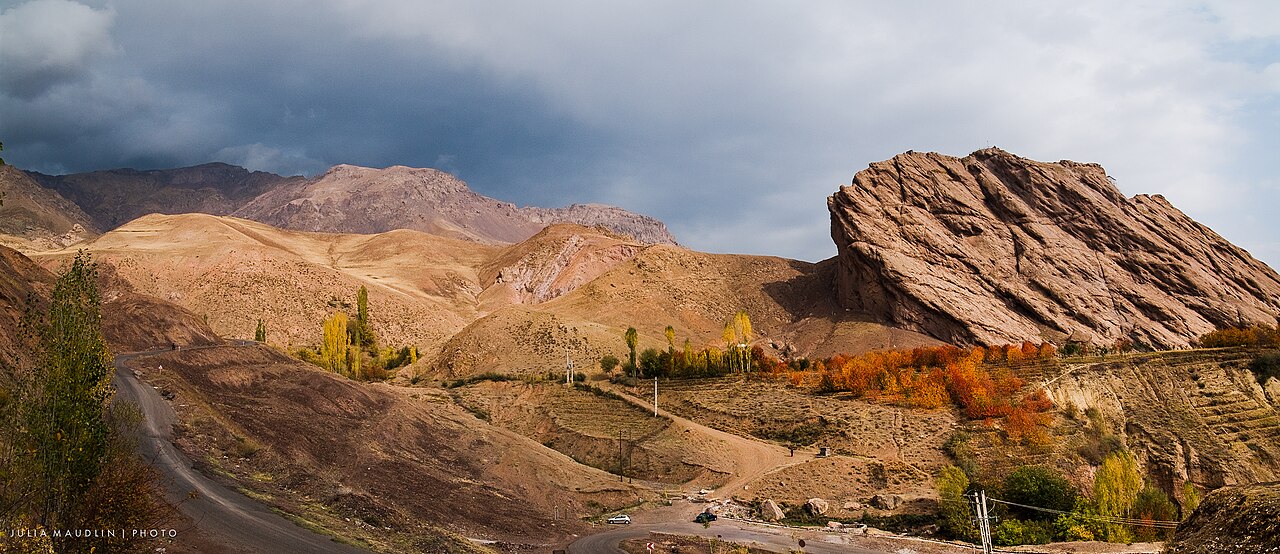
Alamut is a high rock with a long, narrow summit in the valley of Rudbar, reachable only by a steep path. In 1090 it was held for the Seljuks by a Zaydi Shi’i lord named Mahdi. Hasan’s missionaries had already converted many people in the valley and some of the garrison. He entered the fortress quietly, lived there for a time under another name, and then revealed himself. Mahdi was allowed to leave, and the sources say Hasan gave him a draft for 3,000 gold dinars as the price of the castle.
Hasan made Alamut his home and the headquarters of the movement. He strengthened the walls, built cisterns and storerooms cut into the rock, and improved irrigation and planting in the valley below, so that the castle could survive long sieges. The ruins and the valley today are described on the page on Alamut Castle; the nearest city is Qazvin.
A state of castles
From Alamut the revolt spread across the Seljuk lands. Hasan’s agents took or built more fortresses in Rudbar, including Lamasar, and the movement won whole districts in Quhistan in the south of Khorasan, where towns and villages came over to it. Further castles were held at Girdkuh near Damghan and at Shahdiz on a hill outside Isfahan, the Seljuk capital itself, which Ibn Attash’s son Ahmad seized in the 1090s.
The result was an unusual state: not a single territory but a scattered network of strongholds and towns, linked by messengers and loyalty to one leader, minting coins in some periods and later in contact with communities in Syria. Its enemies were the Seljuk sultans and the Sunni scholars who supported them.
The Nizari Ismailis could not field armies to match the Seljuks. Besides the castles, their weapon was the targeted killing of commanders, officials and judges who led the campaigns against them, carried out by devotees known as fida’is. The first well-known victim was Nizam al-Mulk, stabbed in 1092 by a man disguised as a Sufi, though some historians think that Seljuk rivals of the vizier had a hand in his death. How these killings worked, and how they grew into the European legend of the “Assassins”, is the subject of the page on the Nizari Ismailis and the “Assassins” legend.
The split of 1094
In 1094 the Fatimid caliph al-Mustansir died in Cairo. The army commander there put a younger son, al-Musta’li, on the throne instead of the elder son Nizar, who had been named heir; Nizar revolted and was killed in prison in 1095. Hasan and the Ismailis of Iran refused to recognise al-Musta’li. They remained loyal to Nizar and his line, which is why they are called Nizaris. From this point Alamut no longer took orders from Cairo. Hasan led the community as the representative of a hidden imam of Nizar’s line, and he developed the doctrine of ta’lim, that true religious knowledge comes only from the teaching of the imam.
The Seljuk counter-attack
The Seljuk civil wars of the 1090s gave the Nizaris room to grow, but once Sultan Muhammad Tapar was secure he turned on them. In 1107 his army took Shahdiz after a long siege, and Ahmad ibn Attash was killed. Seljuk forces then burned the crops of Rudbar year after year and placed Alamut under siege. The castle held. When news came in 1118 that Muhammad Tapar had died, the besiegers withdrew. His successor in the east, Sultan Sanjar, came to an uneasy accommodation with the Nizaris, and the sources tell a story, impossible to check, that he changed his policy after finding a dagger stuck in the ground beside his bed.
The master of Alamut
Hasan lived in austerity. The sources say he stayed in his rooms in Alamut for the whole 34 years of his rule, going out only twice onto the roof, spending his time reading, writing and directing the movement. This is probably an exaggeration, but it reflects how his followers remembered him. He enforced religious law strictly. When his own sons were accused, one of drinking wine and one of a murder, he had them both put to death, so no dynasty of his own followed him.
He died in June 1124, after naming Kiya Buzurg-Ummid, the commander of Lamasar, as his successor. The state he founded survived him by 132 years. Its later history, including the proclamation of the “Resurrection” in 1164, is told on the page on the Nizari Ismailis, and its end on the page on the fall of Alamut in 1256.
Hasan in later memory
For the Nizari Ismailis, a community that still exists today, Hasan is remembered as a dedicated teacher and organiser who saved the mission in Iran. For Sunni chroniclers he was a heretic and a rebel. The later legend that he had been a schoolfellow of Nizam al-Mulk and Omar Khayyam is a story from much later centuries and cannot be reconciled with their dates. In modern Iran he has also become a figure of novels and television, often as a sinister mastermind, an image that owes more to the “Assassins” myth than to the sources.
Persian words from this page
| حسن صباح | Hasan-e Sabbâh | Hassan-i Sabbah |
| الموت | Alamut | Alamut |
| قلعه | qal’e | castle, fortress |
| رودبار | Rudbâr | Rudbar, the Alamut valley |
| قزوین | Qazvin | Qazvin |
| ری | Rey | Rey, near Tehran |
| دعوت | da’vat | mission, call (Arabic da’wa) |
Sources and further reading
- Ata-Malik Juvayni, Tarikh-i Jahangushay, trans. J. A. Boyle as The History of the World-Conqueror (Manchester, 1958): the section on the Ismailis summarises the lost Sargozasht-i Sayyidna.
- Farhad Daftary, The Isma’ilis: Their History and Doctrines, 2nd ed. (Cambridge, 2007).
- Marshall G. S. Hodgson, The Order of Assassins (The Hague, 1955).
- Peter Willey, Eagle’s Nest: Ismaili Castles in Iran and Syria (London, 2005).
- Encyclopaedia Iranica, “Hasan-e Sabbah”.
Want to learn Persian? Get the free Starter Pack
Get the 14-page printable Starter Pack (all 32 letters, a 7-day reading plan, 100 core words and 20 survival phrases) and a short 5-email course. Free.
More in Ghaznavids, Seljuks and Khwarazmshahs (977–1231)
- The Ghaznavid Empire
- Mahmud of Ghazni
- The Rise of the Seljuks
- The Battle of Dandanaqan (1040)
- Tughril Beg Enters Baghdad
- Alp Arslan
- Seljuk Architecture: Tomb Towers and Caravanserais
- The Battle of Manzikert (1071)
- Malik Shah I
- The Seljuks of Kerman
- Nizam al-Mulk and the Siyasatnama
- The Seljuk Domes of Isfahan’s Jameh Mosque
- Omar Khayyam: Poet and Scientist
- Al-Ghazali
- Sana’i of Ghazni
- Hassan-i Sabbah and the Fortress of Alamut
- The Nizari Ismailis and the “Assassins” Legend
- Sultan Sanjar and the Qara Khitai
- The Battle of Qatwan (1141)
- Anvari and Seljuk Court Poetry
- Seljuk Decline and the Atabegs
- The Ghurids
- Attar of Nishapur
- Nizami Ganjavi
- The Khwarazmian Empire
- Ala al-Din Muhammad II
- The Otrar Incident (1218): How Khwarazm Provoked Genghis Khan
- Jalal al-Din Mingburnu