The Sarbadars were a movement of local notables and Sufi dervishes that rebelled against Mongol tax officials near Sabzevar in western Khorasan in 1337 and ruled the region until they submitted to Timur in 1381. They had no royal family: power passed, often violently, between rival leaders, which is why historians have called their state a kind of oligarchy or republic. They also leaned openly towards Twelver Shi’ism, more than a century before the Safavids.
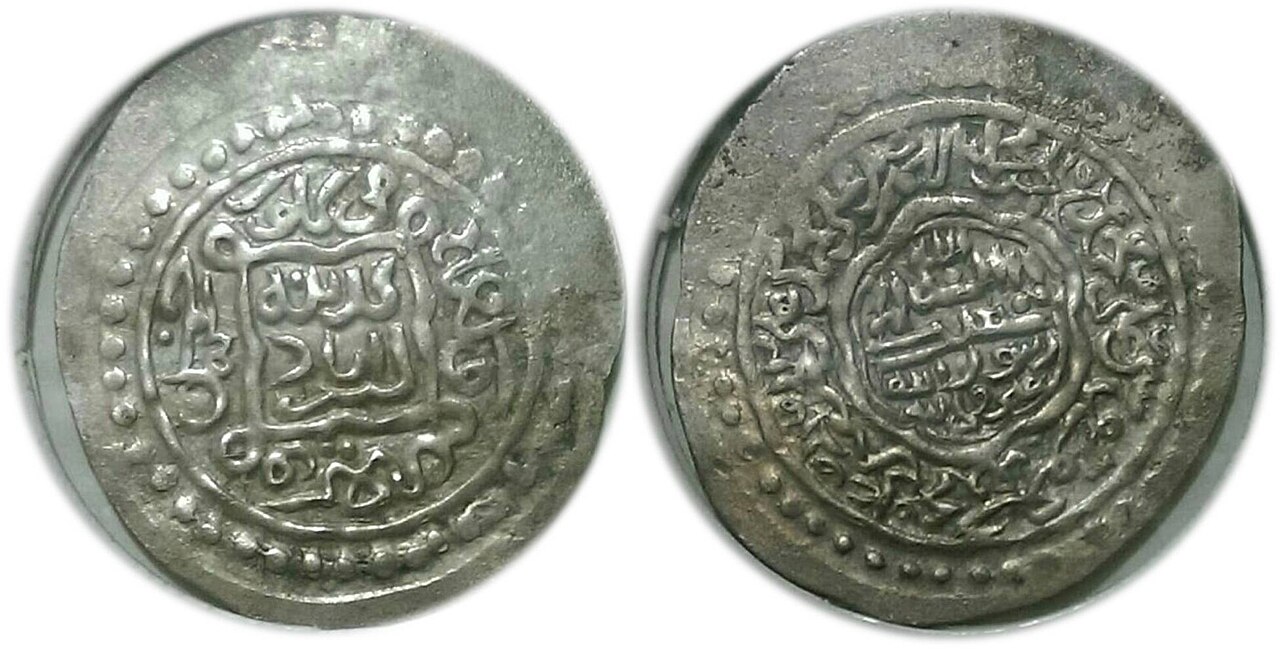

| Persian name | سربداران (Sarbedârân) |
|---|---|
| Dates | 1337–1381 |
| Capital | Sabzevar, western Khorasan |
| Territory at its widest | From around Damghan in the west to Nishapur and the edges of Tus in the east |
| Religion | Shi’i-leaning, with a strong Sufi dervish wing |
| End | Ali Mu’ayyad submits to Timur at Nishapur, 1381 |
Heads on the gallows
The name is usually explained as sar-be-dâr, “head on the gallows”: the rebels said they would rather see their heads hang than live under oppression. The story of the revolt’s start, as told by later chroniclers, is simple. In the village district of Bashtin near Sabzevar, a local landowner named Abd al-Razzaq killed a tax official, a relative of the vizier of the Mongol prince Togha Temür, whose demands had become unbearable. Abd al-Razzaq and his followers took to the hills, beat off the militias sent against them, and in the summer of 1337 took Sabzevar itself.
The timing was not an accident. The Ilkhanate had fallen apart after 1335 (see the end of the Ilkhanate), and Togha Temür, the Chinggisid claimant who controlled much of Khorasan, was busy fighting rivals in the west.
Gentry and dervishes
Abd al-Razzaq did not last long; in 1338 his brother Vajih al-Din Mas’ud stabbed him to death in a quarrel and took over. Mas’ud was a practical politician. He made terms with Togha Temür and paid him tribute, and in 1340 he drove another Mongol group out of Nishapur.
A second force joined the movement from outside the landowning class. Shaykh Khalifa, a scholar from Mazandaran, had preached in Sabzevar a militant, Shi’i-tinged Sufism and been murdered, by most accounts at the instigation of Sunni opponents, in 1335. His disciple Shaykh Hasan Juri spread the teaching through the villages of Khorasan and told his followers that the Twelfth Imam would soon return. Mas’ud brought Hasan Juri and his dervishes into the state, and the alliance gave the Sarbadars a disciplined fighting force.
It also gave them a permanent split. The notables wanted a quiet arrangement with their neighbours; the dervishes wanted a religious state. The two sides marched together against the Kartid kings of Herat, and at the Battle of Zava on 18 July 1342 the Sarbadars were winning until Hasan Juri was killed in the fighting. His followers suspected that Mas’ud had arranged it and left the field, and the battle was lost. Two years later Mas’ud died on a campaign into Mazandaran, trapped on the road between Sari and Amol, captured and executed.
A state without a dynasty
For the next twenty years leaders came and went in quick succession, some from the notables, some from the dervishes. Many were killed by their own side. The best-known act of the period came in the winter of 1353, when the Sarbadar leader Yahya Karavi went with a party of men to Togha Temür’s camp near Astarabad, was received in the khan’s tent, and murdered him and his courtiers. The last serious claimant to the Ilkhanid throne was gone.
What made the Sarbadars unusual was not their violence, which was common to every power of the time, but their lack of a royal claim. None of their leaders was a Chinggisid, a member of an old ruling house, or a former high officer of the Ilkhans. Their coins carried Shi’i formulas, they recognised outside overlords only when it suited them, and power went to whoever could hold the notables and the dervishes together. Some historians call this a republic or an oligarchy; others think the word “republic” says too much and point out that each strong leader ruled like any other prince.
Ali Mu’ayyad, the last Sarbadar
Khwaja Ali Mu’ayyad seized Sabzevar in the early 1360s and held it, with interruptions, until 1381. He was the most openly Shi’i of the Sarbadar rulers: chroniclers say that he had a horse saddled every day, ready for the return of the Twelfth Imam. He also turned on the dervishes, executing or exiling their leaders, and this brought him years of civil war with them and with their allies, the rulers of Astarabad and Mazandaran.
In 1381, besieged in Sabzevar by Amir Vali of Astarabad, Ali Mu’ayyad made the choice that saved his city. He went to Timur, then at Nishapur, and submitted. Timur ravaged Amir Vali’s lands and left Ali in place as a vassal. Ali served in Timur’s army and died in 1386 of wounds received in Luristan. The Sarbadars ended without the massacre that befell so many other cities; when parts of Khorasan rose against Timur in 1383, the punishment fell on towns such as Isfizar (see Timur’s campaigns in Iran).
Why the Sarbadars matter
Iranian historians of the twentieth century often saw the Sarbadars as a popular rising against foreign rule, and Soviet historians, notably I. P. Petrushevsky, read them as a peasant movement. Later work, especially John Masson Smith’s study of their history and coins, stresses that the leaders were mostly landowners and that the movement was as much about local control of taxes as about social justice. Their Shi’i and Sufi mix is often compared with that of the Safavid order, which turned a similar blend of mysticism and militancy into a dynasty a century later (see the Safaviyya order of Ardabil).
Persian words from this page
| سربدار | sarbedâr | “head on the gallows” |
| سبزوار | Sabzevâr | Sabzevar |
| درویش | darvish | dervish, Sufi |
| خراسان | Khorâsân | Khorasan |
| نیشابور | Neyshâbur | Nishapur |
| سر | sar | head |
Sources and further reading
- John Masson Smith Jr., The History of the Sarbadar Dynasty 1336–1381 A.D. and Its Sources (Mouton, 1970).
- “Sarbedarids”, Encyclopaedia Iranica.
- H. R. Roemer, “The Jalayirids, Muzaffarids and Sarbadars”, in The Cambridge History of Iran, vol. 6 (1986).
- I. P. Petrushevsky, Islam in Iran, trans. Hubert Evans (1985), on the Sarbadar movement.
Want to learn Persian? Get the free Starter Pack
Get the 14-page printable Starter Pack (all 32 letters, a 7-day reading plan, 100 core words and 20 survival phrases) and a short 5-email course. Free.
More in Post-Mongol Dynasties, Timurids and Turkmens (1335–1501)
- The Chobanids and Jalayirids
- The Injuids and Muzaffarids of Shiraz
- The Sarbadars of Sabzevar
- Khwaju Kermani and Poets of the 14th Century
- Hafez of Shiraz
- Timur (Tamerlane)
- Timur’s Campaigns in Iran
- Timur and the Battle of Ankara (1402)
- Shahrukh and Herat
- Goharshad Begum
- Ulugh Beg and the Samarkand Observatory
- The Timurid Renaissance
- The Qara Qoyunlu (Black Sheep Turkmen)
- The Blue Mosque of Tabriz
- Sultan Husayn Bayqara
- Jami: The Last Great Classical Persian Poet
- Kamal al-Din Behzad and Persian Miniature Painting
- The Aq Qoyunlu (White Sheep Turkmen)
- The Safaviyya Sufi Order of Ardabil