The Aq Qoyunlu (“White Sheep”) were a Turkmen tribal confederation from Diyarbakr in eastern Anatolia who, under Uzun Hasan (r. 1452–1478), destroyed the Qara Qoyunlu, defeated the Timurids and ruled Iran from Tabriz until the Safavids overthrew them in 1501–1508. Uzun Hasan’s defeat by the Ottomans at Otlukbeli in 1473 fixed the limits of his empire, and his grandson Ismail founded the Safavid dynasty.
| Period | c. 1378–1508 |
|---|---|
| Capitals | Amid (Diyarbakr) until 1468, then Tabriz |
| Key rulers | Qara Yoluk Osman (d. 1435); Uzun Hasan (1452–1478); Ya’qub (1478–1490) |
| Decisive battles | Jahan Shah killed near Muş, 1467; Abu Sa’id defeated in Qarabagh, 1469; defeat by Mehmed II at Otlukbeli, 11 August 1473; Safavid victory at Sharur, 1501 |
| Allies sought | Venice, the Empire of Trebizond, the papacy |
| Ended | Ismail I took Tabriz in 1501 and Diyarbakr and Iraq by 1508 |
The Bayandur clan of Diyarbakr
The Aq Qoyunlu’s leading family, the Bayandur, claimed descent from the legendary Oghuz Khan. In the fourteenth century their tribes pastured around Bayburt and raided the Greek Empire of Trebizond on the Black Sea, which bought peace by marrying its princesses to Turkmen chiefs. Their first great leader, Qara Yoluk Osman, sided with Timur against the Ottomans and the Qara Qoyunlu, and after the Battle of Ankara Timur granted him the region of Diyarbakr. Amid, the black-walled city on the Tigris, became the Aq Qoyunlu capital in 1403.
For half a century they stayed a regional power, overshadowed by the Qara Qoyunlu of Tabriz, while Osman’s sons fought one another for the leadership.
Uzun Hasan: from Diyarbakr to Tabriz
Hasan, called Uzun (“Tall”), seized power in a coup in 1452 and reunited the clans by 1457. He married Theodora Komnene, daughter of the emperor John IV of Trebizond, known in Persian sources as Despina Khatun, around 1458, which tied him to the last Greek state of Anatolia and its Christian allies.
His rise came in two strokes. In November 1467 he surprised Jahan Shah of the Qara Qoyunlu near Muş and killed him, then took Tabriz. The Timurid ruler Abu Sa’id, who held Khorasan and Transoxiana, invaded to claim the Qara Qoyunlu lands; in the winter of 1468–1469 Uzun Hasan cut his supplies in Qarabagh, captured him and handed him to a rival Timurid, who had him executed. Uzun Hasan now ruled Iraq, Azerbaijan, western and central Iran to Kerman, and much of eastern Anatolia. In 1470 he even backed a Timurid claimant who briefly held Herat, a story told on the page on Sultan Husayn Bayqara.
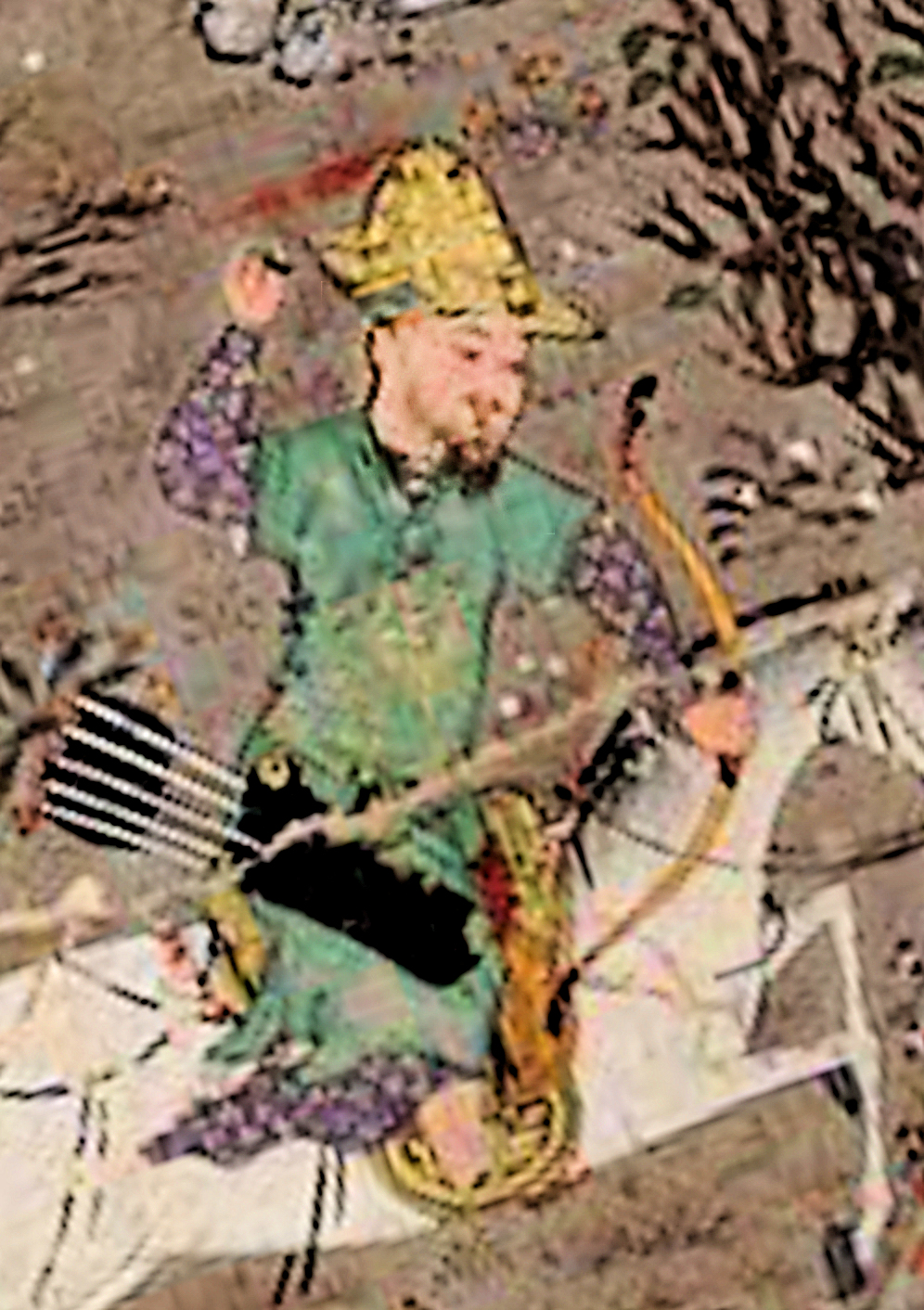

Venice and the Battle of Otlukbeli (1473)
The new empire bordered the Ottomans, who had taken Constantinople in 1453 and Trebizond in 1461. Venice, at war with the Ottomans since 1463, saw Uzun Hasan as an ally in the east. A series of Venetian envoys came to his court: Lazzaro Querini from 1463, Caterino Zeno in 1471, and in 1473–1474 Giosafat Barbaro and Ambrogio Contarini, whose travel accounts are among the best descriptions of Turkmen Iran. The Venetians promised firearms and gunners, which mostly did not arrive in time.
In 1472 Uzun Hasan’s forces raided deep into Ottoman Anatolia. Sultan Mehmed II answered with a large army that included artillery and Janissaries armed with handguns. After a Turkmen success on the Euphrates near Malatya, the armies met again at Otlukbeli, near Erzincan, on 11 August 1473. The Ottoman cannon and musketry broke the Turkmen cavalry, and Uzun Hasan’s son Zeynal was killed. Mehmed did not pursue him into Iran, but the battle ended Aq Qoyunlu ambitions in Anatolia. Forty-one years later Uzun Hasan’s grandson would lose to Ottoman guns at Chaldiran in much the same way.
Government and the “laws of Hasan Beg”
Uzun Hasan ruled a tribal confederation with a Persian bureaucracy. He issued codes of tax and commercial law, the qanun-name, remembered as the “laws of Hasan Beg”. They regulated taxes on land, trade and markets and were long-lived: the Ottomans kept applying them in eastern Anatolia and Iraq after conquering those regions in the sixteenth century. He died in Tabriz on 5 January 1478 and was buried in the Nasriyye complex he had built there.
Ya’qub and the Tabriz court
After a short struggle with his brother Khalil, Uzun Hasan’s son Ya’qub ruled from 1478 to 1490. His reign was the high point of Aq Qoyunlu court culture. He completed the Hasht Behesht (“Eight Paradises”) palace in Tabriz, which an anonymous Venetian merchant who saw it described with admiration, and his workshop produced illustrated manuscripts in a bold, colourful style. Scholars such as the philosopher Jalal al-Din Davani worked under his patronage. His minister Qazi Isa Saveji tried to reform taxation by reviewing the land grants held by the tribal and religious elite, an attempt that made many enemies and was abandoned after Ya’qub’s death.
Ya’qub also faced a new threat from his own relatives. Shaykh Haydar of Ardabil, head of the Safavid Sufi order, was the son of Uzun Hasan’s sister and the husband of Uzun Hasan’s daughter. In 1488 Ya’qub sent troops to help the Shirvanshah against Haydar, who was killed. The story of that family is told on the Safaviyya order page.
Civil war and the Safavid conquest
Ya’qub died in 1490, still young, and the confederation fell into a decade of civil war between his son Baysonghor, his nephew Rostam, Ahmad and finally the brothers Alvand and Morad, who divided the realm. In 1499 Haydar’s young son Ismail came out of hiding in Gilan, and by 1500 he had gathered a few thousand Qizilbash followers. At Sharur, near Nakhchivan, in 1501 he defeated Alvand and entered Tabriz. In 1503 he beat Morad near Hamadan. By 1508 Diyarbakr and Baghdad had fallen and the Aq Qoyunlu were gone. See Shah Ismail I.
What the Safavids inherited
The early Safavid state was in many ways an Aq Qoyunlu state under new management. It ruled from Tabriz with Turkmen tribal cavalry on top and Persian bureaucrats beneath, it inherited Aq Qoyunlu officials and court styles, and it faced the same Ottoman enemy on the same frontier. Even the blood line ran through Uzun Hasan’s daughter Halima, Ismail’s mother.
Persian words from this page
| آققویونلو | Âq Qoyunlu | the White Sheep Turkmens |
| اوزون حسن | Uzun Hasan | Uzun Hasan, “Tall Hasan” |
| هشت بهشت | Hasht Behesht | “Eight Paradises”, the Tabriz palace |
| قانون | qânun | law, code |
| دیاربکر | Diyârbakr | Diyarbakr |
| ونیز | Veniz | Venice |
Sources and further reading
- John E. Woods, The Aqquyunlu: Clan, Confederation, Empire, revised edition, University of Utah Press, 1999.
- Abu Bakr Tehrani, Ketab-e Diyarbakriyye (court history of Uzun Hasan, begun 1470).
- Travels to Tana and Persia, by Josafa Barbaro and Ambrogio Contarini, Hakluyt Society, 1873.
- H. R. Roemer, “The Türkmen dynasties”, in The Cambridge History of Iran, vol. 6, Cambridge University Press, 1986.
- Vladimir Minorsky, “A Civil and Military Review in Fārs in 881/1476”, Bulletin of the School of Oriental Studies 10 (1939–1942).
Want to learn Persian? Get the free Starter Pack
Get the 14-page printable Starter Pack (all 32 letters, a 7-day reading plan, 100 core words and 20 survival phrases) and a short 5-email course. Free.
More in Post-Mongol Dynasties, Timurids and Turkmens (1335–1501)
- The Chobanids and Jalayirids
- The Injuids and Muzaffarids of Shiraz
- The Sarbadars of Sabzevar
- Khwaju Kermani and Poets of the 14th Century
- Hafez of Shiraz
- Timur (Tamerlane)
- Timur’s Campaigns in Iran
- Timur and the Battle of Ankara (1402)
- Shahrukh and Herat
- Goharshad Begum
- Ulugh Beg and the Samarkand Observatory
- The Timurid Renaissance
- The Qara Qoyunlu (Black Sheep Turkmen)
- The Blue Mosque of Tabriz
- Sultan Husayn Bayqara
- Jami: The Last Great Classical Persian Poet
- Kamal al-Din Behzad and Persian Miniature Painting
- The Aq Qoyunlu (White Sheep Turkmen)
- The Safaviyya Sufi Order of Ardabil